

3 Use of Enzymes in Tannery Processing
The leather industry faces serious sustainability issues due to pollution and environmental and negative health effect. New processing is a must! On this account,
tanneries need to embrace cleaner production, prevent or reduce waste formation
and the inevitable small amounts of waste generated disposed in an environmentally
friendly way [12]. Application of neutral and alkaline-stable enzymes in tanneries
Processing steps
Sub-Processes
Waste Generated
WET
RAW HIDES/SKINS
Beam
house
Wastewater, flashings, blood,
cow dungs, High pH, hair,
wool, trimmings, lime split
waste, salts, BOD, COD, SS,
DS, ammonium, nitrogen, fats,
degreasing organic
solvents, lime fleshing waste,
sludge tanning liquor,
chromium, hydrogen sulphide,
odour, aldehydes, vegetable
tans, syntan [5, 12, 13 ]
Sorting and Trimming
Curing and
Storage
Soaking
Green Fleshing
Unhairing and Liming
Lime Fleshing
Lime Splitting and Trimming
Deliming and Bating
Degreasing of Sheepskins
Pickling
Tanyard
Wastewater, chromium sludge,
fat, bad smell, solvent vapour,
shaving wastes, buffing
dust, trimmings and noxious
niff
Tanning
Samming
Chrome Splitting
Shaving
PostTanning
Tanned leather cuttings, waste
water, hydrogen sulphide,
chromium sludge, solvent
vapour, shavings, dyes, odour,
buffing dust
Re-tanning, Dyeing, fat liquoring
Drying
DRY
Mechanical Finishing
Finishing
Dressing waste, solvent vapour
Wastewaters, aerosols, Organic
dyes and solid particulates
Coating
LEATHER
Packaging material, leather
cuttings
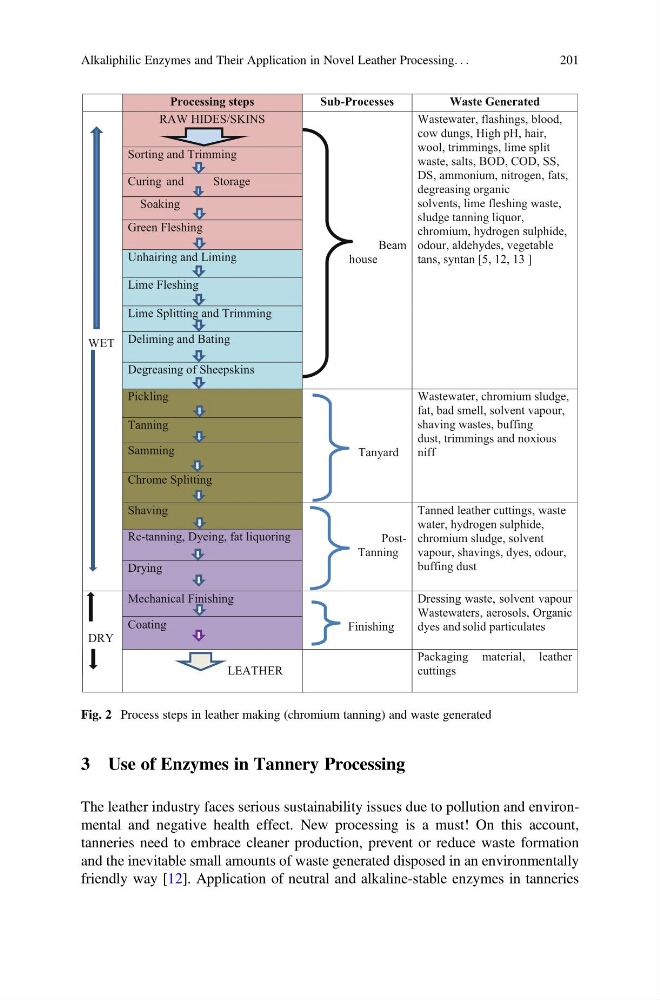
Fig. 2 Process steps in leather making (chromium tanning) and waste generated
Alkaliphilic Enzymes and Their Application in Novel Leather Processing. . .
201
The leather industry faces serious sustainability issues due to pollution and environmental and negative health effect. New processing is a must! On this account,
tanneries need to embrace cleaner production, prevent or reduce waste formation
and the inevitable small amounts of waste generated disposed in an environmentally
friendly way [12]. Application of neutral and alkaline-stable enzymes in tanneries
Processing steps
Sub-Processes
Waste Generated
WET
RAW HIDES/SKINS
Beam
house
Wastewater, flashings, blood,
cow dungs, High pH, hair,
wool, trimmings, lime split
waste, salts, BOD, COD, SS,
DS, ammonium, nitrogen, fats,
degreasing organic
solvents, lime fleshing waste,
sludge tanning liquor,
chromium, hydrogen sulphide,
odour, aldehydes, vegetable
tans, syntan [5, 12, 13 ]
Sorting and Trimming
Curing and
Storage
Soaking
Green Fleshing
Unhairing and Liming
Lime Fleshing
Lime Splitting and Trimming
Deliming and Bating
Degreasing of Sheepskins
Pickling
Tanyard
Wastewater, chromium sludge,
fat, bad smell, solvent vapour,
shaving wastes, buffing
dust, trimmings and noxious
niff
Tanning
Samming
Chrome Splitting
Shaving
PostTanning
Tanned leather cuttings, waste
water, hydrogen sulphide,
chromium sludge, solvent
vapour, shavings, dyes, odour,
buffing dust
Re-tanning, Dyeing, fat liquoring
Drying
DRY
Mechanical Finishing
Finishing
Dressing waste, solvent vapour
Wastewaters, aerosols, Organic
dyes and solid particulates
Coating
LEATHER
Packaging material, leather
cuttings
Fig. 2 Process steps in leather making (chromium tanning) and waste generated
Alkaliphilic Enzymes and Their Application in Novel Leather Processing. . .
201