

This chapter describes the polluting chemicals consumed in different stages of conventional leather processing and the nature of waste generated. In order to overcome
the hazards caused by toxic chemicals in tanneries and protect the environment,
enzymes have been identified as a realistic alternate for chemicals used in beam
house operation and waste management. Alkaline active proteases of alkaliphiles
offer advantages over the use of conventional chemical catalysts for numerous reasons, for example, they exhibit high catalytic activity and high degree of substrate
specificity, can be produced in large amounts and are economically viable. This is
because the enzymes of these alkaliphiles are capable of catalysing reactions at the
extremes of pH, temperature and salinity of leather-manufacturing processes.
The chapter describes how alkaliphilic enzyme can effectively be used in soaking,
dehairing, bating and degreasing operations to prevent waste generation, help in
recovery of valuable by-products, reduce cost and increase leather quality. It is worth
noting that protease has the capability to replace sodium sulphide in the dehairing
process. In addition, alkaline proteases have shown remarkable ability in bioremediation of waste generated during the industrial processes. Intensive efforts are being
directed towards chemical-based industries to use viable clean technology in their
operation to reduce their negative impact on the environment. Similarly, leather
industry should adopt the use of eco-friendly reagents such as enzymes to achieve
long-term sustainability and clean environment and avert health hazards. Application of enzyme technology in clean leather processing strongly depends on legislation, political will and allocation of financial resources in research, development and
implementation of this potentially powerful technology.
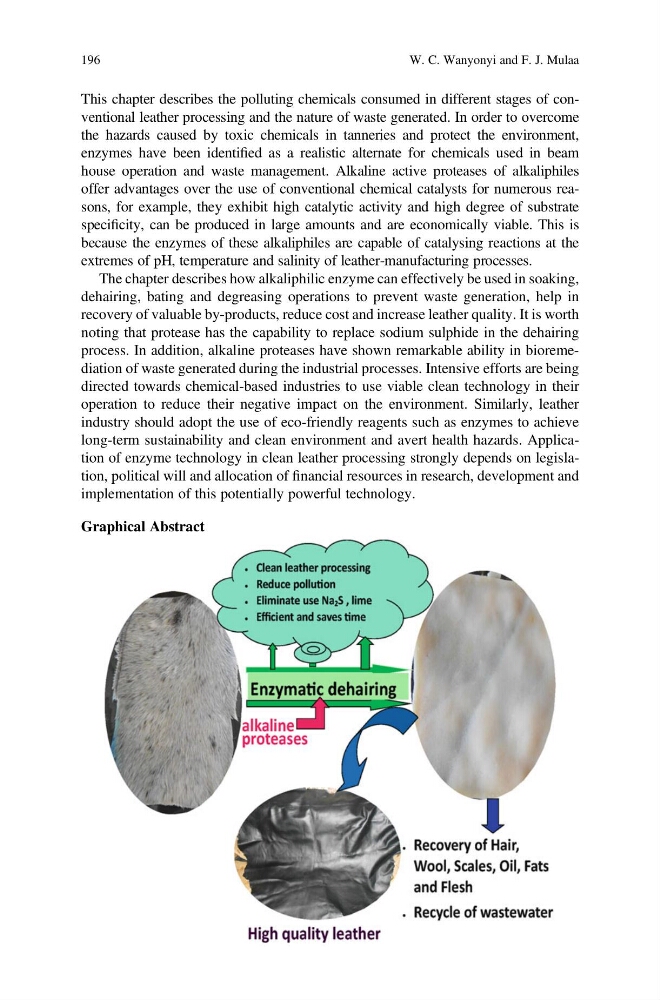
Graphical Abstract
196
W. C. Wanyonyi and F. J. Mulaa
the hazards caused by toxic chemicals in tanneries and protect the environment,
enzymes have been identified as a realistic alternate for chemicals used in beam
house operation and waste management. Alkaline active proteases of alkaliphiles
offer advantages over the use of conventional chemical catalysts for numerous reasons, for example, they exhibit high catalytic activity and high degree of substrate
specificity, can be produced in large amounts and are economically viable. This is
because the enzymes of these alkaliphiles are capable of catalysing reactions at the
extremes of pH, temperature and salinity of leather-manufacturing processes.
The chapter describes how alkaliphilic enzyme can effectively be used in soaking,
dehairing, bating and degreasing operations to prevent waste generation, help in
recovery of valuable by-products, reduce cost and increase leather quality. It is worth
noting that protease has the capability to replace sodium sulphide in the dehairing
process. In addition, alkaline proteases have shown remarkable ability in bioremediation of waste generated during the industrial processes. Intensive efforts are being
directed towards chemical-based industries to use viable clean technology in their
operation to reduce their negative impact on the environment. Similarly, leather
industry should adopt the use of eco-friendly reagents such as enzymes to achieve
long-term sustainability and clean environment and avert health hazards. Application of enzyme technology in clean leather processing strongly depends on legislation, political will and allocation of financial resources in research, development and
implementation of this potentially powerful technology.
Graphical Abstract
196
W. C. Wanyonyi and F. J. Mulaa