

Theor Chem Acc (2015) 134:107
1 3
As mentioned in the previous DC-MP2 and DC coupled
cluster papers [ 27 , 28 , 41 , 46 , 47 ], the buffer region used in
the DC-MP2 method can be set to be smaller than that in the
DC-HF method without signifi cant loss of accuracy. When
this dual-buffer DC-MP2 scheme was adopted, the Fermi
level was used to be redetermined using the MOs constructed
in the smaller subsystems. In the integer occupation DC-MP2
method, however, the use of the Fermi level obtained from
the prior DC-HF calculation does not signifi cantly change the
results because the Fermi level is used only for separating the
subsystem MOs into occupied and virtual ones. On the other
hand, in the FT DC-MP2 method, the subsystem MP2 correlation energy of Eq. ( 53 ) may largely depend on the Fermi
level due to the occupation numbers appearing in the coeffi -
cients of Eqs. ( 54 ) and ( 55 ). Because the reference state for the
DC-MP2 method is the preceding DC-HF state, the authors
decided to use the Fermi level determined in the DC-HF calculation throughout the DC-MP2 calculation. The dependence of the FT DC-MP2 energy on the Fermi level will also be
assessed below.
Fundamentally, the difference between the implementations of the FT and integer occupation DC-MP2 methods is
the summation lengths in Eqs. ( 51 ) and ( 53 ). Although the
MO indices in Eq. ( 53 ) formally run over all subsystem orbitals, the MO p of subsystem α is regarded as to be doubly occupied or fully vacant if f α
p > 1 − θ or f α
p < θ, respectively
(throughout this paper, the threshold of θ = 10 −15 is adopted).
Therefore, the computational costs for the MP2 calculation of
subsystem α depend on the practical numbers of occupied and
virtual MOs, which are defi ned with the numbers of all MOs
( N α ), uncorrelated core MOs ( N α
core ), doubly occupied MOs
( N α
docc , including N α
core ), and fully vacant MOs ( N α
fvac ) by
and
respectively.
The above-mentioned methods were implemented into
the development version of the GAMESS program [ 48 , 49 ],
which was used in calculations for the next Section.
3 Numerical assessments
3.1 DM-MP2 and FT-MP2 calculations of benzene
First, the relation between FT-MP2 and DM-MP2, derived
in the previous Section, was numerically assessed in calculations of benzene molecule with 6-31G** basis set
(57)
f
α
pq,rs = f
α
p f
α
q
¯
f
α
r
¯
f
α
s .
(58)
N
α
occ = N
α
− N
α
fvac − N
α
core
(59)
N
α
vir = N
α
− N
α
docc ,
[ 50 ]. In DM-MP2 calculations, we applied the Chebyshev
expansion for the evaluation of matrix exponential, which
is implemented in the EXPOKIT library program [ 51 ]. For the
numerical quadrature of the Laplace-transformed integrals
of Eqs. ( 9 ) and ( 27 ), we used the τ -point Euler–Maclaurin
(trapezoidal) quadrature
with
and the following change in variable
according to the previous assessment [ 18 ] (note that
f 2 (0) = f 2 (1) = 0 ).
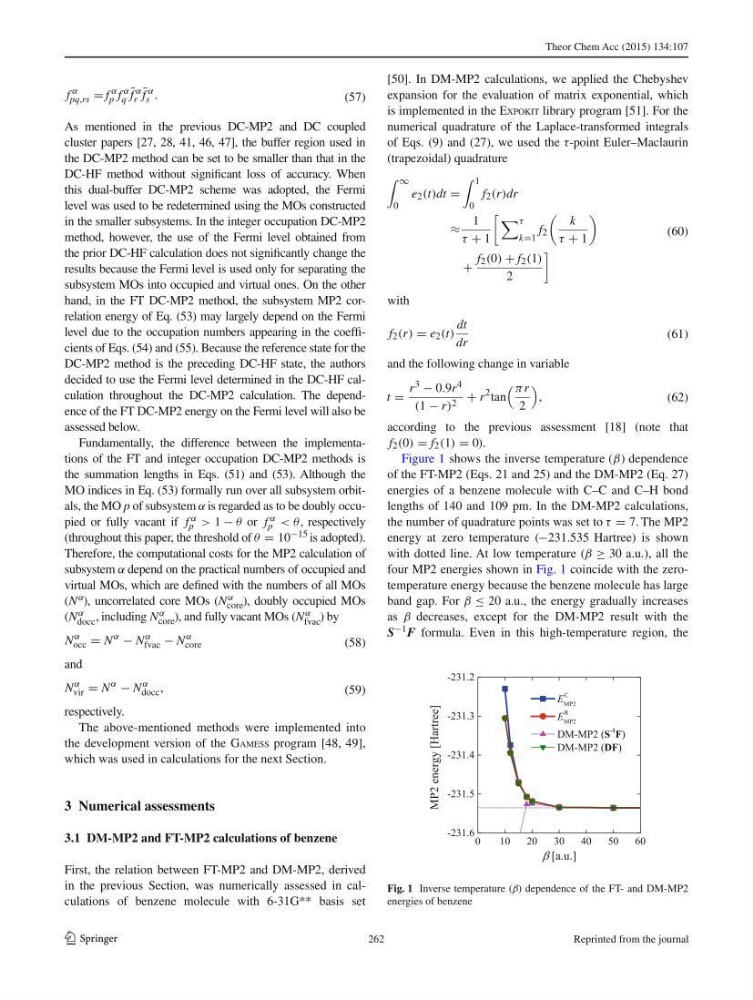
Figure 1 shows the inverse temperature (β) dependence
of the FT-MP2 (Eqs. 21 and 25 ) and the DM-MP2 (Eq. 27 )
energies of a benzene molecule with C–C and C–H bond
lengths of 140 and 109 pm. In the DM-MP2 calculations,
the number of quadrature points was set to τ = 7. The MP2
energy at zero temperature ( −231.535 Hartree) is shown
with dotted line. At low temperature ( β ≥ 30 a.u.), all the
four MP2 energies shown in Fig. 1 coincide with the zerotemperature energy because the benzene molecule has large
band gap. For β ≤ 20 a.u., the energy gradually increases
as β decreases, except for the DM-MP2 result with the
S −1 F formula. Even in this high-temperature region, the
(60)
∞
0
e 2 (t)dt =
1
0
f 2 (r)dr
≈
1
τ + 1
τ
k=1
f 2
k
τ + 1
+
f 2 (0) + f 2 (1)
2
(61)
f 2 (r) = e 2 (t)
dt
dr
(62)
t =
r 3 − 0.9r 4
(1 − r) 2 + r
2 tan
πr
2
,
Fig. 1 Inverse temperature ( β ) dependence of the FT- and DM-MP2
energies of benzene
262
Reprinted from the journal
1 3
As mentioned in the previous DC-MP2 and DC coupled
cluster papers [ 27 , 28 , 41 , 46 , 47 ], the buffer region used in
the DC-MP2 method can be set to be smaller than that in the
DC-HF method without signifi cant loss of accuracy. When
this dual-buffer DC-MP2 scheme was adopted, the Fermi
level was used to be redetermined using the MOs constructed
in the smaller subsystems. In the integer occupation DC-MP2
method, however, the use of the Fermi level obtained from
the prior DC-HF calculation does not signifi cantly change the
results because the Fermi level is used only for separating the
subsystem MOs into occupied and virtual ones. On the other
hand, in the FT DC-MP2 method, the subsystem MP2 correlation energy of Eq. ( 53 ) may largely depend on the Fermi
level due to the occupation numbers appearing in the coeffi -
cients of Eqs. ( 54 ) and ( 55 ). Because the reference state for the
DC-MP2 method is the preceding DC-HF state, the authors
decided to use the Fermi level determined in the DC-HF calculation throughout the DC-MP2 calculation. The dependence of the FT DC-MP2 energy on the Fermi level will also be
assessed below.
Fundamentally, the difference between the implementations of the FT and integer occupation DC-MP2 methods is
the summation lengths in Eqs. ( 51 ) and ( 53 ). Although the
MO indices in Eq. ( 53 ) formally run over all subsystem orbitals, the MO p of subsystem α is regarded as to be doubly occupied or fully vacant if f α
p > 1 − θ or f α
p < θ, respectively
(throughout this paper, the threshold of θ = 10 −15 is adopted).
Therefore, the computational costs for the MP2 calculation of
subsystem α depend on the practical numbers of occupied and
virtual MOs, which are defi ned with the numbers of all MOs
( N α ), uncorrelated core MOs ( N α
core ), doubly occupied MOs
( N α
docc , including N α
core ), and fully vacant MOs ( N α
fvac ) by
and
respectively.
The above-mentioned methods were implemented into
the development version of the GAMESS program [ 48 , 49 ],
which was used in calculations for the next Section.
3 Numerical assessments
3.1 DM-MP2 and FT-MP2 calculations of benzene
First, the relation between FT-MP2 and DM-MP2, derived
in the previous Section, was numerically assessed in calculations of benzene molecule with 6-31G** basis set
(57)
f
α
pq,rs = f
α
p f
α
q
¯
f
α
r
¯
f
α
s .
(58)
N
α
occ = N
α
− N
α
fvac − N
α
core
(59)
N
α
vir = N
α
− N
α
docc ,
[ 50 ]. In DM-MP2 calculations, we applied the Chebyshev
expansion for the evaluation of matrix exponential, which
is implemented in the EXPOKIT library program [ 51 ]. For the
numerical quadrature of the Laplace-transformed integrals
of Eqs. ( 9 ) and ( 27 ), we used the τ -point Euler–Maclaurin
(trapezoidal) quadrature
with
and the following change in variable
according to the previous assessment [ 18 ] (note that
f 2 (0) = f 2 (1) = 0 ).
Figure 1 shows the inverse temperature (β) dependence
of the FT-MP2 (Eqs. 21 and 25 ) and the DM-MP2 (Eq. 27 )
energies of a benzene molecule with C–C and C–H bond
lengths of 140 and 109 pm. In the DM-MP2 calculations,
the number of quadrature points was set to τ = 7. The MP2
energy at zero temperature ( −231.535 Hartree) is shown
with dotted line. At low temperature ( β ≥ 30 a.u.), all the
four MP2 energies shown in Fig. 1 coincide with the zerotemperature energy because the benzene molecule has large
band gap. For β ≤ 20 a.u., the energy gradually increases
as β decreases, except for the DM-MP2 result with the
S −1 F formula. Even in this high-temperature region, the
(60)
∞
0
e 2 (t)dt =
1
0
f 2 (r)dr
≈
1
τ + 1
τ
k=1
f 2
k
τ + 1
+
f 2 (0) + f 2 (1)
2
(61)
f 2 (r) = e 2 (t)
dt
dr
(62)
t =
r 3 − 0.9r 4
(1 − r) 2 + r
2 tan
πr
2
,
Fig. 1 Inverse temperature ( β ) dependence of the FT- and DM-MP2
energies of benzene
262
Reprinted from the journal