

Theor Chem Acc (2015) 134:100
1 3
overlap allows for dealing with 3 × 3 matrices instead
of the numerical treatment of the N × N overlap matrix,
with the above values for N .
Acknowledgments The authors are indebted to a Referee who
helped to signifi cantly improve the manuscript. The work presented
here is a direct continuation of the research being followed in the
laboratory of Péter Surján. It is a delight for the authors—all of them
students of prof. Surján for some time in their life—to congratulate
him on the occasion of reaching 60 and express their gratitude to the
outstanding scholar.
References
1. Löwdin PO (1950) J Chem Phys 18:365
2. Löwdin PO (1970) Adv Quantum Chem 5:185
3. Mayer I (2002) Int J Quantum Chem 90(1):63. doi: 10.1002/
qua.981
4. Mayer I (2003) Simple theorems, proofs, and derivations in
quantum chemistry. Kluwer, New York
5. Wolinski K, Sellers H, Pulay P (1987) Chem Phys Lett 140:225
6. Wolinski K, Pulay P (1989) J Chem Phys 90:3647
7. van Dam HJJ, van Lenthe JH (1998) Mol Phys 93:431
8. Werner HJ (1996) Mol Phys 89:645
9. Andersson K, Malmqvist PÅ, Roos BO, Sadlej AJ, Wolinski K
(1990) J Phys Chem 94:5483
10. Andersson K, Malmqvist PÅ, Roos BO (1992) J Chem Phys
96:1218
11. Rolik Z, Szabados Á, Surján PR (2003) J Chem Phys 119:1922
12. Szabados Á, Rolik Z, Tóth G, Surján PR (2005) J Chem Phys
122:114104
13. Kobayashi M, Szabados Á, Nakai H, Surján PR (2010) J Chem
Theory Comput 6:2024
14. Surján P, Rolik Z, Szabados Á, Kőhalmi D (2004) Ann Phys
(Leipzig) 13:223
15. Mayer I (2000) Theor Chim Acta 104:163
16. Nagy P, Surján P, Szabados Á (2012) Theor Chem Acc (Theoretica Chimica Acta) 131:1109. doi: 10.1007/s00214-012-1109-y
17. Limacher PA, Ayers PW, Johnson PA, De Baerdemacker S, Neck
DV, Bultinck P (2014) Phys Chem Chem Phys 16:5061
18. Nagy PR, Szabados Á (2012) Int J Quantum Chem 113:230
19. Rayleigh LJWS (1976) The theory of sound, vol 1. Dover, New
York
20. Schrödinger E (1926) Ann Phys 80:437
21. Lindgren I, Morrison J (1986) Atomic many-body theory.
Springer, Berlin
22. Shavitt I, Bartlett RJ (2009) Many-body methods in chemistry
and physics. Cambridge University Press, Cambridge
23. Hose G, Kaldor U (1979) J Phys B 12:3827
24. Meissner L, Bartlett RJ (1989) J Chem Phys 91:4800
25. Epstein P (1926) Phys Rev 28:695
26. Nesbet R (1955) Proc R Soc (Lond) A230:312
27. Surján PR (1999) Top Curr Chem 203:63
28. Surján PR, Szabados Á, Jeszenszki P, Zoboki T (2012) J Math
Chem 50:534
29. Jeszenszki P, Nagy PR, Zoboki T, Szabados Á, Surján PR (2014)
Int J Quantum Chem 114:1048
30. Rassolov VA, Xu F (2007) J Chem Phys 127:044104
31. Small DW, Head-Gordon M (2009) J Chem Phys 130:084103
32. Jeszenszki P, Rassolov V, Surján PR, Szabados Á (2015) Mol
Phys 113(3–4):249
33. Johnson PA, Ayers PW, Limacher PA, Baerdemacker SD, Neck
DV, Bultinck P (2013) Comput Theor Chem 1003:101
−1.97
−1.96
−1.95
−1.94
−1.93
−1.92
−1.91
−1.9
−1.89
−1.88
−1.87
−1.86
86
88
90
92
94
E [E
h ]
H−X−H angle [º]
APSG
MCPT
MS−pLMCPT
FCI
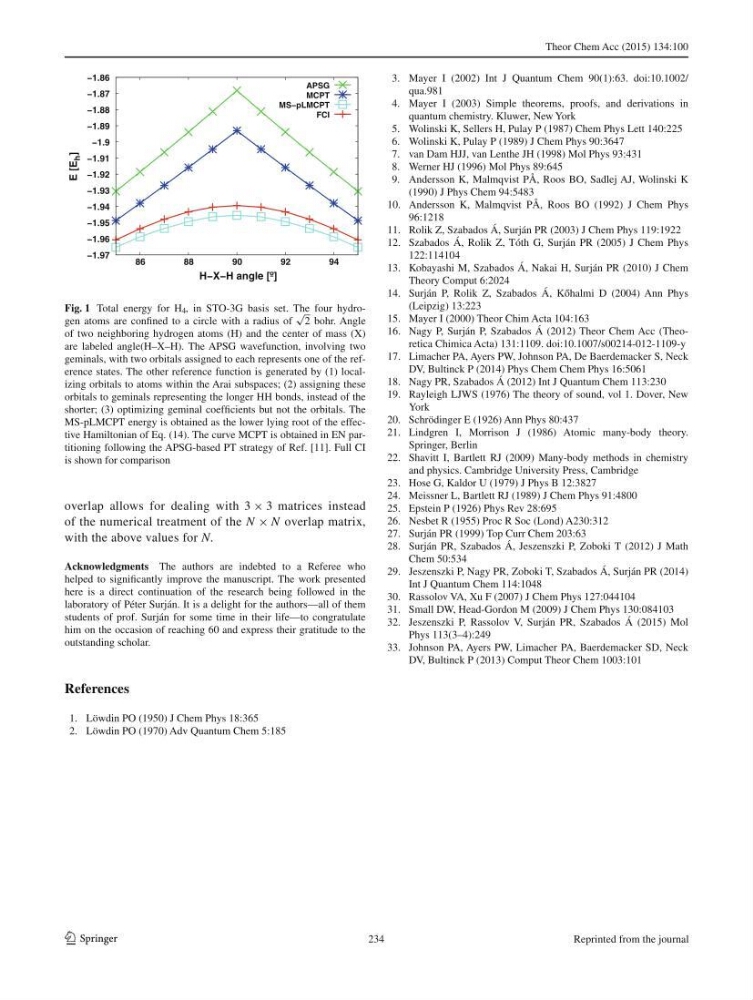
Fig. 1 Total energy for H 4 , in STO-3G basis set. The four hydrogen atoms are confi ned to a circle with a radius of
√
2 bohr. Angle
of two neighboring hydrogen atoms (H) and the center of mass (X)
are labeled angle(H–X–H). The APSG wavefunction, involving two
geminals, with two orbitals assigned to each represents one of the reference states. The other reference function is generated by (1) localizing orbitals to atoms within the Arai subspaces; (2) assigning these
orbitals to geminals representing the longer HH bonds, instead of the
shorter; (3) optimizing geminal coeffi cients but not the orbitals. The
MS-pLMCPT energy is obtained as the lower lying root of the effective Hamiltonian of Eq. ( 14 ). The curve MCPT is obtained in EN partitioning following the APSG-based PT strategy of Ref. [ 11 ]. Full CI
is shown for comparison
234
Reprinted from the journal
1 3
overlap allows for dealing with 3 × 3 matrices instead
of the numerical treatment of the N × N overlap matrix,
with the above values for N .
Acknowledgments The authors are indebted to a Referee who
helped to signifi cantly improve the manuscript. The work presented
here is a direct continuation of the research being followed in the
laboratory of Péter Surján. It is a delight for the authors—all of them
students of prof. Surján for some time in their life—to congratulate
him on the occasion of reaching 60 and express their gratitude to the
outstanding scholar.
References
1. Löwdin PO (1950) J Chem Phys 18:365
2. Löwdin PO (1970) Adv Quantum Chem 5:185
3. Mayer I (2002) Int J Quantum Chem 90(1):63. doi: 10.1002/
qua.981
4. Mayer I (2003) Simple theorems, proofs, and derivations in
quantum chemistry. Kluwer, New York
5. Wolinski K, Sellers H, Pulay P (1987) Chem Phys Lett 140:225
6. Wolinski K, Pulay P (1989) J Chem Phys 90:3647
7. van Dam HJJ, van Lenthe JH (1998) Mol Phys 93:431
8. Werner HJ (1996) Mol Phys 89:645
9. Andersson K, Malmqvist PÅ, Roos BO, Sadlej AJ, Wolinski K
(1990) J Phys Chem 94:5483
10. Andersson K, Malmqvist PÅ, Roos BO (1992) J Chem Phys
96:1218
11. Rolik Z, Szabados Á, Surján PR (2003) J Chem Phys 119:1922
12. Szabados Á, Rolik Z, Tóth G, Surján PR (2005) J Chem Phys
122:114104
13. Kobayashi M, Szabados Á, Nakai H, Surján PR (2010) J Chem
Theory Comput 6:2024
14. Surján P, Rolik Z, Szabados Á, Kőhalmi D (2004) Ann Phys
(Leipzig) 13:223
15. Mayer I (2000) Theor Chim Acta 104:163
16. Nagy P, Surján P, Szabados Á (2012) Theor Chem Acc (Theoretica Chimica Acta) 131:1109. doi: 10.1007/s00214-012-1109-y
17. Limacher PA, Ayers PW, Johnson PA, De Baerdemacker S, Neck
DV, Bultinck P (2014) Phys Chem Chem Phys 16:5061
18. Nagy PR, Szabados Á (2012) Int J Quantum Chem 113:230
19. Rayleigh LJWS (1976) The theory of sound, vol 1. Dover, New
York
20. Schrödinger E (1926) Ann Phys 80:437
21. Lindgren I, Morrison J (1986) Atomic many-body theory.
Springer, Berlin
22. Shavitt I, Bartlett RJ (2009) Many-body methods in chemistry
and physics. Cambridge University Press, Cambridge
23. Hose G, Kaldor U (1979) J Phys B 12:3827
24. Meissner L, Bartlett RJ (1989) J Chem Phys 91:4800
25. Epstein P (1926) Phys Rev 28:695
26. Nesbet R (1955) Proc R Soc (Lond) A230:312
27. Surján PR (1999) Top Curr Chem 203:63
28. Surján PR, Szabados Á, Jeszenszki P, Zoboki T (2012) J Math
Chem 50:534
29. Jeszenszki P, Nagy PR, Zoboki T, Szabados Á, Surján PR (2014)
Int J Quantum Chem 114:1048
30. Rassolov VA, Xu F (2007) J Chem Phys 127:044104
31. Small DW, Head-Gordon M (2009) J Chem Phys 130:084103
32. Jeszenszki P, Rassolov V, Surján PR, Szabados Á (2015) Mol
Phys 113(3–4):249
33. Johnson PA, Ayers PW, Limacher PA, Baerdemacker SD, Neck
DV, Bultinck P (2013) Comput Theor Chem 1003:101
−1.97
−1.96
−1.95
−1.94
−1.93
−1.92
−1.91
−1.9
−1.89
−1.88
−1.87
−1.86
86
88
90
92
94
E [E
h ]
H−X−H angle [º]
APSG
MCPT
MS−pLMCPT
FCI
Fig. 1 Total energy for H 4 , in STO-3G basis set. The four hydrogen atoms are confi ned to a circle with a radius of
√
2 bohr. Angle
of two neighboring hydrogen atoms (H) and the center of mass (X)
are labeled angle(H–X–H). The APSG wavefunction, involving two
geminals, with two orbitals assigned to each represents one of the reference states. The other reference function is generated by (1) localizing orbitals to atoms within the Arai subspaces; (2) assigning these
orbitals to geminals representing the longer HH bonds, instead of the
shorter; (3) optimizing geminal coeffi cients but not the orbitals. The
MS-pLMCPT energy is obtained as the lower lying root of the effective Hamiltonian of Eq. ( 14 ). The curve MCPT is obtained in EN partitioning following the APSG-based PT strategy of Ref. [ 11 ]. Full CI
is shown for comparison
234
Reprinted from the journal