

Theor Chem Acc (2016) 135:3
1 3
CSCF method are in good agreement with those computed
with highly correlated methods.
5.2 Molecules
In this subsection, we apply our HF + MP2 methodology
on doubly ionized core hole states. It is known that double
core ionization potentials are more sensitive to changes in
the molecular environment [ 50 ]. It is worth also noting that
there exist very few reported applications for double core
hole (DCH) states, especially of open-shell molecules [ 51 ,
52 ]. For molecules under consideration (CO, NO, LiF),
basis sets consisting of 30 s 9 p distributed Gaussians were
used. The exponents and positions of functions were determined by minimizing the HF energy for each individual
state. Each p -functions were presented as a linear combination of two s -functions (so-called lobe representation). In
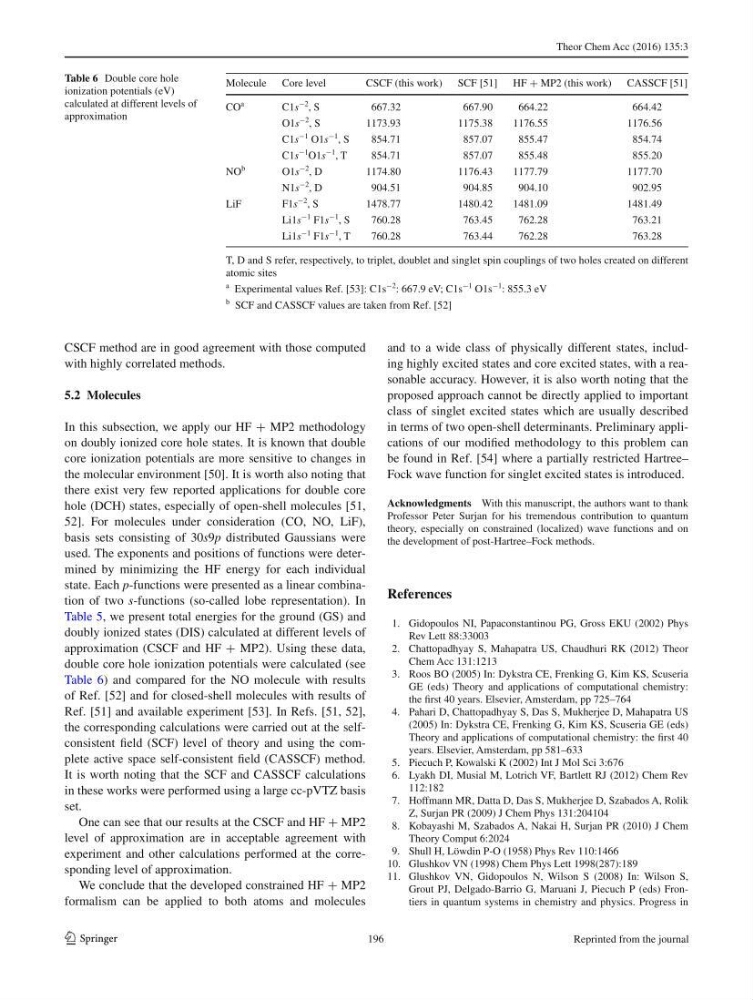
Table 5 , we present total energies for the ground (GS) and
doubly ionized states (DIS) calculated at different levels of
approximation (CSCF and HF + MP2). Using these data,
double core hole ionization potentials were calculated (see
Table 6 ) and compared for the NO molecule with results
of Ref. [ 52 ] and for closed-shell molecules with results of
Ref. [ 51 ] and available experiment [ 53 ]. In Refs. [ 51 , 52 ],
the corresponding calculations were carried out at the selfconsistent fi eld (SCF) level of theory and using the complete active space self-consistent fi eld (CASSCF) method.
It is worth noting that the SCF and CASSCF calculations
in these works were performed using a large cc-pVTZ basis
set.
One can see that our results at the CSCF and HF + MP2
level of approximation are in acceptable agreement with
experiment and other calculations performed at the corresponding level of approximation.
We conclude that the developed constrained HF + MP2
formalism can be applied to both atoms and molecules
and to a wide class of physically different states, including highly excited states and core excited states, with a reasonable accuracy. However, it is also worth noting that the
proposed approach cannot be directly applied to important
class of singlet excited states which are usually described
in terms of two open-shell determinants. Preliminary applications of our modifi ed methodology to this problem can
be found in Ref. [ 54 ] where a partially restricted Hartree–
Fock wave function for singlet excited states is introduced.
Acknowledgments With this manuscript, the authors want to thank
Professor Peter Surjan for his tremendous contribution to quantum
theory, especially on constrained (localized) wave functions and on
the development of post-Hartree–Fock methods.
References
1. Gidopoulos NI, Papaconstantinou PG, Gross EKU (2002) Phys
Rev Lett 88:33003
2. Chattopadhyay S, Mahapatra US, Chaudhuri RK (2012) Theor
Chem Acc 131:1213
3. Roos BO (2005) In: Dykstra CE, Frenking G, Kim KS, Scuseria
GE (eds) Theory and applications of computational chemistry:
the fi rst 40 years. Elsevier, Amsterdam, pp 725–764
4. Pahari D, Chattopadhyay S, Das S, Mukherjee D, Mahapatra US
(2005) In: Dykstra CE, Frenking G, Kim KS, Scuseria GE (eds)
Theory and applications of computational chemistry: the fi rst 40
years. Elsevier, Amsterdam, pp 581–633
5. Piecuch P, Kowalski K (2002) Int J Mol Sci 3:676
6. Lyakh DI, Musial M, Lotrich VF, Bartlett RJ (2012) Chem Rev
112:182
7. Hoffmann MR, Datta D, Das S, Mukherjee D, Szabados A, Rolik
Z, Surjan PR (2009) J Chem Phys 131:204104
8. Kobayashi M, Szabados A, Nakai H, Surjan PR (2010) J Chem
Theory Comput 6:2024
9. Shull H, Löwdin P-O (1958) Phys Rev 110:1466
10. Glushkov VN (1998) Chem Phys Lett 1998(287):189
11. Glushkov VN, Gidopoulos N, Wilson S (2008) In: Wilson S,
Grout PJ, Delgado-Barrio G, Maruani J, Piecuch P (eds) Frontiers in quantum systems in chemistry and physics. Progress in
Table 6 Double core hole
ionization potentials (eV)
calculated at different levels of
approximation
T, D and S refer, respectively, to triplet, doublet and singlet spin couplings of two holes created on different
atomic sites
a Experimental values Ref. [ 53 ]: C1s
−2
: 667.9 eV; C1s
−1 O1s
−1
: 855.3 eV
b SCF and CASSCF values are taken from Ref. [ 52 ]
Molecule Core level
CSCF (this work) SCF [ 51 ] HF + MP2 (this work) CASSCF [ 51 ]
CO
a
C1 s
−2 , S
667.32
667.90
664.22
664.42
O1 s
−2
, S
1173.93
1175.38
1176.55
1176.56
C1 s
−1 O1 s
−1
, S
854.71
857.07
855.47
854.74
C1 s
−1 O1 s
−1
, T
854.71
857.07
855.48
855.20
NO
b
O1 s
−2
, D
1174.80
1176.43
1177.79
1177.70
N1 s
−2
, D
904.51
904.85
904.10
902.95
LiF
F1 s
−2
, S
1478.77
1480.42
1481.09
1481.49
Li1 s
−1 F1 s
−1
, S
760.28
763.45
762.28
763.21
Li1 s
−1 F1 s
−1
, T
760.28
763.44
762.28
763.28
196
Reprinted from the journal
1 3
CSCF method are in good agreement with those computed
with highly correlated methods.
5.2 Molecules
In this subsection, we apply our HF + MP2 methodology
on doubly ionized core hole states. It is known that double
core ionization potentials are more sensitive to changes in
the molecular environment [ 50 ]. It is worth also noting that
there exist very few reported applications for double core
hole (DCH) states, especially of open-shell molecules [ 51 ,
52 ]. For molecules under consideration (CO, NO, LiF),
basis sets consisting of 30 s 9 p distributed Gaussians were
used. The exponents and positions of functions were determined by minimizing the HF energy for each individual
state. Each p -functions were presented as a linear combination of two s -functions (so-called lobe representation). In
Table 5 , we present total energies for the ground (GS) and
doubly ionized states (DIS) calculated at different levels of
approximation (CSCF and HF + MP2). Using these data,
double core hole ionization potentials were calculated (see
Table 6 ) and compared for the NO molecule with results
of Ref. [ 52 ] and for closed-shell molecules with results of
Ref. [ 51 ] and available experiment [ 53 ]. In Refs. [ 51 , 52 ],
the corresponding calculations were carried out at the selfconsistent fi eld (SCF) level of theory and using the complete active space self-consistent fi eld (CASSCF) method.
It is worth noting that the SCF and CASSCF calculations
in these works were performed using a large cc-pVTZ basis
set.
One can see that our results at the CSCF and HF + MP2
level of approximation are in acceptable agreement with
experiment and other calculations performed at the corresponding level of approximation.
We conclude that the developed constrained HF + MP2
formalism can be applied to both atoms and molecules
and to a wide class of physically different states, including highly excited states and core excited states, with a reasonable accuracy. However, it is also worth noting that the
proposed approach cannot be directly applied to important
class of singlet excited states which are usually described
in terms of two open-shell determinants. Preliminary applications of our modifi ed methodology to this problem can
be found in Ref. [ 54 ] where a partially restricted Hartree–
Fock wave function for singlet excited states is introduced.
Acknowledgments With this manuscript, the authors want to thank
Professor Peter Surjan for his tremendous contribution to quantum
theory, especially on constrained (localized) wave functions and on
the development of post-Hartree–Fock methods.
References
1. Gidopoulos NI, Papaconstantinou PG, Gross EKU (2002) Phys
Rev Lett 88:33003
2. Chattopadhyay S, Mahapatra US, Chaudhuri RK (2012) Theor
Chem Acc 131:1213
3. Roos BO (2005) In: Dykstra CE, Frenking G, Kim KS, Scuseria
GE (eds) Theory and applications of computational chemistry:
the fi rst 40 years. Elsevier, Amsterdam, pp 725–764
4. Pahari D, Chattopadhyay S, Das S, Mukherjee D, Mahapatra US
(2005) In: Dykstra CE, Frenking G, Kim KS, Scuseria GE (eds)
Theory and applications of computational chemistry: the fi rst 40
years. Elsevier, Amsterdam, pp 581–633
5. Piecuch P, Kowalski K (2002) Int J Mol Sci 3:676
6. Lyakh DI, Musial M, Lotrich VF, Bartlett RJ (2012) Chem Rev
112:182
7. Hoffmann MR, Datta D, Das S, Mukherjee D, Szabados A, Rolik
Z, Surjan PR (2009) J Chem Phys 131:204104
8. Kobayashi M, Szabados A, Nakai H, Surjan PR (2010) J Chem
Theory Comput 6:2024
9. Shull H, Löwdin P-O (1958) Phys Rev 110:1466
10. Glushkov VN (1998) Chem Phys Lett 1998(287):189
11. Glushkov VN, Gidopoulos N, Wilson S (2008) In: Wilson S,
Grout PJ, Delgado-Barrio G, Maruani J, Piecuch P (eds) Frontiers in quantum systems in chemistry and physics. Progress in
Table 6 Double core hole
ionization potentials (eV)
calculated at different levels of
approximation
T, D and S refer, respectively, to triplet, doublet and singlet spin couplings of two holes created on different
atomic sites
a Experimental values Ref. [ 53 ]: C1s
−2
: 667.9 eV; C1s
−1 O1s
−1
: 855.3 eV
b SCF and CASSCF values are taken from Ref. [ 52 ]
Molecule Core level
CSCF (this work) SCF [ 51 ] HF + MP2 (this work) CASSCF [ 51 ]
CO
a
C1 s
−2 , S
667.32
667.90
664.22
664.42
O1 s
−2
, S
1173.93
1175.38
1176.55
1176.56
C1 s
−1 O1 s
−1
, S
854.71
857.07
855.47
854.74
C1 s
−1 O1 s
−1
, T
854.71
857.07
855.48
855.20
NO
b
O1 s
−2
, D
1174.80
1176.43
1177.79
1177.70
N1 s
−2
, D
904.51
904.85
904.10
902.95
LiF
F1 s
−2
, S
1478.77
1480.42
1481.09
1481.49
Li1 s
−1 F1 s
−1
, S
760.28
763.45
762.28
763.21
Li1 s
−1 F1 s
−1
, T
760.28
763.44
762.28
763.28
196
Reprinted from the journal