

Theor Chem Acc (2015) 134:128
1 3
I 0 =1 10
14 W/cm
2
t pulse =10 fs
0
90
180
t = 2 fs
I(t) = 5.3 10
12 W/cm
2
I 0 =1 10
14 W/cm
2
t pulse =10 fs
0
90
180
t = 12 fs
I(t) = 1.0 10
14 W/cm
2
I 0 =1 10
14 W/cm
2
t pulse =10 fs
0
90
180
t = 24 fs
I(t) = 2.2 10
12 W/cm
2
I 0 =1 10
14 W/cm
2
t pulse =10 fs
0
90
180
t = 36 fs
I(t) = 1.7 10
7 W/cm
2
I 0 =1 10
14 W/cm
2
t pulse =10 fs
0
90
180
t = 42 fs
I(t) = 2.4 10
3 W/cm
2
I 0 =1 10
14 W/cm
2
t pulse =10 fs
0
90
180
t = 48 fs
0.001
3
0.001
0.002
0.005
0.01
0.02
0.05
0.1
0.2
0.5
1
2
0
/2
Orientation,
(rad)
0
/2
Orientation,
(rad)
0
/2
Orientation,
(rad)
0
/2
Orientation,
(rad)
0
/2
Orientation,
(rad)
0
/2
Orientation,
(rad)
Interatomic distance, R (a.u.)
10 20 30 40 50
1 2 3 4 5
Interatomic distance, R (a.u.)
10 20 30 40 50
1 2 3 4 5
Interatomic distance, R (a.u.)
10 20 30 40 50
1 2 3 4 5
Interatomic distance, R (a.u.)
10 20 30 40 50
1 2 3 4 5
Interatomic distance, R (a.u.)
10 20 30 40 50
1 2 3 4 5
Interatomic distance, R (a.u.)
10 20 30 40 50
1 2 3 4 5
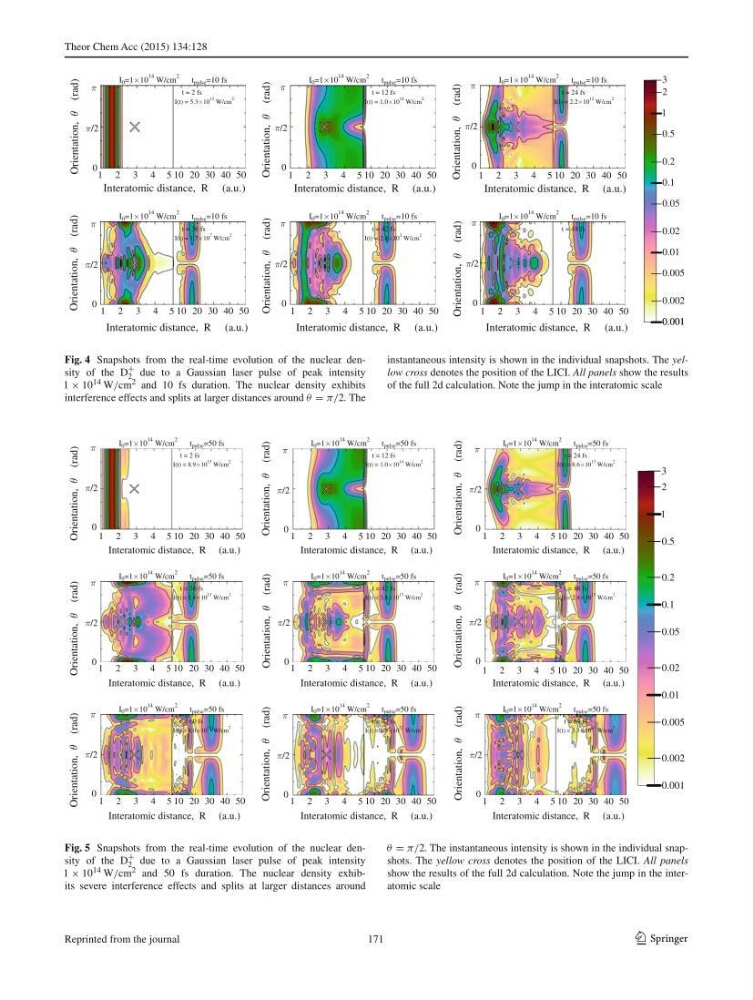
Fig. 4 Snapshots from the real-time evolution of the nuclear density of the D
+
2 due to a Gaussian laser pulse of peak intensity
1 × 10 14 W/cm 2 and 10 fs duration. The nuclear density exhibits
interference effects and splits at larger distances around θ = π/2 . The
instantaneous intensity is shown in the individual snapshots. The yellow cross denotes the position of the LICI. All panels show the results
of the full 2d calculation. Note the jump in the interatomic scale
Interatomic distance, R (a.u.)
I 0 =1 10
14 W/cm
2
t pulse =50 fs
0
90
180
t = 2 fs
I(t) = 8.9 10
13 W/cm
2
Interatomic distance, R (a.u.)
I 0 =1 10
14 W/cm
2
t pulse =50 fs
0
90
180
t = 12 fs
I(t) = 1.0 10
14 W/cm
2
Interatomic distance, R (a.u.)
I 0 =1 10
14 W/cm
2
t pulse =50 fs
0
90
180
t = 24 fs
I(t) = 8.6 10
13 W/cm
2
Interatomic distance, R (a.u.)
I 0 =1 10
14 W/cm
2
t pulse =50 fs
0
90
180
t = 36 fs
I(t) = 5.4 10
13 W/cm
2
Interatomic distance, R (a.u.)
I 0 =1 10
14 W/cm
2
t pulse =50 fs
0
90
180
t = 42 fs
I(t) = 3.8 10
13 W/cm
2
Interatomic distance, R (a.u.)
I 0 =1 10
14 W/cm
2
t pulse =50 fs
0
90
180
t = 48 fs
I(t) = 2.4 10
13 W/cm
2
Interatomic distance, R (a.u.)
I 0 =1 10
14 W/cm
2
t pulse =50 fs
0
90
180
t = 60 fs
I(t) = 8.0 10
12 W/cm
2
Interatomic distance, R (a.u.)
I 0 =1 10
14 W/cm
2
t pulse =50 fs
0
90
180
t = 72 fs
I(t) = 1.9 10
12 W/cm
2
Interatomic distance, R (a.u.)
I 0 =1 10
14 W/cm
2
t pulse =50 fs
0
90
180
t = 84 fs
I(t) = 3.3 10
11 W/cm
2
3
0.001
0.002
0.005
0.01
0.02
0.05
0.1
0.2
0.5
1
2
10 20 30 40 50
1 2 3 4 5
10 20 30 40 50
1 2 3 4 5
10 20 30 40 50
1 2 3 4 5
10 20 30 40 50
1 2 3 4 5
10 20 30 40 50
1 2 3 4 5
10 20 30 40 50
1 2 3 4 5
10 20 30 40 50
1 2 3 4 5
10 20 30 40 50
1 2 3 4 5
10 20 30 40 50
1 2 3 4 5
0
/2
Orientation,
(rad)
0
/2
Orientation,
(rad)
0
/2
Orientation,
(rad)
0
/2
Orientation,
(rad)
0
/2
Orientation,
(rad)
0
/2
Orientation,
(rad)
0
/2
Orientation,
(rad)
0
/2
Orientation,
(rad)
0
/2
Orientation,
(rad)
Fig. 5 Snapshots from the real-time evolution of the nuclear density of the D
+
2 due to a Gaussian laser pulse of peak intensity
1 × 10 14 W/cm 2 and 50 fs duration. The nuclear density exhibits severe interference effects and splits at larger distances around
θ = π/2 . The instantaneous intensity is shown in the individual snapshots. The yellow cross denotes the position of the LICI. All panels
show the results of the full 2d calculation. Note the jump in the interatomic scale
171
Reprinted from the journal
1 3
I 0 =1 10
14 W/cm
2
t pulse =10 fs
0
90
180
t = 2 fs
I(t) = 5.3 10
12 W/cm
2
I 0 =1 10
14 W/cm
2
t pulse =10 fs
0
90
180
t = 12 fs
I(t) = 1.0 10
14 W/cm
2
I 0 =1 10
14 W/cm
2
t pulse =10 fs
0
90
180
t = 24 fs
I(t) = 2.2 10
12 W/cm
2
I 0 =1 10
14 W/cm
2
t pulse =10 fs
0
90
180
t = 36 fs
I(t) = 1.7 10
7 W/cm
2
I 0 =1 10
14 W/cm
2
t pulse =10 fs
0
90
180
t = 42 fs
I(t) = 2.4 10
3 W/cm
2
I 0 =1 10
14 W/cm
2
t pulse =10 fs
0
90
180
t = 48 fs
0.001
3
0.001
0.002
0.005
0.01
0.02
0.05
0.1
0.2
0.5
1
2
0
/2
Orientation,
(rad)
0
/2
Orientation,
(rad)
0
/2
Orientation,
(rad)
0
/2
Orientation,
(rad)
0
/2
Orientation,
(rad)
0
/2
Orientation,
(rad)
Interatomic distance, R (a.u.)
10 20 30 40 50
1 2 3 4 5
Interatomic distance, R (a.u.)
10 20 30 40 50
1 2 3 4 5
Interatomic distance, R (a.u.)
10 20 30 40 50
1 2 3 4 5
Interatomic distance, R (a.u.)
10 20 30 40 50
1 2 3 4 5
Interatomic distance, R (a.u.)
10 20 30 40 50
1 2 3 4 5
Interatomic distance, R (a.u.)
10 20 30 40 50
1 2 3 4 5
Fig. 4 Snapshots from the real-time evolution of the nuclear density of the D
+
2 due to a Gaussian laser pulse of peak intensity
1 × 10 14 W/cm 2 and 10 fs duration. The nuclear density exhibits
interference effects and splits at larger distances around θ = π/2 . The
instantaneous intensity is shown in the individual snapshots. The yellow cross denotes the position of the LICI. All panels show the results
of the full 2d calculation. Note the jump in the interatomic scale
Interatomic distance, R (a.u.)
I 0 =1 10
14 W/cm
2
t pulse =50 fs
0
90
180
t = 2 fs
I(t) = 8.9 10
13 W/cm
2
Interatomic distance, R (a.u.)
I 0 =1 10
14 W/cm
2
t pulse =50 fs
0
90
180
t = 12 fs
I(t) = 1.0 10
14 W/cm
2
Interatomic distance, R (a.u.)
I 0 =1 10
14 W/cm
2
t pulse =50 fs
0
90
180
t = 24 fs
I(t) = 8.6 10
13 W/cm
2
Interatomic distance, R (a.u.)
I 0 =1 10
14 W/cm
2
t pulse =50 fs
0
90
180
t = 36 fs
I(t) = 5.4 10
13 W/cm
2
Interatomic distance, R (a.u.)
I 0 =1 10
14 W/cm
2
t pulse =50 fs
0
90
180
t = 42 fs
I(t) = 3.8 10
13 W/cm
2
Interatomic distance, R (a.u.)
I 0 =1 10
14 W/cm
2
t pulse =50 fs
0
90
180
t = 48 fs
I(t) = 2.4 10
13 W/cm
2
Interatomic distance, R (a.u.)
I 0 =1 10
14 W/cm
2
t pulse =50 fs
0
90
180
t = 60 fs
I(t) = 8.0 10
12 W/cm
2
Interatomic distance, R (a.u.)
I 0 =1 10
14 W/cm
2
t pulse =50 fs
0
90
180
t = 72 fs
I(t) = 1.9 10
12 W/cm
2
Interatomic distance, R (a.u.)
I 0 =1 10
14 W/cm
2
t pulse =50 fs
0
90
180
t = 84 fs
I(t) = 3.3 10
11 W/cm
2
3
0.001
0.002
0.005
0.01
0.02
0.05
0.1
0.2
0.5
1
2
10 20 30 40 50
1 2 3 4 5
10 20 30 40 50
1 2 3 4 5
10 20 30 40 50
1 2 3 4 5
10 20 30 40 50
1 2 3 4 5
10 20 30 40 50
1 2 3 4 5
10 20 30 40 50
1 2 3 4 5
10 20 30 40 50
1 2 3 4 5
10 20 30 40 50
1 2 3 4 5
10 20 30 40 50
1 2 3 4 5
0
/2
Orientation,
(rad)
0
/2
Orientation,
(rad)
0
/2
Orientation,
(rad)
0
/2
Orientation,
(rad)
0
/2
Orientation,
(rad)
0
/2
Orientation,
(rad)
0
/2
Orientation,
(rad)
0
/2
Orientation,
(rad)
0
/2
Orientation,
(rad)
Fig. 5 Snapshots from the real-time evolution of the nuclear density of the D
+
2 due to a Gaussian laser pulse of peak intensity
1 × 10 14 W/cm 2 and 50 fs duration. The nuclear density exhibits severe interference effects and splits at larger distances around
θ = π/2 . The instantaneous intensity is shown in the individual snapshots. The yellow cross denotes the position of the LICI. All panels
show the results of the full 2d calculation. Note the jump in the interatomic scale
171
Reprinted from the journal