

effect exerted by the hydride ligand. When one of the positions trans to the bridging
hydride is blocked, namely, by orthometallation of a vinyl ligand, the reaction
operates by a mononuclear catalytic cycle [64]. This results in a new product
selectivity since 1,2-diphenylethane is obtained instead of stilbene (vide supra). The
formation of 1,2-diphenylethane has been rationalized as a consequence of the
thwarted dissociation of stilbene, which does not experience the trans labilization
effect of the hydride ligand across the bimetallic core described above for its precursor
(Scheme 26). This hindered release of the alkene in the mononuclear mechanism also
explains the higher reaction rates obtained for the analogous binuclear mechanism.
The activity of complex [Ir 2 (CH 3 CN)(H) 3 (μ-H)(P
i
Pr 3 ) 2 (μ-Pz) 2 ] as a catalyst for
the hydrogenation of diphenylacetylene and ethylene contrasts with its inactivity
when employed in the hydrogenation of N-benzylideneaniline. However, when
transformed into its protonated derivative, for example, [Ir 2 (CH 3 CN)(H) 2 (H 2 )
(μ-H)(P
i
Pr 3 ) 2 (μ-Pz) 2 ]BF 4 by reaction with HBF 4 , the new complex becomes a
very active catalyst for C¼N hydrogenation [111]. The catalytic cycle involves
fast elementary steps of hydride and proton transfer according to an ionic outer
sphere mechanism that takes place at one of the iridium centers of the binuclear
complex (Scheme 27).
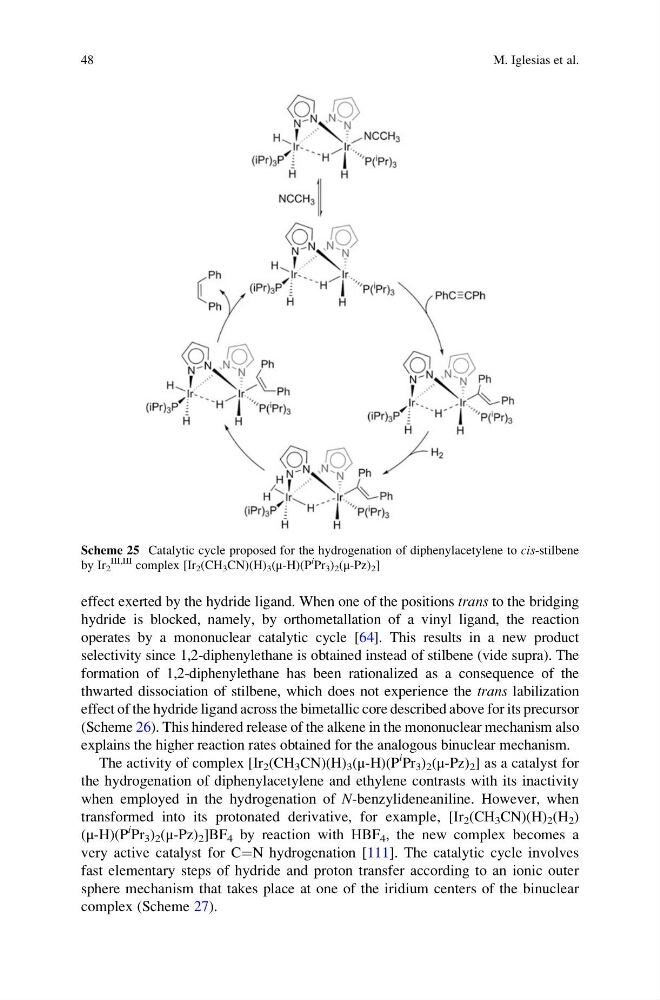
Scheme 25 Catalytic cycle proposed for the hydrogenation of diphenylacetylene to cis-stilbene
by Ir 2
III,III complex [Ir 2 (CH 3 CN)(H) 3 (μ-H)(P
i Pr 3 ) 2 (μ-Pz) 2 ]
48
M. Iglesias et al.
hydride is blocked, namely, by orthometallation of a vinyl ligand, the reaction
operates by a mononuclear catalytic cycle [64]. This results in a new product
selectivity since 1,2-diphenylethane is obtained instead of stilbene (vide supra). The
formation of 1,2-diphenylethane has been rationalized as a consequence of the
thwarted dissociation of stilbene, which does not experience the trans labilization
effect of the hydride ligand across the bimetallic core described above for its precursor
(Scheme 26). This hindered release of the alkene in the mononuclear mechanism also
explains the higher reaction rates obtained for the analogous binuclear mechanism.
The activity of complex [Ir 2 (CH 3 CN)(H) 3 (μ-H)(P
i
Pr 3 ) 2 (μ-Pz) 2 ] as a catalyst for
the hydrogenation of diphenylacetylene and ethylene contrasts with its inactivity
when employed in the hydrogenation of N-benzylideneaniline. However, when
transformed into its protonated derivative, for example, [Ir 2 (CH 3 CN)(H) 2 (H 2 )
(μ-H)(P
i
Pr 3 ) 2 (μ-Pz) 2 ]BF 4 by reaction with HBF 4 , the new complex becomes a
very active catalyst for C¼N hydrogenation [111]. The catalytic cycle involves
fast elementary steps of hydride and proton transfer according to an ionic outer
sphere mechanism that takes place at one of the iridium centers of the binuclear
complex (Scheme 27).
Scheme 25 Catalytic cycle proposed for the hydrogenation of diphenylacetylene to cis-stilbene
by Ir 2
III,III complex [Ir 2 (CH 3 CN)(H) 3 (μ-H)(P
i Pr 3 ) 2 (μ-Pz) 2 ]
48
M. Iglesias et al.