

with a photosensitizer. This means that the catalyst requires a mild reduction
potential, since extreme potentials cannot be generated by typical photosensitizers.
This requirement eliminates many standard hydrogenase-inspired models such as
phosphine-substituted variants of diironhexacarbonyl complexes and highlights the
importance of overpotential. In addition, low overpotential for the catalytic reaction
is also highly desirable so that catalysis can be driven by visible, as opposed to
ultraviolet, light. It is also worth noting that the electrons for the reduction are
usually provided by a sacrificial reductant and poor interactions between the
reductant and the photosensitizer can also limit catalytic performance. Finally,
many reported systems are limited not by the rates of the catalysts but rather by
catalyst and photosensitizer stability. Essentially, the entire system must be stable
in the harsh conditions of constant illumination and acidity. This is a challenge both
for the traditional ironcarbonyl catalysts, since the CO ligands tend to be
photolabile, and for commonly used Ru polypyridyl photosensitizers.
The first three-component hydrogen production systems, i.e., catalyst, photosensitizer, and sacrificial electron donor, employing a diiron dithiolate-type catalyst
were reported by Song and coworkers [129, 130]. Drawing from the extensive
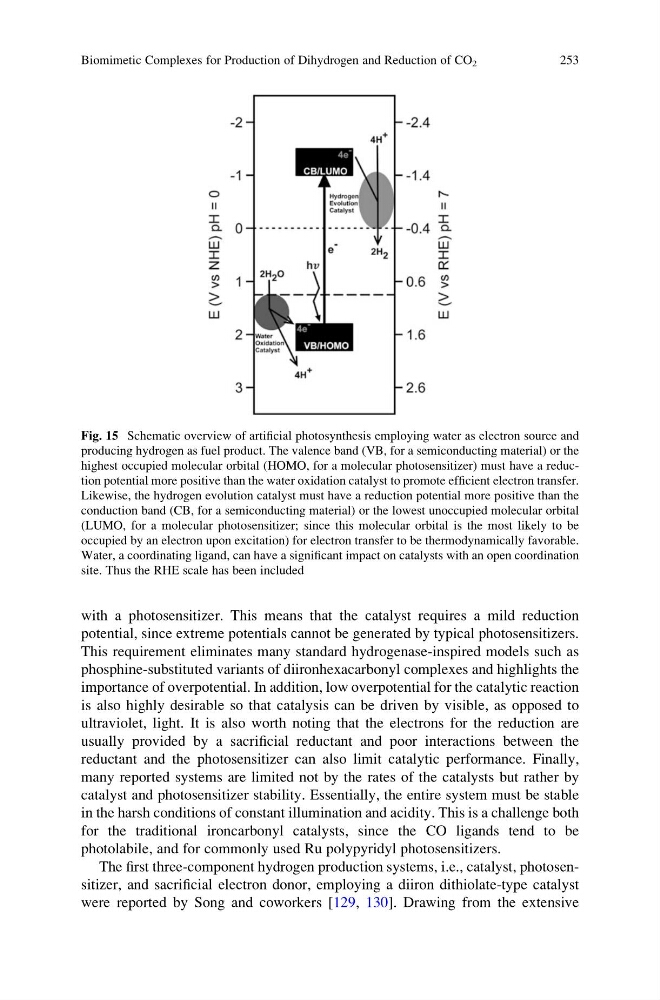
Fig. 15 Schematic overview of artificial photosynthesis employing water as electron source and
producing hydrogen as fuel product. The valence band (VB, for a semiconducting material) or the
highest occupied molecular orbital (HOMO, for a molecular photosensitizer) must have a reduction potential more positive than the water oxidation catalyst to promote efficient electron transfer.
Likewise, the hydrogen evolution catalyst must have a reduction potential more positive than the
conduction band (CB, for a semiconducting material) or the lowest unoccupied molecular orbital
(LUMO, for a molecular photosensitizer; since this molecular orbital is the most likely to be
occupied by an electron upon excitation) for electron transfer to be thermodynamically favorable.
Water, a coordinating ligand, can have a significant impact on catalysts with an open coordination
site. Thus the RHE scale has been included
Biomimetic Complexes for Production of Dihydrogen and Reduction of CO 2
253
potential, since extreme potentials cannot be generated by typical photosensitizers.
This requirement eliminates many standard hydrogenase-inspired models such as
phosphine-substituted variants of diironhexacarbonyl complexes and highlights the
importance of overpotential. In addition, low overpotential for the catalytic reaction
is also highly desirable so that catalysis can be driven by visible, as opposed to
ultraviolet, light. It is also worth noting that the electrons for the reduction are
usually provided by a sacrificial reductant and poor interactions between the
reductant and the photosensitizer can also limit catalytic performance. Finally,
many reported systems are limited not by the rates of the catalysts but rather by
catalyst and photosensitizer stability. Essentially, the entire system must be stable
in the harsh conditions of constant illumination and acidity. This is a challenge both
for the traditional ironcarbonyl catalysts, since the CO ligands tend to be
photolabile, and for commonly used Ru polypyridyl photosensitizers.
The first three-component hydrogen production systems, i.e., catalyst, photosensitizer, and sacrificial electron donor, employing a diiron dithiolate-type catalyst
were reported by Song and coworkers [129, 130]. Drawing from the extensive
Fig. 15 Schematic overview of artificial photosynthesis employing water as electron source and
producing hydrogen as fuel product. The valence band (VB, for a semiconducting material) or the
highest occupied molecular orbital (HOMO, for a molecular photosensitizer) must have a reduction potential more positive than the water oxidation catalyst to promote efficient electron transfer.
Likewise, the hydrogen evolution catalyst must have a reduction potential more positive than the
conduction band (CB, for a semiconducting material) or the lowest unoccupied molecular orbital
(LUMO, for a molecular photosensitizer; since this molecular orbital is the most likely to be
occupied by an electron upon excitation) for electron transfer to be thermodynamically favorable.
Water, a coordinating ligand, can have a significant impact on catalysts with an open coordination
site. Thus the RHE scale has been included
Biomimetic Complexes for Production of Dihydrogen and Reduction of CO 2
253