

2.4 Dual Catalysis from “Neighbor” Metals
Combination of two different metals has a great potential in this field considering that
the two metals can produce different and complementary tasks simultaneously or
consecutively. If we start with combination from “neighbor” metals, the main progress
in this field has been made in using two separate metal-based catalysts. An early
example is the Sonogashira reaction which consists in coupling aryl halides with
terminal alkynes in the presence of catalytic amount of Pd and Cu (Scheme 15, Eq. 1)
[64, 65]. In this cooperative dual catalytic reaction, the palladium catalyzes activation
of the aryl halide, while copper activates the alkyne to form an acetylide and transfer it
to palladium via transmetalation process. Other very elegant examples demonstrate
the potential of this research area, among which one can cite the enantioselective
allylic alkylation of α-cyanoesters promoted by the Rh/Pd system described by Ito
(Scheme 15, Eq. 2) [66]. When in this reaction rhodium was omitted, high yields were
obtained but no enantiomeric excess was found, and in the absence of palladium, no
conversion was observed. A transition state (16-TS), which involves the nucleophilic
attack of the rhodium enolate to the π-allylpalladium complex, has been proposed.
Goossen has described a Pd/Cu catalyzed decarboxylative biaryl synthesis from
aromatic carboxylates and aryl halides or pseudohalides (Scheme 15, Eq. 3)
[67]. In this reaction, palladium complex activates aryl triflate, while decarboxylation
from the carboxylate is mediated by the copper system, giving rise to aryl palladium
and aryl copper species. In a transmetalation step, a diaryl-Pd species is formed that
liberates the biaryl product via reductive elimination. Synergetic effects have been
observed by Hidai using bimetallic Co/Ru system for the hydroformylation of olefins
(Scheme 15, Eq. 4) [68]. The rate of the hydroformylation of cyclohexene using a Ru:
Rh
Et 2 P
P
P
PEt 2
Ph
Ph
Rh
2+
P
Et 2 P
Rh
C
Rh
C
H
H
P
PEt 2
CO
OC
Ph
Ph
O
O
2+
rac-13
rac-14
+ H 2 /CO
6 bar (1:1)
cat. rac-13 (0.11 mol%)
acetone, 90°C, 3h
H
O
+
O
H
n
iso
85% conversion
n:i = 27.5:1
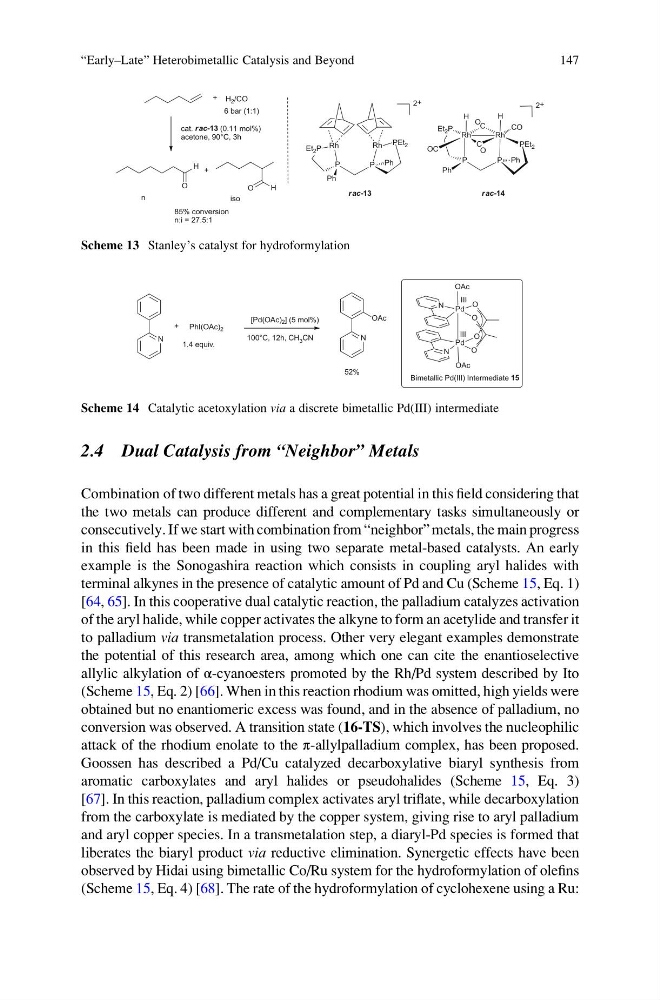
Scheme 13 Stanley’s catalyst for hydroformylation
N
N
OAc
PhI(OAc) 2
+
N
Pd
OAc
N
Pd
OAc
O
O
O
O
III
III
Bimetallic Pd(III) Intermediate 15
1.4 equiv.
100°C, 12h, CH 3 CN
[Pd(OAc) 2 ] (5 mol%)
52%
Scheme 14 Catalytic acetoxylation via a discrete bimetallic Pd(III) intermediate
“Early–Late” Heterobimetallic Catalysis and Beyond
147
Combination of two different metals has a great potential in this field considering that
the two metals can produce different and complementary tasks simultaneously or
consecutively. If we start with combination from “neighbor” metals, the main progress
in this field has been made in using two separate metal-based catalysts. An early
example is the Sonogashira reaction which consists in coupling aryl halides with
terminal alkynes in the presence of catalytic amount of Pd and Cu (Scheme 15, Eq. 1)
[64, 65]. In this cooperative dual catalytic reaction, the palladium catalyzes activation
of the aryl halide, while copper activates the alkyne to form an acetylide and transfer it
to palladium via transmetalation process. Other very elegant examples demonstrate
the potential of this research area, among which one can cite the enantioselective
allylic alkylation of α-cyanoesters promoted by the Rh/Pd system described by Ito
(Scheme 15, Eq. 2) [66]. When in this reaction rhodium was omitted, high yields were
obtained but no enantiomeric excess was found, and in the absence of palladium, no
conversion was observed. A transition state (16-TS), which involves the nucleophilic
attack of the rhodium enolate to the π-allylpalladium complex, has been proposed.
Goossen has described a Pd/Cu catalyzed decarboxylative biaryl synthesis from
aromatic carboxylates and aryl halides or pseudohalides (Scheme 15, Eq. 3)
[67]. In this reaction, palladium complex activates aryl triflate, while decarboxylation
from the carboxylate is mediated by the copper system, giving rise to aryl palladium
and aryl copper species. In a transmetalation step, a diaryl-Pd species is formed that
liberates the biaryl product via reductive elimination. Synergetic effects have been
observed by Hidai using bimetallic Co/Ru system for the hydroformylation of olefins
(Scheme 15, Eq. 4) [68]. The rate of the hydroformylation of cyclohexene using a Ru:
Rh
Et 2 P
P
P
PEt 2
Ph
Ph
Rh
2+
P
Et 2 P
Rh
C
Rh
C
H
H
P
PEt 2
CO
OC
Ph
Ph
O
O
2+
rac-13
rac-14
+ H 2 /CO
6 bar (1:1)
cat. rac-13 (0.11 mol%)
acetone, 90°C, 3h
H
O
+
O
H
n
iso
85% conversion
n:i = 27.5:1
Scheme 13 Stanley’s catalyst for hydroformylation
N
N
OAc
PhI(OAc) 2
+
N
Pd
OAc
N
Pd
OAc
O
O
O
O
III
III
Bimetallic Pd(III) Intermediate 15
1.4 equiv.
100°C, 12h, CH 3 CN
[Pd(OAc) 2 ] (5 mol%)
52%
Scheme 14 Catalytic acetoxylation via a discrete bimetallic Pd(III) intermediate
“Early–Late” Heterobimetallic Catalysis and Beyond
147