

3 Cycloaddition with Azides, Alkynes, Alkenes and Allenes
3.1 Azide–Alkyne Cycloaddition
The copper-catalysed azide–alkyne cycloaddition reaction is a reliable and robust
synthetic method for covalently linking a diverse range of molecular building
blocks [41, 42], bioconjugation [43] and organic synthesis [44–48]. The reaction
proceeds in a highly selective single step, under mild reaction conditions, and is
successful in the presence of a wide range of other functional groups. It has only
recently been established that this reaction proceeds through the mechanism shown
in Scheme 9, whereby η
2 -coordination of a second Cu centre to the Cu–acetylide
complex forms intermediate 20 [49]. Nucleophilic attack at N-3 of the azide by the
Ru
*Cp
Cp*
Cl
SR
Ru
RS
Ru
*Cp
Cp*
Cl
SR
C
Ru
RS
BF 4
C
H HC
Ru
*Cp
Cp*
Cl
SR
C
Ru
RS
BF 4
C
HC C CHR'OH
H 2 O
OH
R'
C
H
R'
Ru
*Cp
Cp*
Cl
SR
C
Ru
RS
BF 4
C
H
H
C
19
OEt
R'
EtOH
HC C CHR'OEt
Ru
*Cp
Cp*
Cl
SR
Cl
Ru
RS
7 (R= alkyl)
HC
C H
C OEt
R'
NH 4 BF 4 +
HC C CHR'OH
R
OH
R
OEt
EtOH
+ 7 (cat.)
R
NH
R
O
R
O
Ar
etc.
a)
b)
ArNH 2
O
O
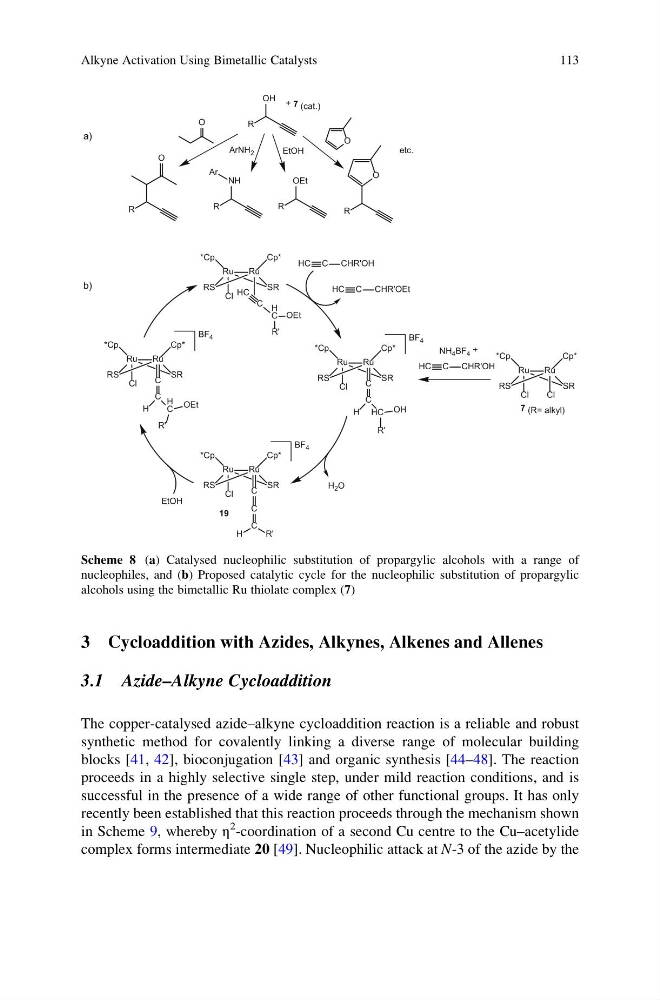
Scheme 8 (a) Catalysed nucleophilic substitution of propargylic alcohols with a range of
nucleophiles, and (b) Proposed catalytic cycle for the nucleophilic substitution of propargylic
alcohols using the bimetallic Ru thiolate complex (7)
Alkyne Activation Using Bimetallic Catalysts
113
3.1 Azide–Alkyne Cycloaddition
The copper-catalysed azide–alkyne cycloaddition reaction is a reliable and robust
synthetic method for covalently linking a diverse range of molecular building
blocks [41, 42], bioconjugation [43] and organic synthesis [44–48]. The reaction
proceeds in a highly selective single step, under mild reaction conditions, and is
successful in the presence of a wide range of other functional groups. It has only
recently been established that this reaction proceeds through the mechanism shown
in Scheme 9, whereby η
2 -coordination of a second Cu centre to the Cu–acetylide
complex forms intermediate 20 [49]. Nucleophilic attack at N-3 of the azide by the
Ru
*Cp
Cp*
Cl
SR
Ru
RS
Ru
*Cp
Cp*
Cl
SR
C
Ru
RS
BF 4
C
H HC
Ru
*Cp
Cp*
Cl
SR
C
Ru
RS
BF 4
C
HC C CHR'OH
H 2 O
OH
R'
C
H
R'
Ru
*Cp
Cp*
Cl
SR
C
Ru
RS
BF 4
C
H
H
C
19
OEt
R'
EtOH
HC C CHR'OEt
Ru
*Cp
Cp*
Cl
SR
Cl
Ru
RS
7 (R= alkyl)
HC
C H
C OEt
R'
NH 4 BF 4 +
HC C CHR'OH
R
OH
R
OEt
EtOH
+ 7 (cat.)
R
NH
R
O
R
O
Ar
etc.
a)
b)
ArNH 2
O
O
Scheme 8 (a) Catalysed nucleophilic substitution of propargylic alcohols with a range of
nucleophiles, and (b) Proposed catalytic cycle for the nucleophilic substitution of propargylic
alcohols using the bimetallic Ru thiolate complex (7)
Alkyne Activation Using Bimetallic Catalysts
113