

2.5 Self-Consistent All Order Constricted Variational
Density Functional Theory with Orbital Relaxation
In the description of the excited state by the SCF-CV(1)-DFT scheme all occupied
β-orbitals are unchanged (frozen) from the ground state and the same is the case for
a number of α-orbitals which do not directly participate in the transition. Thus in the
case of the n σ ! π* transitions, all α-orbitals other than n σ , π * are frozen. To
remedy this, we allow in the RSCF-CV(1)-DFT [26] scheme for a relaxation to
second order in the mixing matrix R
σσ
σ ¼ α, β
ð
Þ of all occupied orbitals in the
excited state [26]. Thus,
ψ
σ
i 1
ð Þ ! ϕ
σ
i 1
ð Þ þ
X
vir=2
c
R
σσ
ci ϕ
σ
c 1
ð Þ À
1
2
X
vir=2
c
X
occ=2
k
R
σσ
ci R
σσ
ck ϕ
σ
k 1
ð Þ þ O
3
ð Þ R
σ
½
ð40aÞ
ψ
σ
a 1
ð Þ ! ϕ
σ
a 1
ð Þ À
X
vir=2
k
R
σσ
ak ϕ
σ
k 1
ð Þ À
1
2
X
vir=2
c
X
occ=2
k
R
σσ
ak R
σσ
ck ϕ
σ
c 1
ð Þ þ O
3
ð Þ R
σσ
½ ð40bÞ
Replacing in (2a) the matrix U ˜ which combines occupied and virtual orbitals of
the unrelaxed set ϕ q ; q ¼ 1, occ þ vir
È
É
with the corresponding matrix U which
mixes the occupied and virtual orbitals of the relaxed basis ψ q ; q ¼ 1, occ þ vir
È
É
leads to the unitary transformation
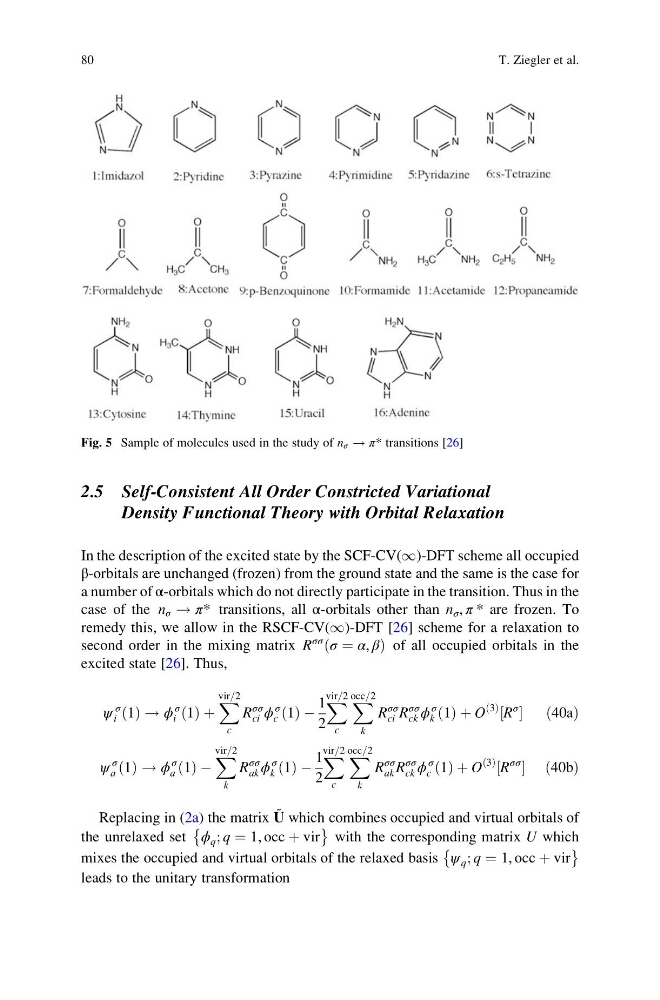
Fig. 5 Sample of molecules used in the study of n σ ! π* transitions [26]
80
T. Ziegler et al.
Density Functional Theory with Orbital Relaxation
In the description of the excited state by the SCF-CV(1)-DFT scheme all occupied
β-orbitals are unchanged (frozen) from the ground state and the same is the case for
a number of α-orbitals which do not directly participate in the transition. Thus in the
case of the n σ ! π* transitions, all α-orbitals other than n σ , π * are frozen. To
remedy this, we allow in the RSCF-CV(1)-DFT [26] scheme for a relaxation to
second order in the mixing matrix R
σσ
σ ¼ α, β
ð
Þ of all occupied orbitals in the
excited state [26]. Thus,
ψ
σ
i 1
ð Þ ! ϕ
σ
i 1
ð Þ þ
X
vir=2
c
R
σσ
ci ϕ
σ
c 1
ð Þ À
1
2
X
vir=2
c
X
occ=2
k
R
σσ
ci R
σσ
ck ϕ
σ
k 1
ð Þ þ O
3
ð Þ R
σ
½
ð40aÞ
ψ
σ
a 1
ð Þ ! ϕ
σ
a 1
ð Þ À
X
vir=2
k
R
σσ
ak ϕ
σ
k 1
ð Þ À
1
2
X
vir=2
c
X
occ=2
k
R
σσ
ak R
σσ
ck ϕ
σ
c 1
ð Þ þ O
3
ð Þ R
σσ
½ ð40bÞ
Replacing in (2a) the matrix U ˜ which combines occupied and virtual orbitals of
the unrelaxed set ϕ q ; q ¼ 1, occ þ vir
È
É
with the corresponding matrix U which
mixes the occupied and virtual orbitals of the relaxed basis ψ q ; q ¼ 1, occ þ vir
È
É
leads to the unitary transformation
Fig. 5 Sample of molecules used in the study of n σ ! π* transitions [26]
80
T. Ziegler et al.