

and
1 L b are given in Table 2 for TDDFT, CV(2)-TD, and CV(1)-TD based on
LDA.
1 L a CV(1)-TD with an RMSD of 0.24 eV is seen to perform better than CV
(2)-TD (RMSD ¼ 0.40 eV) and especially TDDFT (0.52 eV). In fact our results are
of a similar quality to the best results obtained by long-range corrected (LRC)
functionals [79]. We note again that the
1 L a transitions involves a single
HOMO ! LUMO orbital displacement with γ i ¼ π=2. For
1 L b all three methods
perform equally well with RMSDs of 0.16 eV (TDDFT), 0.15 eV(CV(2)-TD), and
0.19 eV (P-CV(1)-DFT), respectively. It is interesting to note that the LRCfunctionals [79] in this case perform much more poorly with RMSDs around
0.4 eV. Thus, CV(1)-TD at the simple LDA level is the only scheme of the
methods discussed here which gives a balanced description of π ! π* transitions
involving a single orbital displacement (
1 L a ) and π ! π
* transitions with more than
one displacement.
Table 3 CV(1)-TD singlet excitation energies (in eV) for linear acenes with LDA
Number of rings
Experiment
a
CV(1)-TD
1
B 2u
1
B 3u
ΔE
b
1
B 2u
1
B 3u
ΔE
b
2
4.66
4.13
0.53
4.73
4.39
0.34
3
3.60
3.64
À0.04
3.68
3.73
À0.05
4
2.88
3.39
À0.51
2.91
3.32
À0.41
5
2.37
3.12
À0.75
2.35
3.03
À0.68
6
2.02
2.87
À0.85
1.93
2.82
À0.89
a
Platt [74]
b
ΔE ¼ ΔE(
1
B 2u ) À ΔE(
1
B 3u )
1
3
2
4
5
6
7
8
9
10
11
12
13
14
15
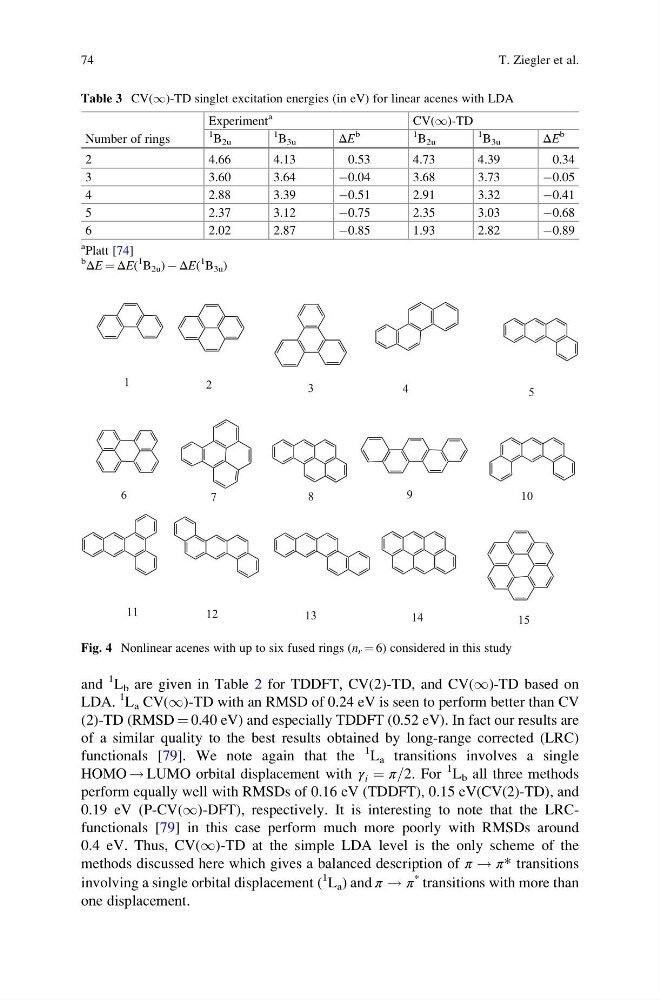
Fig. 4 Nonlinear acenes with up to six fused rings (n r ¼ 6) considered in this study
74
T. Ziegler et al.
1 L b are given in Table 2 for TDDFT, CV(2)-TD, and CV(1)-TD based on
LDA.
1 L a CV(1)-TD with an RMSD of 0.24 eV is seen to perform better than CV
(2)-TD (RMSD ¼ 0.40 eV) and especially TDDFT (0.52 eV). In fact our results are
of a similar quality to the best results obtained by long-range corrected (LRC)
functionals [79]. We note again that the
1 L a transitions involves a single
HOMO ! LUMO orbital displacement with γ i ¼ π=2. For
1 L b all three methods
perform equally well with RMSDs of 0.16 eV (TDDFT), 0.15 eV(CV(2)-TD), and
0.19 eV (P-CV(1)-DFT), respectively. It is interesting to note that the LRCfunctionals [79] in this case perform much more poorly with RMSDs around
0.4 eV. Thus, CV(1)-TD at the simple LDA level is the only scheme of the
methods discussed here which gives a balanced description of π ! π* transitions
involving a single orbital displacement (
1 L a ) and π ! π
* transitions with more than
one displacement.
Table 3 CV(1)-TD singlet excitation energies (in eV) for linear acenes with LDA
Number of rings
Experiment
a
CV(1)-TD
1
B 2u
1
B 3u
ΔE
b
1
B 2u
1
B 3u
ΔE
b
2
4.66
4.13
0.53
4.73
4.39
0.34
3
3.60
3.64
À0.04
3.68
3.73
À0.05
4
2.88
3.39
À0.51
2.91
3.32
À0.41
5
2.37
3.12
À0.75
2.35
3.03
À0.68
6
2.02
2.87
À0.85
1.93
2.82
À0.89
a
Platt [74]
b
ΔE ¼ ΔE(
1
B 2u ) À ΔE(
1
B 3u )
1
3
2
4
5
6
7
8
9
10
11
12
13
14
15
Fig. 4 Nonlinear acenes with up to six fused rings (n r ¼ 6) considered in this study
74
T. Ziegler et al.