

Using Linear Programming to Optimize Process Configurations
Linear programming is a technique to solve complex problems having multivariable conditions by the use of linear equations. The equations are developed to define
the interrelationship of the variables. Computers are used to solve these equations
and to select from a matrix of these equations the solution or solutions to the
problem.
This is not a new technique. It has been used for many years in industry and
particularly the oil industry to plan and optimize its operation. Indeed, in oil refining
today, there is considerable development in process control using linear programming “online” to optimize the unit operation. In its use as a management tool, it can
refine the calculations described in this chapter to a very fine degree. It is possible
also by using this technique to examine many more options than could be examined
in a manual operation.
The first objective using this technique is to build a mathematical model that
fully defines the problem. The main model constitutes the “objective function.” The
purpose of linear programming is to either maximize or minimize the objective
function (e.g., maximize overall profit or minimize overall costs) subject to a
number of constraints. The model itself will consist of many submodels which
will be interrelated by linear equations. In the case of an oil refinery configuration
study, the data for the model development will include:
10
-40
-20
0
20
40
60
Net Present Worth
ROI = 20.5
80
100
120
15
20
25
Percentage Discount
30
35
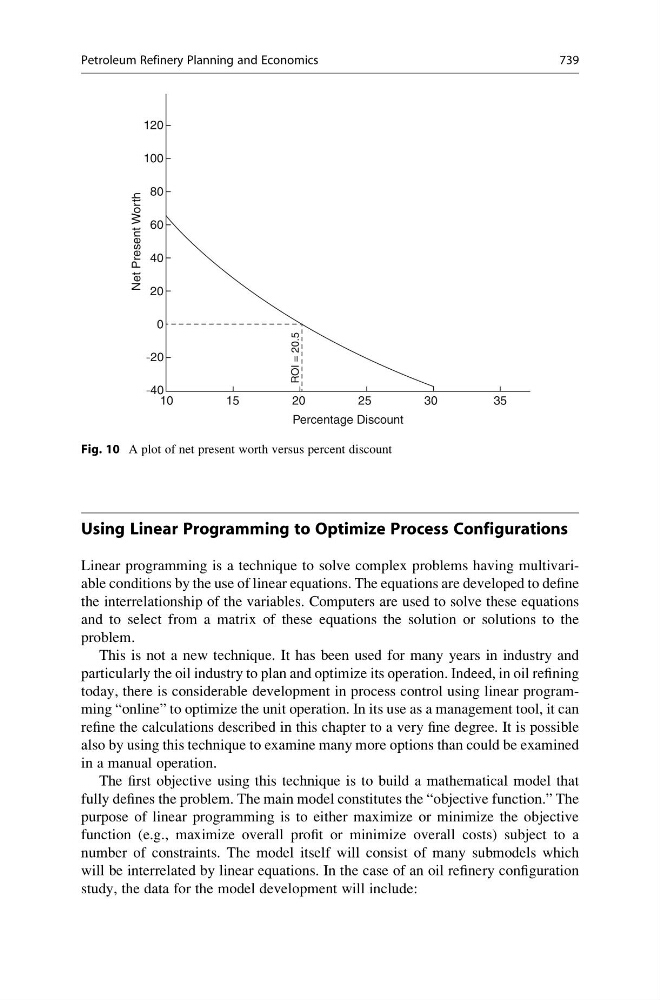
Fig. 10 A plot of net present worth versus percent discount
Petroleum Refinery Planning and Economics
739