

The equilibrium can be calculated from the furnace inlet composition and outlet
pressure and temperature using published SMR and water-gas shift K values. These
data are available, for instance, in Catalyst Handbook (by Katalco, SpringerVerlag, NY, 1970) as Tables 2 and 3 of the Appendices to that book. Be sure you
look carefully at the form of the K SMR equation to get the right direction for the
reaction you are calculating.
For convenience, the charts have been converted to equations relating K SMR and
temperatures below:
SMR reaction:
K SMR ¼ P CO Â P H 2
3
Â
Ã
= P CH 4 Â P H 2 O
½
(11)
where partial pressures are in atmospheres and temperature is
C.
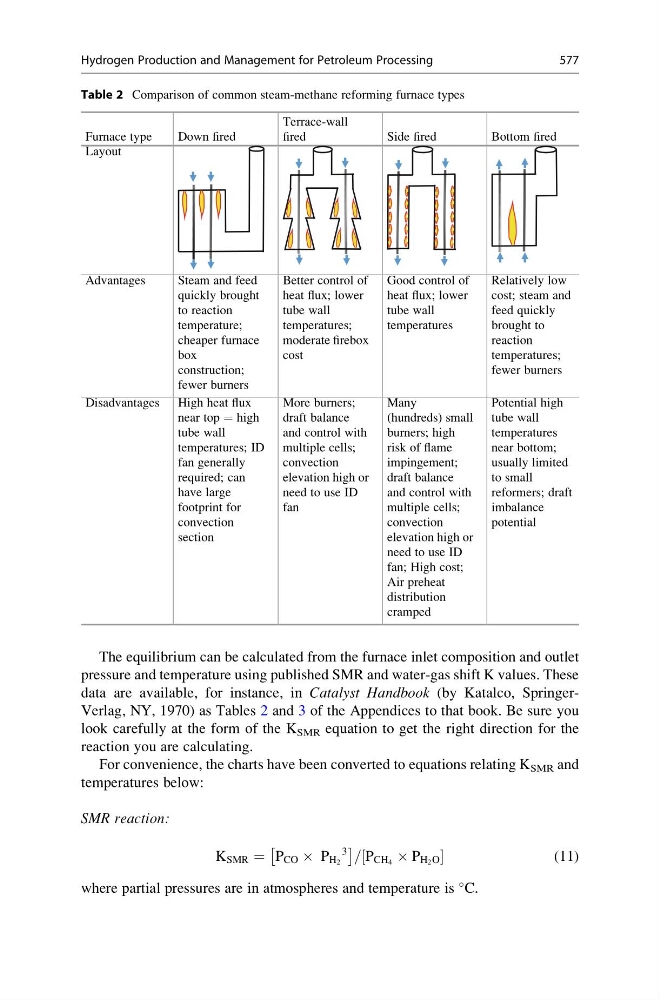
Table 2 Comparison of common steam-methane reforming furnace types
Furnace type
Down fired
Terrace-wall
fired
Side fired
Bottom fired
Layout
Advantages
Steam and feed
quickly brought
to reaction
temperature;
cheaper furnace
box
construction;
fewer burners
Better control of
heat flux; lower
tube wall
temperatures;
moderate firebox
cost
Good control of
heat flux; lower
tube wall
temperatures
Relatively low
cost; steam and
feed quickly
brought to
reaction
temperatures;
fewer burners
Disadvantages High heat flux
near top = high
tube wall
temperatures; ID
fan generally
required; can
have large
footprint for
convection
section
More burners;
draft balance
and control with
multiple cells;
convection
elevation high or
need to use ID
fan
Many
(hundreds) small
burners; high
risk of flame
impingement;
draft balance
and control with
multiple cells;
convection
elevation high or
need to use ID
fan; High cost;
Air preheat
distribution
cramped
Potential high
tube wall
temperatures
near bottom;
usually limited
to small
reformers; draft
imbalance
potential
Hydrogen Production and Management for Petroleum Processing
577