

• All feedstocks:
– Blended together – preferably in controlled proportions
– Final trace liquid knocked out
If the blended gas contains very high H 2 S levels (more than about 10 vppm), the
mixed feed will be routed through an amine scrubber to remove the bulk of the
H 2 S. The rich amine from the scrubber is sent to regeneration for sulfur recovery,
normally out of the SMR plant. A typical reaction in the scrubber, using MEA as an
example, is shown in Eq. 1:
HOC 2 H 4 À N À H 2 aq
ð Þ þ H 2 S g
ð Þ ! HOC 2 H 4 À N À H 3
þ aq
ð Þ þ SH
À aq
ð Þ (1)
Depending on residual sulfur after amine scrubbing, very sour gases may also be
scrubbed with caustic to remove traces of H 2 S down to the sub 10 vppm H 2 S range.
That caustic reaction is shown in Eq. 2. The spent caustic is routed off plot for
disposal:
H 2 S g
ð Þ þ NaOH aq
ð Þ ! NaHS aq
ð Þ þ H 2 O l
ð Þ
(2)
The somewhat cleaner feed gas is then mixed with enough hydrogen for
hydrotreating and heated to about 600–750
F. If there are significant olefins
present, the preheated temperature may be lower to offset heat of reaction from
olefin saturation (see below). The amount of hydrogen required depends on the
feedstock but generally falls in the following ranges:
• Natural gas feed: 2–5 v%
• Refinery gases: 2–5+ v%
• Propane and butane: 12 v%
• Naphtha: 25–35 v%
Feed
Recycle
H 2
Clean Feed
to Reformer
HDS
Catalyst
Chloride
Guard
ZnO
Absorbent
ZnO
Absorbent
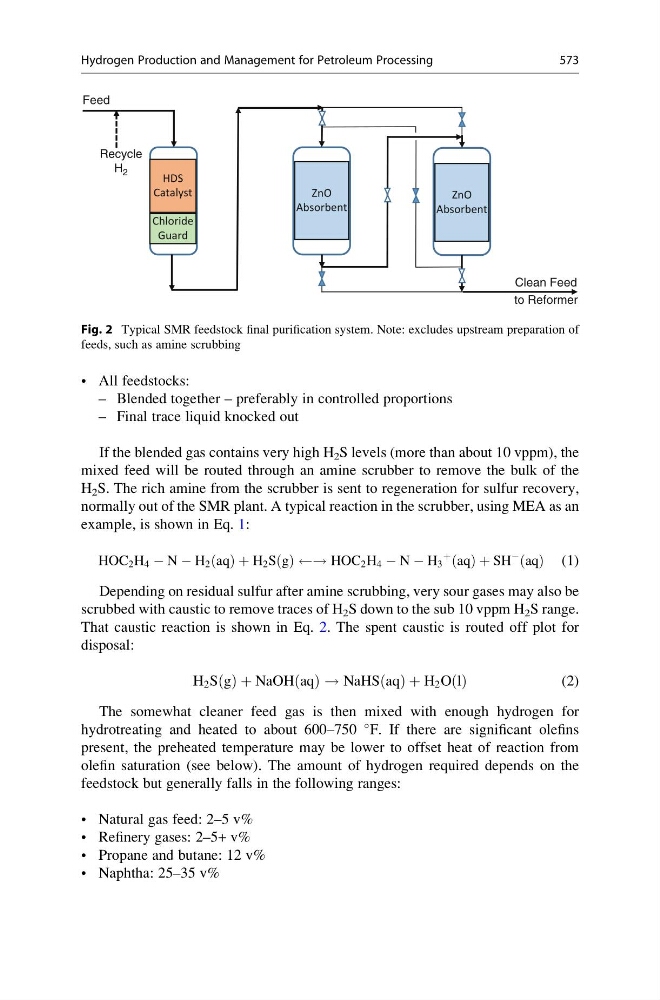
Fig. 2 Typical SMR feedstock final purification system. Note: excludes upstream preparation of
feeds, such as amine scrubbing
Hydrogen Production and Management for Petroleum Processing
573
– Blended together – preferably in controlled proportions
– Final trace liquid knocked out
If the blended gas contains very high H 2 S levels (more than about 10 vppm), the
mixed feed will be routed through an amine scrubber to remove the bulk of the
H 2 S. The rich amine from the scrubber is sent to regeneration for sulfur recovery,
normally out of the SMR plant. A typical reaction in the scrubber, using MEA as an
example, is shown in Eq. 1:
HOC 2 H 4 À N À H 2 aq
ð Þ þ H 2 S g
ð Þ ! HOC 2 H 4 À N À H 3
þ aq
ð Þ þ SH
À aq
ð Þ (1)
Depending on residual sulfur after amine scrubbing, very sour gases may also be
scrubbed with caustic to remove traces of H 2 S down to the sub 10 vppm H 2 S range.
That caustic reaction is shown in Eq. 2. The spent caustic is routed off plot for
disposal:
H 2 S g
ð Þ þ NaOH aq
ð Þ ! NaHS aq
ð Þ þ H 2 O l
ð Þ
(2)
The somewhat cleaner feed gas is then mixed with enough hydrogen for
hydrotreating and heated to about 600–750
F. If there are significant olefins
present, the preheated temperature may be lower to offset heat of reaction from
olefin saturation (see below). The amount of hydrogen required depends on the
feedstock but generally falls in the following ranges:
• Natural gas feed: 2–5 v%
• Refinery gases: 2–5+ v%
• Propane and butane: 12 v%
• Naphtha: 25–35 v%
Feed
Recycle
H 2
Clean Feed
to Reformer
HDS
Catalyst
Chloride
Guard
ZnO
Absorbent
ZnO
Absorbent
Fig. 2 Typical SMR feedstock final purification system. Note: excludes upstream preparation of
feeds, such as amine scrubbing
Hydrogen Production and Management for Petroleum Processing
573