

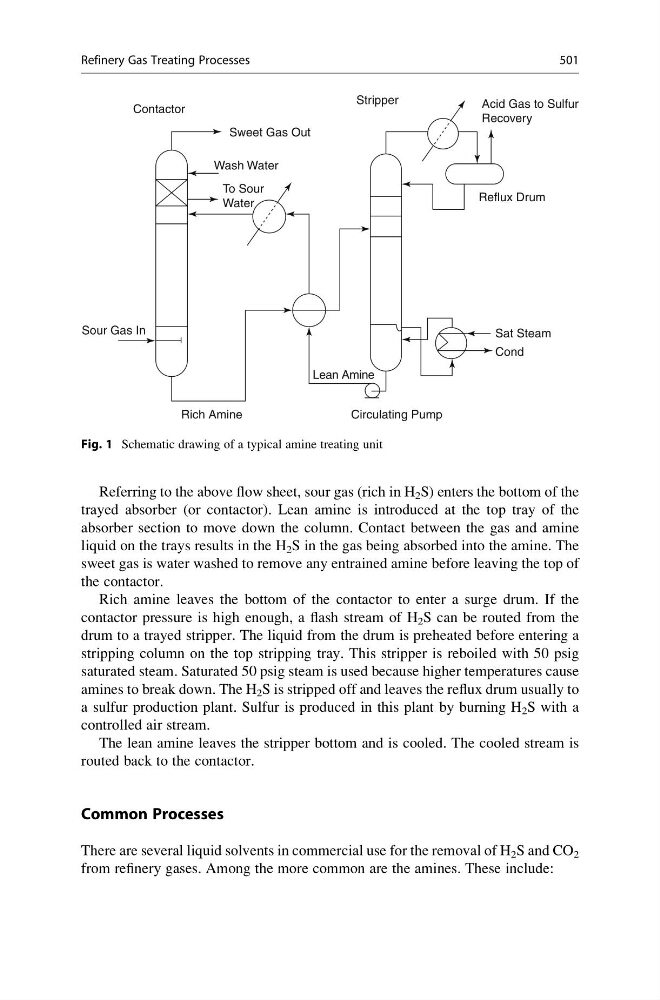
Referring to the above flow sheet, sour gas (rich in H 2 S) enters the bottom of the
trayed absorber (or contactor). Lean amine is introduced at the top tray of the
absorber section to move down the column. Contact between the gas and amine
liquid on the trays results in the H 2 S in the gas being absorbed into the amine. The
sweet gas is water washed to remove any entrained amine before leaving the top of
the contactor.
Rich amine leaves the bottom of the contactor to enter a surge drum. If the
contactor pressure is high enough, a flash stream of H 2 S can be routed from the
drum to a trayed stripper. The liquid from the drum is preheated before entering a
stripping column on the top stripping tray. This stripper is reboiled with 50 psig
saturated steam. Saturated 50 psig steam is used because higher temperatures cause
amines to break down. The H 2 S is stripped off and leaves the reflux drum usually to
a sulfur production plant. Sulfur is produced in this plant by burning H 2 S with a
controlled air stream.
The lean amine leaves the stripper bottom and is cooled. The cooled stream is
routed back to the contactor.
Common Processes
There are several liquid solvents in commercial use for the removal of H 2 S and CO 2
from refinery gases. Among the more common are the amines. These include:
Contactor
Sweet Gas Out
Stripper
Acid Gas to Sulfur
Recovery
Reflux Drum
Sat Steam
Lean Amine
Rich Amine
Circulating Pump
Cond
Wash Water
To Sour
Water
Sour Gas In
Fig. 1 Schematic drawing of a typical amine treating unit
Refinery Gas Treating Processes
501
trayed absorber (or contactor). Lean amine is introduced at the top tray of the
absorber section to move down the column. Contact between the gas and amine
liquid on the trays results in the H 2 S in the gas being absorbed into the amine. The
sweet gas is water washed to remove any entrained amine before leaving the top of
the contactor.
Rich amine leaves the bottom of the contactor to enter a surge drum. If the
contactor pressure is high enough, a flash stream of H 2 S can be routed from the
drum to a trayed stripper. The liquid from the drum is preheated before entering a
stripping column on the top stripping tray. This stripper is reboiled with 50 psig
saturated steam. Saturated 50 psig steam is used because higher temperatures cause
amines to break down. The H 2 S is stripped off and leaves the reflux drum usually to
a sulfur production plant. Sulfur is produced in this plant by burning H 2 S with a
controlled air stream.
The lean amine leaves the stripper bottom and is cooled. The cooled stream is
routed back to the contactor.
Common Processes
There are several liquid solvents in commercial use for the removal of H 2 S and CO 2
from refinery gases. Among the more common are the amines. These include:
Contactor
Sweet Gas Out
Stripper
Acid Gas to Sulfur
Recovery
Reflux Drum
Sat Steam
Lean Amine
Rich Amine
Circulating Pump
Cond
Wash Water
To Sour
Water
Sour Gas In
Fig. 1 Schematic drawing of a typical amine treating unit
Refinery Gas Treating Processes
501