

nitrogen-containing compounds is converted to NH 3 , and if present the O heteroatom in oxygen-containing compounds is converted into H 2 O. Hydrocracking
converts the higher carbon number feed molecules to lower molecular weight
products by cracking the side chains and by saturating the aromatics and olefins.
Hydrocracking catalysts will also remove any residual sulfur and nitrogen which
remain after the hydrotreating, usually in the heavy molecular weight compounds.
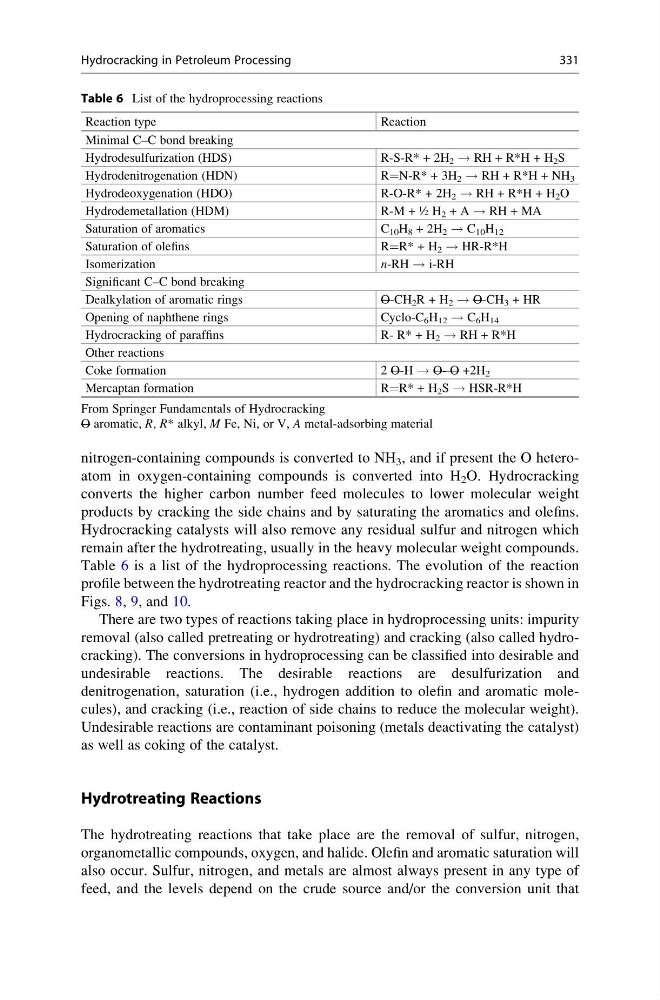
Table 6 is a list of the hydroprocessing reactions. The evolution of the reaction
profile between the hydrotreating reactor and the hydrocracking reactor is shown in
Figs. 8, 9, and 10.
There are two types of reactions taking place in hydroprocessing units: impurity
removal (also called pretreating or hydrotreating) and cracking (also called hydrocracking). The conversions in hydroprocessing can be classified into desirable and
undesirable reactions. The desirable reactions are desulfurization and
denitrogenation, saturation (i.e., hydrogen addition to olefin and aromatic molecules), and cracking (i.e., reaction of side chains to reduce the molecular weight).
Undesirable reactions are contaminant poisoning (metals deactivating the catalyst)
as well as coking of the catalyst.
Hydrotreating Reactions
The hydrotreating reactions that take place are the removal of sulfur, nitrogen,
organometallic compounds, oxygen, and halide. Olefin and aromatic saturation will
also occur. Sulfur, nitrogen, and metals are almost always present in any type of
feed, and the levels depend on the crude source and/or the conversion unit that
Table 6 List of the hydroprocessing reactions
Reaction type
Reaction
Minimal C–C bond breaking
Hydrodesulfurization (HDS)
R-S-R* + 2H 2 ! RH + R*H + H 2 S
Hydrodenitrogenation (HDN)
R=N-R* + 3H 2 ! RH + R*H + NH 3
Hydrodeoxygenation (HDO)
R-O-R* + 2H 2 ! RH + R*H + H 2 O
Hydrodemetallation (HDM)
R-M + ½ H 2 + A ! RH + MA
Saturation of aromatics
C 10 H 8 + 2H 2 ! C 10 H 12
Saturation of olefins
R=R* + H 2 ! HR-R*H
Isomerization
n-RH ! i-RH
Significant C–C bond breaking
Dealkylation of aromatic rings
O-CH 2 R + H 2 ! O-CH 3 + HR
Opening of naphthene rings
Cyclo-C 6 H 12 ! C 6 H 14
Hydrocracking of paraffins
R- R* + H 2 ! RH + R*H
Other reactions
Coke formation
2 O-H ! O- O +2H 2
Mercaptan formation
R=R* + H 2 S ! HSR-R*H
From Springer Fundamentals of Hydrocracking
O aromatic, R, R* alkyl, M Fe, Ni, or V, A metal-adsorbing material
Hydrocracking in Petroleum Processing
331
converts the higher carbon number feed molecules to lower molecular weight
products by cracking the side chains and by saturating the aromatics and olefins.
Hydrocracking catalysts will also remove any residual sulfur and nitrogen which
remain after the hydrotreating, usually in the heavy molecular weight compounds.
Table 6 is a list of the hydroprocessing reactions. The evolution of the reaction
profile between the hydrotreating reactor and the hydrocracking reactor is shown in
Figs. 8, 9, and 10.
There are two types of reactions taking place in hydroprocessing units: impurity
removal (also called pretreating or hydrotreating) and cracking (also called hydrocracking). The conversions in hydroprocessing can be classified into desirable and
undesirable reactions. The desirable reactions are desulfurization and
denitrogenation, saturation (i.e., hydrogen addition to olefin and aromatic molecules), and cracking (i.e., reaction of side chains to reduce the molecular weight).
Undesirable reactions are contaminant poisoning (metals deactivating the catalyst)
as well as coking of the catalyst.
Hydrotreating Reactions
The hydrotreating reactions that take place are the removal of sulfur, nitrogen,
organometallic compounds, oxygen, and halide. Olefin and aromatic saturation will
also occur. Sulfur, nitrogen, and metals are almost always present in any type of
feed, and the levels depend on the crude source and/or the conversion unit that
Table 6 List of the hydroprocessing reactions
Reaction type
Reaction
Minimal C–C bond breaking
Hydrodesulfurization (HDS)
R-S-R* + 2H 2 ! RH + R*H + H 2 S
Hydrodenitrogenation (HDN)
R=N-R* + 3H 2 ! RH + R*H + NH 3
Hydrodeoxygenation (HDO)
R-O-R* + 2H 2 ! RH + R*H + H 2 O
Hydrodemetallation (HDM)
R-M + ½ H 2 + A ! RH + MA
Saturation of aromatics
C 10 H 8 + 2H 2 ! C 10 H 12
Saturation of olefins
R=R* + H 2 ! HR-R*H
Isomerization
n-RH ! i-RH
Significant C–C bond breaking
Dealkylation of aromatic rings
O-CH 2 R + H 2 ! O-CH 3 + HR
Opening of naphthene rings
Cyclo-C 6 H 12 ! C 6 H 14
Hydrocracking of paraffins
R- R* + H 2 ! RH + R*H
Other reactions
Coke formation
2 O-H ! O- O +2H 2
Mercaptan formation
R=R* + H 2 S ! HSR-R*H
From Springer Fundamentals of Hydrocracking
O aromatic, R, R* alkyl, M Fe, Ni, or V, A metal-adsorbing material
Hydrocracking in Petroleum Processing
331