

Step 3. In this heat balance the bottom pumparound duty will be the unknown.
Equate heat in equals heat out to determine the duty of the pumparound required
to produce the set overflow.
Step 4. This pumparound duty can be checked on the plant by multiplying the flow
in the pumparound by the enthalpy difference over the exchangers.
Step 5. Carry out the overall heat balance over the tower. That is, calculate the
difference between the total heat in with the feed and the total out with all the
products. This difference gives the total heat to be removed by both
pumparounds. Assuming there are two pumparounds (top and bottom), the
duty of the bottom pumparound has already been calculated; then the top
pumparound duty will be the total heat to be removed minus the duty of the
bottom pumparound.
Step 6. Usually the most critical flow in a vacuum unit is the wash oil flowing over
the bottom wash trays or packing. This is the area where most undesirable
entrainment can occur, and this is the most vulnerable area for coking. Lack of
wash oil enhances contamination of the bottom product and promotes coking in
this area.
Step 7. Carry out a heat balance over the bottom wash section of the tower. The
unknown in this case is the overflow liquid from the heavy vacuum gas oil.
Equate the heat in with feed and overflow with the heat out from total product
vapors, overflow vapor, and bitumen to solve for the unknown.
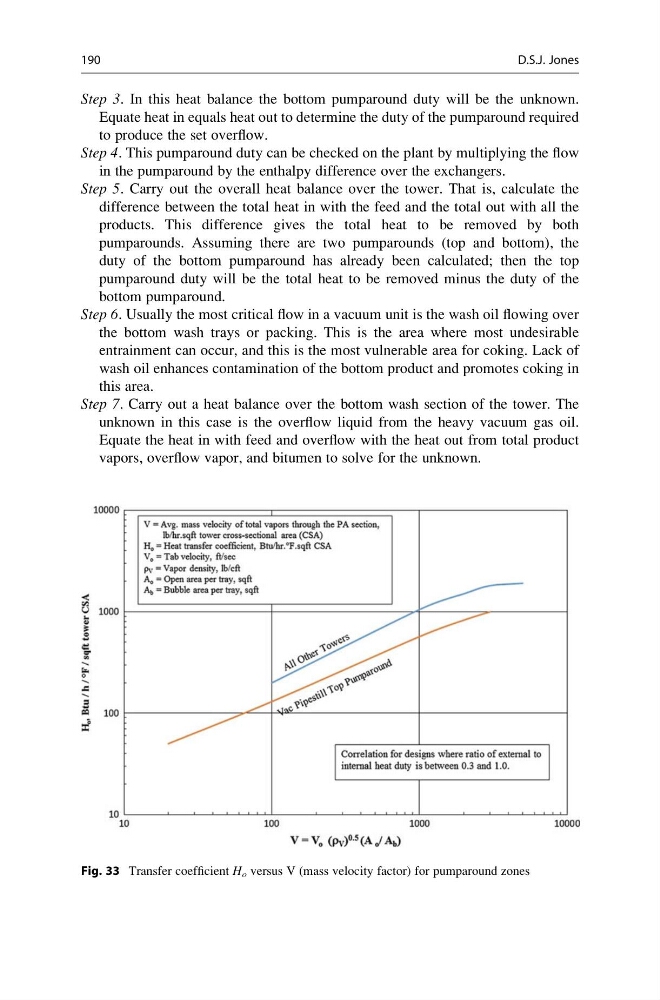
Fig. 33 Transfer coefficient H o versus V (mass velocity factor) for pumparound zones
190
D.S.J. Jones
Equate heat in equals heat out to determine the duty of the pumparound required
to produce the set overflow.
Step 4. This pumparound duty can be checked on the plant by multiplying the flow
in the pumparound by the enthalpy difference over the exchangers.
Step 5. Carry out the overall heat balance over the tower. That is, calculate the
difference between the total heat in with the feed and the total out with all the
products. This difference gives the total heat to be removed by both
pumparounds. Assuming there are two pumparounds (top and bottom), the
duty of the bottom pumparound has already been calculated; then the top
pumparound duty will be the total heat to be removed minus the duty of the
bottom pumparound.
Step 6. Usually the most critical flow in a vacuum unit is the wash oil flowing over
the bottom wash trays or packing. This is the area where most undesirable
entrainment can occur, and this is the most vulnerable area for coking. Lack of
wash oil enhances contamination of the bottom product and promotes coking in
this area.
Step 7. Carry out a heat balance over the bottom wash section of the tower. The
unknown in this case is the overflow liquid from the heavy vacuum gas oil.
Equate the heat in with feed and overflow with the heat out from total product
vapors, overflow vapor, and bitumen to solve for the unknown.
Fig. 33 Transfer coefficient H o versus V (mass velocity factor) for pumparound zones
190
D.S.J. Jones