

Determine Pumparound and Internal Flows for Vacuum Towers
Now that the cut points and tower conditions of temperature and pressure are
established, the internal flow and pumparound duties can be calculated, although
generally speaking fractionation requirements are not as strict in a vacuum crude
unit as in the case for the atmospheric unit. Nevertheless, proper wash streams are
required in vacuum towers to protect distillates which may become feed to cracking
units, from entrained undesirable components such as metals. Test runs on vacuum
units therefore should include the determination of reflux streams and, in turn,
tower loading.
The following steps outline a calculation procedure to determine pumparound
requirements and overflow (reflux) in the wash section of the tower.
Step 1. Set the overflow requirement for the LVGO drawoff tray using the rule of
thumb given in the previous item. Alternatively, if this can be measured on the
plant, use that data.
Step 2. From plant data or such data as can be developed from items on ejector
system and drawoff temperatures, calculate the heat balance below the LVGO
drawoff tray.
0.6
0.5
0.4
K
0.3
0.2
0
40
80
120
160
200
LIQUID RATE L in cu ft/h.sq ft
240
280
320
360
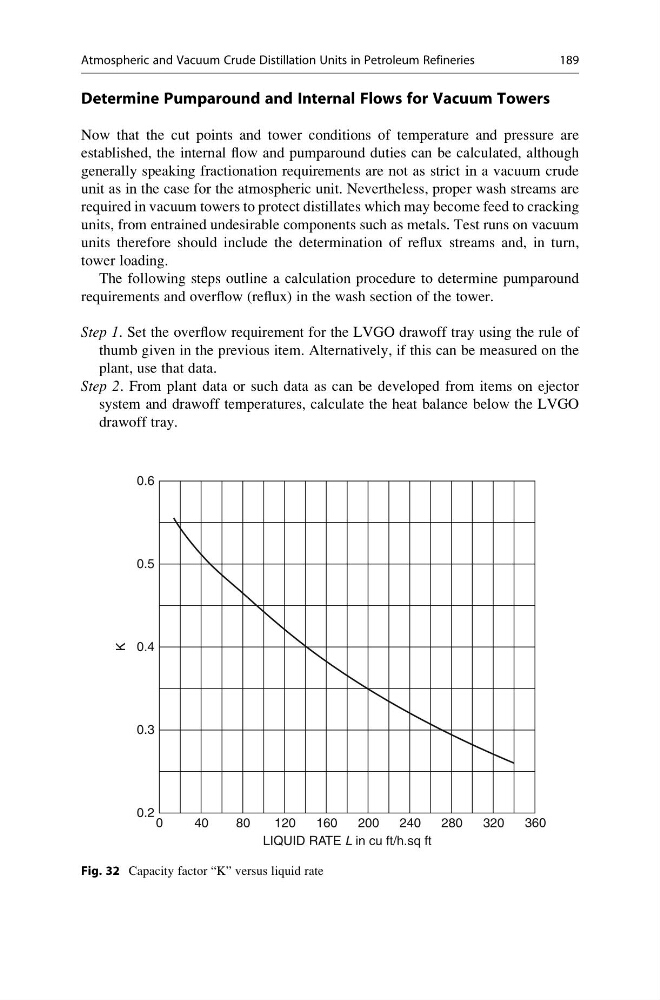
Fig. 32 Capacity factor “K” versus liquid rate
Atmospheric and Vacuum Crude Distillation Units in Petroleum Refineries
189
Now that the cut points and tower conditions of temperature and pressure are
established, the internal flow and pumparound duties can be calculated, although
generally speaking fractionation requirements are not as strict in a vacuum crude
unit as in the case for the atmospheric unit. Nevertheless, proper wash streams are
required in vacuum towers to protect distillates which may become feed to cracking
units, from entrained undesirable components such as metals. Test runs on vacuum
units therefore should include the determination of reflux streams and, in turn,
tower loading.
The following steps outline a calculation procedure to determine pumparound
requirements and overflow (reflux) in the wash section of the tower.
Step 1. Set the overflow requirement for the LVGO drawoff tray using the rule of
thumb given in the previous item. Alternatively, if this can be measured on the
plant, use that data.
Step 2. From plant data or such data as can be developed from items on ejector
system and drawoff temperatures, calculate the heat balance below the LVGO
drawoff tray.
0.6
0.5
0.4
K
0.3
0.2
0
40
80
120
160
200
LIQUID RATE L in cu ft/h.sq ft
240
280
320
360
Fig. 32 Capacity factor “K” versus liquid rate
Atmospheric and Vacuum Crude Distillation Units in Petroleum Refineries
189