

lim
a 0
2
!1
2a
s
¼ 2
ffiffiffiffiffiffiffiffiffiffiffiffiffiffiffiffiffiffiffi
ð1 þ 2a 0
1 Þ
q
:
ð20Þ
According to Eq. (20), the ratio 2a/s diverges only if both a 1 ′ and a 2 ′ approach
infinity, which suggests that it can be used as a parameter to distinguish between
geometries of sphere-plane and plane-plane interactions. If a scaled surface-to-surface
separation s
Ã
s=2a is considered, a normalized parameter that applies to all possible
combinations of sphere size and separation distance can be obtained, where it is
lim
a
0
1 ! 0
a
0
2 ! 0
s
Ã
¼ 1
ð21Þ
for the interaction between two point particles, according to Eq. (18). Furthermore,
lim
a
0
1 ! 0
a
0
2 ! 1
s
Ã
¼
1
2
ð22Þ
corresponds to the interaction of a point particle with a plane, according to Eq. (20);
and
lim
a
0
1 ! 1
a
0
2 ! 1
s
Ã
¼ 0
ð23Þ
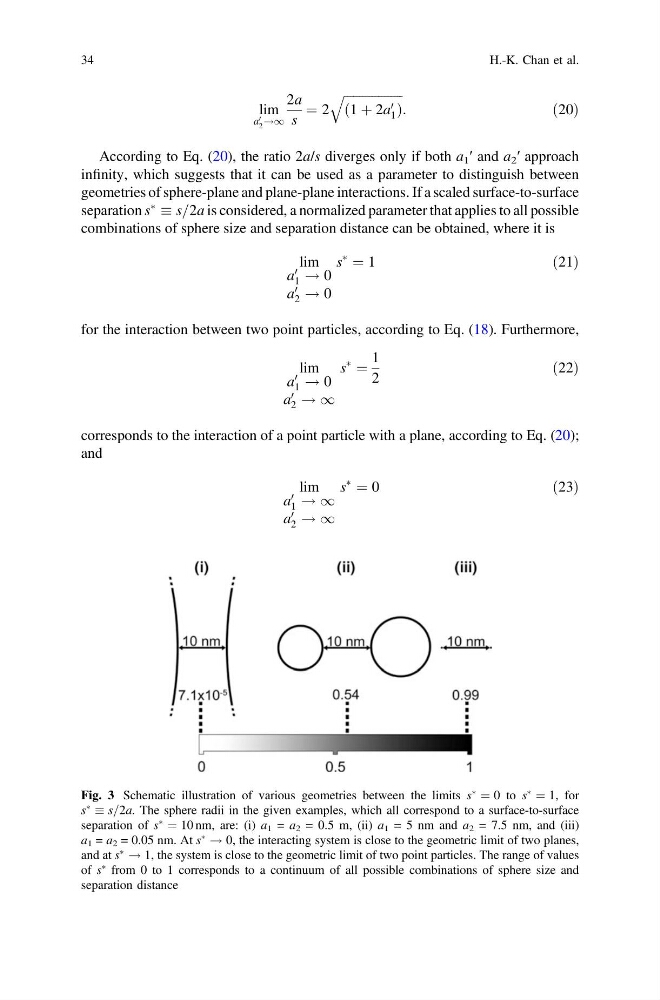
Fig. 3 Schematic illustration of various geometries between the limits s
à ¼ 0 to s
à ¼ 1, for
s
à s=2a. The sphere radii in the given examples, which all correspond to a surface-to-surface
separation of s
à ¼ 10 nm, are: (i) a 1 = a 2 = 0.5 m, (ii) a 1 = 5 nm and a 2 = 7.5 nm, and (iii)
a 1 = a 2 = 0.05 nm. At s
à ! 0, the interacting system is close to the geometric limit of two planes,
and at s
à ! 1, the system is close to the geometric limit of two point particles. The range of values
of s
à from 0 to 1 corresponds to a continuum of all possible combinations of sphere size and
separation distance
34
H.-K. Chan et al.
a 0
2
!1
2a
s
¼ 2
ffiffiffiffiffiffiffiffiffiffiffiffiffiffiffiffiffiffiffi
ð1 þ 2a 0
1 Þ
q
:
ð20Þ
According to Eq. (20), the ratio 2a/s diverges only if both a 1 ′ and a 2 ′ approach
infinity, which suggests that it can be used as a parameter to distinguish between
geometries of sphere-plane and plane-plane interactions. If a scaled surface-to-surface
separation s
Ã
s=2a is considered, a normalized parameter that applies to all possible
combinations of sphere size and separation distance can be obtained, where it is
lim
a
0
1 ! 0
a
0
2 ! 0
s
Ã
¼ 1
ð21Þ
for the interaction between two point particles, according to Eq. (18). Furthermore,
lim
a
0
1 ! 0
a
0
2 ! 1
s
Ã
¼
1
2
ð22Þ
corresponds to the interaction of a point particle with a plane, according to Eq. (20);
and
lim
a
0
1 ! 1
a
0
2 ! 1
s
Ã
¼ 0
ð23Þ
Fig. 3 Schematic illustration of various geometries between the limits s
à ¼ 0 to s
à ¼ 1, for
s
à s=2a. The sphere radii in the given examples, which all correspond to a surface-to-surface
separation of s
à ¼ 10 nm, are: (i) a 1 = a 2 = 0.5 m, (ii) a 1 = 5 nm and a 2 = 7.5 nm, and (iii)
a 1 = a 2 = 0.05 nm. At s
à ! 0, the interacting system is close to the geometric limit of two planes,
and at s
à ! 1, the system is close to the geometric limit of two point particles. The range of values
of s
à from 0 to 1 corresponds to a continuum of all possible combinations of sphere size and
separation distance
34
H.-K. Chan et al.