

4 Conclusions
Molecular modelling and molecular dynamics simulations are important tools in
understanding the structure and function of biological ensembles. Molecular simulations can help to conceive and characterize conformational changes on proteins
that play an essential role in their function, also providing a description at the
atomic-level of the same changes. Hence, it allows the migration from a static and
rigid protein structure conception to a more flexible and dynamic view. In enzymatic mechanistic studies, MD plays an important role, describing an enzymesubstrate conformational sampling, essential as a preliminary for mechanistic
evaluations by methods such as QM/MM.
This study, in particular, provides a detailed analysis of key elements mediating
the interaction between the FAAH enzyme and the anandamide substrate. In
addition, it offers a characterization of the FAAH dimer model in contrast with the
monomer, in terms of flexibility.
The results point towards pronounced differences between the flexibility profile
for the monomer and dimer structures of the enzyme that could account for future
considerations of the dimeric structure in future studies where the flexibility effects
are relevant. Interestingly, with the monomer, the regions with higher flexibility are
the regions of the enzyme with a more relevant interaction with the solvent. In the
dimer case, the more flexible regions are those expected to interact with the
membrane.
This study has also characterized 6 of the more relevant interacting residues in
the active site with the substrate anandamide, in terms of the contact surface area.
The more relevant residues ordered in terms of greater to lower extent are Leu192,
Thr488, Phe432, Leu404, Ile491, and Leu380. Also, several polar amino acid
residues are in contact with the anandamide surface. Examples include the poorly
conserved Glu373 and Ser376, and the highly conserved Arg428 and catalytic
Ser241 amino acid residues.
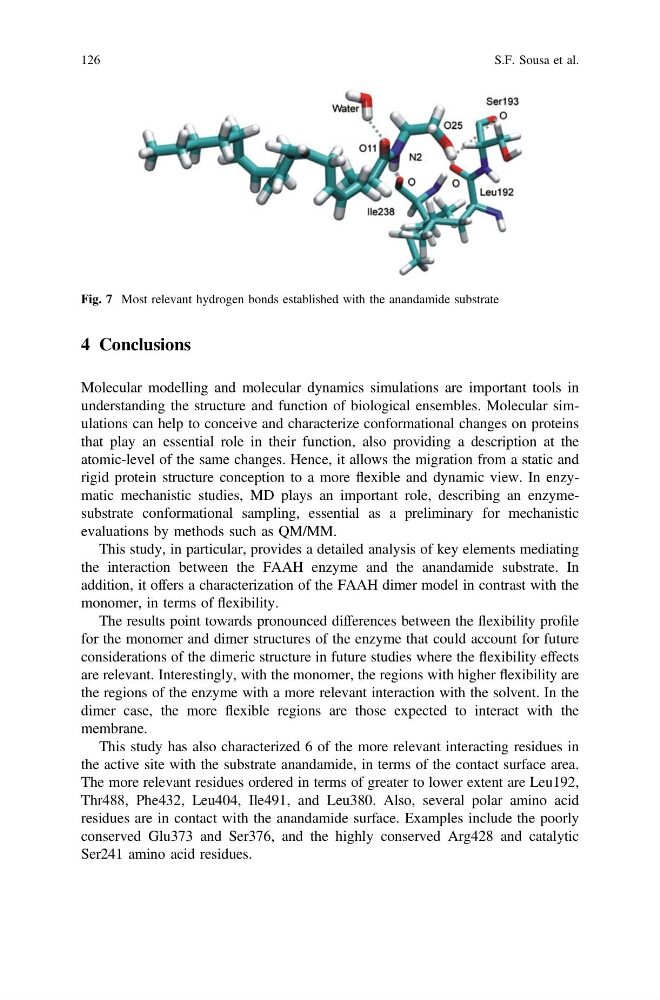
Fig. 7 Most relevant hydrogen bonds established with the anandamide substrate
126
S.F. Sousa et al.
Molecular modelling and molecular dynamics simulations are important tools in
understanding the structure and function of biological ensembles. Molecular simulations can help to conceive and characterize conformational changes on proteins
that play an essential role in their function, also providing a description at the
atomic-level of the same changes. Hence, it allows the migration from a static and
rigid protein structure conception to a more flexible and dynamic view. In enzymatic mechanistic studies, MD plays an important role, describing an enzymesubstrate conformational sampling, essential as a preliminary for mechanistic
evaluations by methods such as QM/MM.
This study, in particular, provides a detailed analysis of key elements mediating
the interaction between the FAAH enzyme and the anandamide substrate. In
addition, it offers a characterization of the FAAH dimer model in contrast with the
monomer, in terms of flexibility.
The results point towards pronounced differences between the flexibility profile
for the monomer and dimer structures of the enzyme that could account for future
considerations of the dimeric structure in future studies where the flexibility effects
are relevant. Interestingly, with the monomer, the regions with higher flexibility are
the regions of the enzyme with a more relevant interaction with the solvent. In the
dimer case, the more flexible regions are those expected to interact with the
membrane.
This study has also characterized 6 of the more relevant interacting residues in
the active site with the substrate anandamide, in terms of the contact surface area.
The more relevant residues ordered in terms of greater to lower extent are Leu192,
Thr488, Phe432, Leu404, Ile491, and Leu380. Also, several polar amino acid
residues are in contact with the anandamide surface. Examples include the poorly
conserved Glu373 and Ser376, and the highly conserved Arg428 and catalytic
Ser241 amino acid residues.
Fig. 7 Most relevant hydrogen bonds established with the anandamide substrate
126
S.F. Sousa et al.