

1. Microtidal environment (tidal range <2 m).
2. Mesotidal environment (tidal range 2–4 m).
3. Macrotidal environment (tidal range >4 m).
The average tidal range in the open sea is only
about 50 cm. Along the coasts, however, we often
get increased interference by tidal currents. This is
particularly true around large islands where tidal
waves converge on the lee side and can build up, and
also in bays along the coasts. In long, narrow bays we
may get a high degree of resonance. This occurs if the
bay has a length and depth which cause tidal waves
which are on the rebound to reinforce the next incoming tidal wave. The highest tidal range which has been
measured is 16.3 m in the Bay of Fundy in Canada. In
some areas around the British Isles the tidal range may
be up to about 12 m, and there are also large ranges in
the German Bight and adjacent parts of the North Sea.
Tidal waves also move anticlockwise in N hemisphere
around centres with zero tidal range (amphidromic
points), with the tidal range increasing radially with
the distance from the centre. This is typical of the tidal
pattern in the North Sea.
The width of the continental shelf plays a major
role in determining tidal ranges. When tidal waves
enter shallow water, their velocity is reduced due to
friction against the bottom. When the water depth and
the velocity decline, the height of the tidal wave will
increase, so that the total energy flux is maintained.
The tidal range, which is thus the height of the tidal
wave, therefore increases inwards across the shelf.
Where there are embayments along the coast, tidal
waves become focused, so that the tidal range
increases towards the middle of the bay. This is true
of the east coast of the USA, off Georgia, and of the
German Bight in Europe.
If the shelf becomes even wider, as in an epicontinental sea, tidal power will gradually be exhausted due
to the high frictional resistance. This is the case on the
present Siberian continental shelf where the tidal
range is very low (<10–20 cm). Wind stress may set
up rather large storm tides. When the water is very
shallow, as on the Bahamas Bank, friction damping
takes place over much shorter distances.
The great epicontinental seas, in Ordovician and
Cretaceous times for example, were also characterised
by low tidal ranges.
About 1/3 of the world’s coasts have tidal ranges
greater than 4 m (macrotides), 1/3 have mesotides
(2–4 m) and 1/3 microtides (less than 2 m). Small
inland seas, like the Mediterranean, the Black Sea
a
b
Regressive (prograding)
Barrier model
Transgressive
Barrier model
Dune
Backshore
Foreshore
Upper
Middle
Lower
Dune
Spit beach
Welded ridge
(Spit platform)
Barrier-inlet
model
Shallow channel
Deep channel
Backshore
–Dune
Washover
Washover
Marsh
Channel
Tidal flat
Flood tidal
delta
Subaqueous
lagoon
Legend
Flasers
Bioturbation, trace fossils
Shells, shell debris
Roots, organic debris
Sandstone
Silty shale
Coal lenses
Erosional surface
with lag deposit
Plane beds
Planar crossbedding
Trough crossbedding
Ripple laminae
Sandstone, siltstone,
Argillaceous, coal lenses
Shale, brown, silty,
Fissile up section
Sandstone, F.G., Planar &
Cross laminated, burrowed
Sandstone, silty,
Argillaceous, plant debris
Oyster coquina bed
Shale, medium gray,
Friable, oysters
Sandstone, siltstone,
Coal lenses
Erosional surface
Erosional surface
Sandstone, F.G., parallel
laminations, plane beds
ophiomorpha & arenicolites
burrows
sandstone, V.F. to F.G., silty,
parallel laminations,
microcross laminations,
bioturbated, flasers
Sandstone, F. to M.G.,
bipolar small to medium
scale trough crossbeds
abundant, some planar
crossbeds & rare horizontal
plane beds, abundant
ophiomorpha burrows
Marsh-tidal
flat
Marsh-tidal flat
Subtidal
lagoon
Subtidal
lagoon
Shallow
channel
Barrier
beach
Deep
channel
Upper shorefaceforeshore
Middle
shoreface
Washover
Blood reserve fm.
Metres
St.Mary river fm.
Shoreface
Metres
Metres
Metres
10
8
6
4
2
0
10
8
6
4
2
0
10
8
6
4
2
0
15
10
5
0
Lagoon
(Back barrier)
Tidal inlet
(Channel-delta)
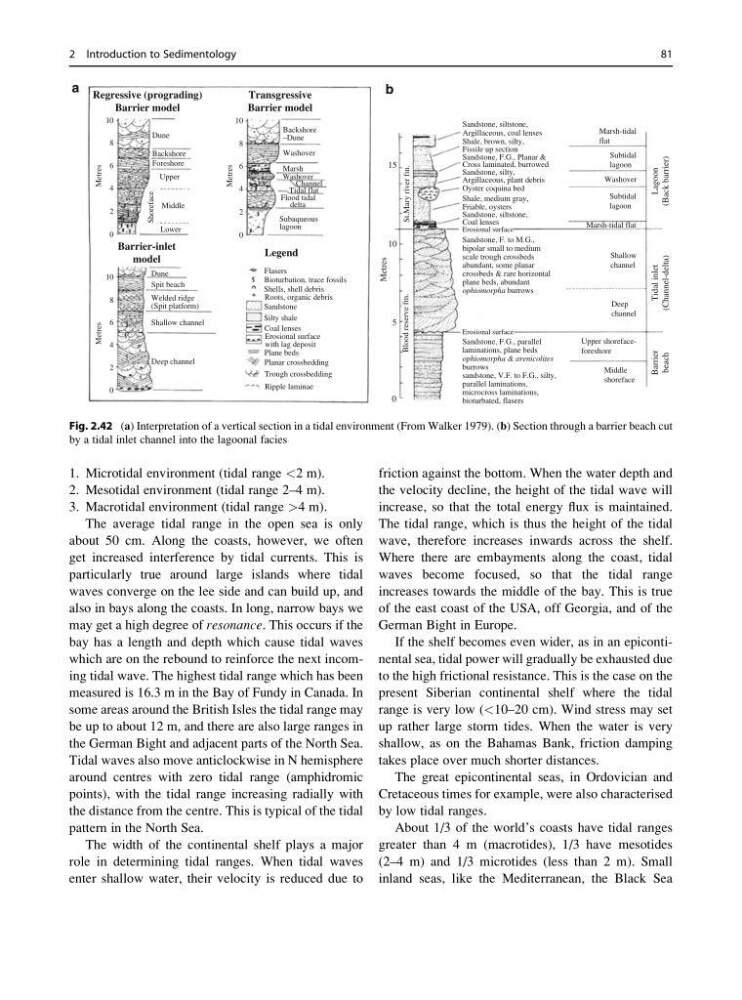
Fig. 2.42 (a) Interpretation of a vertical section in a tidal environment (From Walker 1979). (b) Section through a barrier beach cut
by a tidal inlet channel into the lagoonal facies
2 Introduction to Sedimentology
81
2. Mesotidal environment (tidal range 2–4 m).
3. Macrotidal environment (tidal range >4 m).
The average tidal range in the open sea is only
about 50 cm. Along the coasts, however, we often
get increased interference by tidal currents. This is
particularly true around large islands where tidal
waves converge on the lee side and can build up, and
also in bays along the coasts. In long, narrow bays we
may get a high degree of resonance. This occurs if the
bay has a length and depth which cause tidal waves
which are on the rebound to reinforce the next incoming tidal wave. The highest tidal range which has been
measured is 16.3 m in the Bay of Fundy in Canada. In
some areas around the British Isles the tidal range may
be up to about 12 m, and there are also large ranges in
the German Bight and adjacent parts of the North Sea.
Tidal waves also move anticlockwise in N hemisphere
around centres with zero tidal range (amphidromic
points), with the tidal range increasing radially with
the distance from the centre. This is typical of the tidal
pattern in the North Sea.
The width of the continental shelf plays a major
role in determining tidal ranges. When tidal waves
enter shallow water, their velocity is reduced due to
friction against the bottom. When the water depth and
the velocity decline, the height of the tidal wave will
increase, so that the total energy flux is maintained.
The tidal range, which is thus the height of the tidal
wave, therefore increases inwards across the shelf.
Where there are embayments along the coast, tidal
waves become focused, so that the tidal range
increases towards the middle of the bay. This is true
of the east coast of the USA, off Georgia, and of the
German Bight in Europe.
If the shelf becomes even wider, as in an epicontinental sea, tidal power will gradually be exhausted due
to the high frictional resistance. This is the case on the
present Siberian continental shelf where the tidal
range is very low (<10–20 cm). Wind stress may set
up rather large storm tides. When the water is very
shallow, as on the Bahamas Bank, friction damping
takes place over much shorter distances.
The great epicontinental seas, in Ordovician and
Cretaceous times for example, were also characterised
by low tidal ranges.
About 1/3 of the world’s coasts have tidal ranges
greater than 4 m (macrotides), 1/3 have mesotides
(2–4 m) and 1/3 microtides (less than 2 m). Small
inland seas, like the Mediterranean, the Black Sea
a
b
Regressive (prograding)
Barrier model
Transgressive
Barrier model
Dune
Backshore
Foreshore
Upper
Middle
Lower
Dune
Spit beach
Welded ridge
(Spit platform)
Barrier-inlet
model
Shallow channel
Deep channel
Backshore
–Dune
Washover
Washover
Marsh
Channel
Tidal flat
Flood tidal
delta
Subaqueous
lagoon
Legend
Flasers
Bioturbation, trace fossils
Shells, shell debris
Roots, organic debris
Sandstone
Silty shale
Coal lenses
Erosional surface
with lag deposit
Plane beds
Planar crossbedding
Trough crossbedding
Ripple laminae
Sandstone, siltstone,
Argillaceous, coal lenses
Shale, brown, silty,
Fissile up section
Sandstone, F.G., Planar &
Cross laminated, burrowed
Sandstone, silty,
Argillaceous, plant debris
Oyster coquina bed
Shale, medium gray,
Friable, oysters
Sandstone, siltstone,
Coal lenses
Erosional surface
Erosional surface
Sandstone, F.G., parallel
laminations, plane beds
ophiomorpha & arenicolites
burrows
sandstone, V.F. to F.G., silty,
parallel laminations,
microcross laminations,
bioturbated, flasers
Sandstone, F. to M.G.,
bipolar small to medium
scale trough crossbeds
abundant, some planar
crossbeds & rare horizontal
plane beds, abundant
ophiomorpha burrows
Marsh-tidal
flat
Marsh-tidal flat
Subtidal
lagoon
Subtidal
lagoon
Shallow
channel
Barrier
beach
Deep
channel
Upper shorefaceforeshore
Middle
shoreface
Washover
Blood reserve fm.
Metres
St.Mary river fm.
Shoreface
Metres
Metres
Metres
10
8
6
4
2
0
10
8
6
4
2
0
10
8
6
4
2
0
15
10
5
0
Lagoon
(Back barrier)
Tidal inlet
(Channel-delta)
Fig. 2.42 (a) Interpretation of a vertical section in a tidal environment (From Walker 1979). (b) Section through a barrier beach cut
by a tidal inlet channel into the lagoonal facies
2 Introduction to Sedimentology
81