

technology must be based on the processing plant, and
whether the technology will be implemented on
existing plants (retrofit), or integrated into new plants.
24.3 What Is Required to Store CO 2 ?
24.3.1 CO 2 Point Sources
Size matters in CCS. A large part of the cost of CCS is
related to the capture facilities and the transport network to the CO 2 storage site (steel pipelines and
compressors). The possibility of capturing large
amounts of CO 2 at one plant lowers the cost of CCS
($/ton stored CO 2 ). This is critical in order to implement CCS globally at a scale required to meet the
IPCC 2
C target. CCS therefore requires point sources
of CO 2 , which can be cement factories, coal-fired
power plants, or production facilities for natural gas
(all with a potential of about 1–3 Mt CO 2 /year). If
several minor CO 2 point sources (<1 Mt/year) are in
a geographically limited area, the sources (flue gas or
natural gas) can be piped to a common capture facility.
In addition to the size of the facilities, geographical
location plays a role. Because of the costs and risks
associated with pipelines, the distance to the storage
reservoir should be as short as possible.
24.3.2 The Storage Reservoir: Injectivity
and CO 2 Storage Capacity
The requirements of a CO 2 storage deposit are to a large
extent the same as those for petroleum reservoirs. Injection requires that the pressure of the injection well is
larger than the reservoir pressure. The amount of overpressure required is given by the injectivity of the
reservoir, which is determined by several factors, such
as the size of the reservoir unit and its hydraulic conductivity. The size of the reservoir unit refers to the
volume that can absorb the pressure build-up resulting
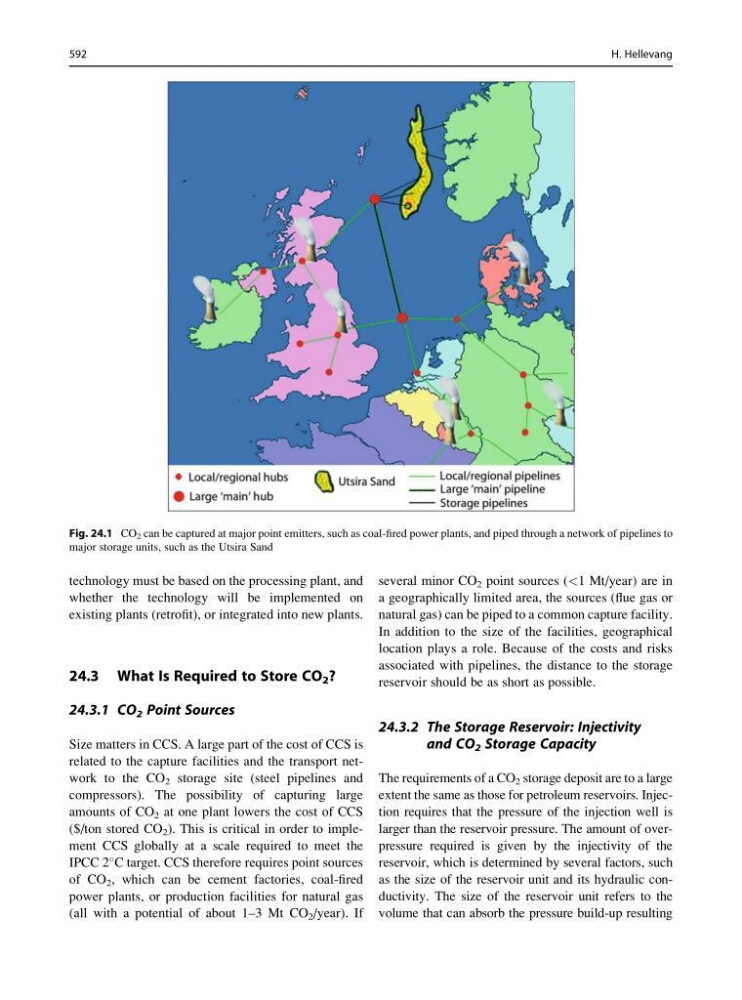
Fig. 24.1 CO 2 can be captured at major point emitters, such as coal-fired power plants, and piped through a network of pipelines to
major storage units, such as the Utsira Sand
592
H. Hellevang
whether the technology will be implemented on
existing plants (retrofit), or integrated into new plants.
24.3 What Is Required to Store CO 2 ?
24.3.1 CO 2 Point Sources
Size matters in CCS. A large part of the cost of CCS is
related to the capture facilities and the transport network to the CO 2 storage site (steel pipelines and
compressors). The possibility of capturing large
amounts of CO 2 at one plant lowers the cost of CCS
($/ton stored CO 2 ). This is critical in order to implement CCS globally at a scale required to meet the
IPCC 2
C target. CCS therefore requires point sources
of CO 2 , which can be cement factories, coal-fired
power plants, or production facilities for natural gas
(all with a potential of about 1–3 Mt CO 2 /year). If
several minor CO 2 point sources (<1 Mt/year) are in
a geographically limited area, the sources (flue gas or
natural gas) can be piped to a common capture facility.
In addition to the size of the facilities, geographical
location plays a role. Because of the costs and risks
associated with pipelines, the distance to the storage
reservoir should be as short as possible.
24.3.2 The Storage Reservoir: Injectivity
and CO 2 Storage Capacity
The requirements of a CO 2 storage deposit are to a large
extent the same as those for petroleum reservoirs. Injection requires that the pressure of the injection well is
larger than the reservoir pressure. The amount of overpressure required is given by the injectivity of the
reservoir, which is determined by several factors, such
as the size of the reservoir unit and its hydraulic conductivity. The size of the reservoir unit refers to the
volume that can absorb the pressure build-up resulting
Fig. 24.1 CO 2 can be captured at major point emitters, such as coal-fired power plants, and piped through a network of pipelines to
major storage units, such as the Utsira Sand
592
H. Hellevang