

Another method mostly used in Alberta is called
SAGD (Steam Assisted Gravity Drainage). Here two
horizontal wells are drilled into the reservoir with tar
sand. Steam is injected into the upper well to heat up the
tar so that it becomes viscous enough to be produced
from the lower well. The tar (bitumen) must generally
be heated to 200
C for the viscosity to be reduced to
about 10 cP. Water and air is then injected to displace
the steam further into the sandtone reservoir. Each m
3
of oil produced may require from 2-10 GJ of energy.
When cheap gas is used as energy for the heating
process it may be profitable to produce oil even if there
should be a negative energy balance.
As the steam condenses to water it gives off heat in the
reservoir. A recovery between 40–60% may be expected.
The produced oil will also contain some water and
clay which must be removed before the oil can be
processed. The water is then re-injected or used for the
generation of steam, to reduce the use of new freshwater.
Fig. 23.2 Athabasca tar sand. The oil-impregnated sand is mined and the heavy oil is separated from the sand with hot water
InjecƟon well
ProducƟon
well
a
b
Overburden 200 -400 m
Layer with tar sand
Oil from heated tar sand
InjecƟon of steam
Principles of SAGD
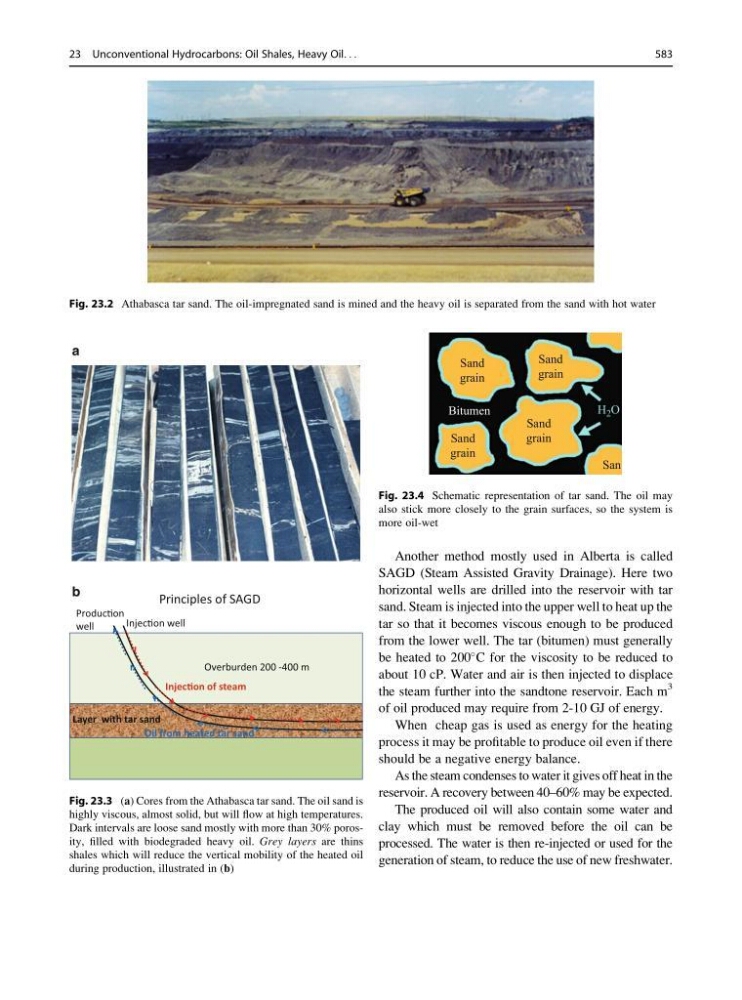
Fig. 23.3 (a) Cores from the Athabasca tar sand. The oil sand is
highly viscous, almost solid, but will flow at high temperatures.
Dark intervals are loose sand mostly with more than 30% porosity, filled with biodegraded heavy oil. Grey layers are thins
shales which will reduce the vertical mobility of the heated oil
during production, illustrated in (b)
Bitumen
Sand
grain
Sand
grain
Sand
grain
Sand
grain
San
H 2 O
Fig. 23.4 Schematic representation of tar sand. The oil may
also stick more closely to the grain surfaces, so the system is
more oil-wet
23 Unconventional Hydrocarbons: Oil Shales, Heavy Oil. . .
583
SAGD (Steam Assisted Gravity Drainage). Here two
horizontal wells are drilled into the reservoir with tar
sand. Steam is injected into the upper well to heat up the
tar so that it becomes viscous enough to be produced
from the lower well. The tar (bitumen) must generally
be heated to 200
C for the viscosity to be reduced to
about 10 cP. Water and air is then injected to displace
the steam further into the sandtone reservoir. Each m
3
of oil produced may require from 2-10 GJ of energy.
When cheap gas is used as energy for the heating
process it may be profitable to produce oil even if there
should be a negative energy balance.
As the steam condenses to water it gives off heat in the
reservoir. A recovery between 40–60% may be expected.
The produced oil will also contain some water and
clay which must be removed before the oil can be
processed. The water is then re-injected or used for the
generation of steam, to reduce the use of new freshwater.
Fig. 23.2 Athabasca tar sand. The oil-impregnated sand is mined and the heavy oil is separated from the sand with hot water
InjecƟon well
ProducƟon
well
a
b
Overburden 200 -400 m
Layer with tar sand
Oil from heated tar sand
InjecƟon of steam
Principles of SAGD
Fig. 23.3 (a) Cores from the Athabasca tar sand. The oil sand is
highly viscous, almost solid, but will flow at high temperatures.
Dark intervals are loose sand mostly with more than 30% porosity, filled with biodegraded heavy oil. Grey layers are thins
shales which will reduce the vertical mobility of the heated oil
during production, illustrated in (b)
Bitumen
Sand
grain
Sand
grain
Sand
grain
Sand
grain
San
H 2 O
Fig. 23.4 Schematic representation of tar sand. The oil may
also stick more closely to the grain surfaces, so the system is
more oil-wet
23 Unconventional Hydrocarbons: Oil Shales, Heavy Oil. . .
583