

located in quite their true position on the seismic
profile, making it difficult sometimes to define them
accurately. Migration of the seismic data goes some
way to remedying the problem. Folded beds will only
be realistically depicted if the folds are sufficiently
gentle that the beds have a low angle of dip.
17.7.3 Seismic Attribute Analysis
A seismic attribute is a quantitative measure of a
seismic characteristic of interest. Seismic attribute
analysis is concerned with the study of amplitude,
polarity, continuity and wave shape. One of the goals
of seismic attributes is to somehow capture maximum
information by quantifying the amplitude and morphological features seen in the seismic data through a suite
of deterministic calculations performed on a computer. The extraction of seismic attributes, such as
amplitude envelope, dominant frequency, apparent
polarity and instantaneous phase can produce remarkable 3D images of subsurface rock formations
(Fig. 17.31). Such analysis may give an indication of
the thickness and nature of the upper and lower
contacts of a sand body (Selley 1998). Comparison
Shale
Target reservoir
Massive sands
Fig. 17.29 A time slice of a special seismic attribute (Simpedance co-rendered with K max curvature) that is constructed
for lithology determination. Fractured, interbedded sandstones
(green) juxtaposed against the organic-rich shales (purple) are
the most productive reservoirs in this horizon. (Courtesy ION
Geophysical)
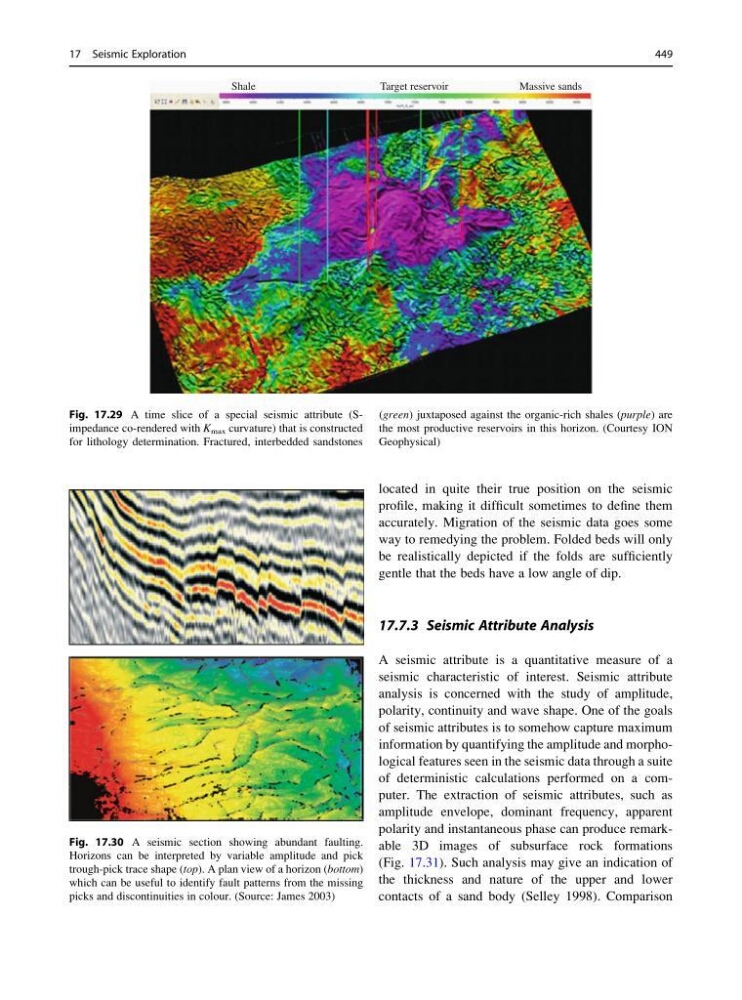
Fig. 17.30 A seismic section showing abundant faulting.
Horizons can be interpreted by variable amplitude and pick
trough-pick trace shape (top). A plan view of a horizon (bottom)
which can be useful to identify fault patterns from the missing
picks and discontinuities in colour. (Source: James 2003)
17 Seismic Exploration
449
profile, making it difficult sometimes to define them
accurately. Migration of the seismic data goes some
way to remedying the problem. Folded beds will only
be realistically depicted if the folds are sufficiently
gentle that the beds have a low angle of dip.
17.7.3 Seismic Attribute Analysis
A seismic attribute is a quantitative measure of a
seismic characteristic of interest. Seismic attribute
analysis is concerned with the study of amplitude,
polarity, continuity and wave shape. One of the goals
of seismic attributes is to somehow capture maximum
information by quantifying the amplitude and morphological features seen in the seismic data through a suite
of deterministic calculations performed on a computer. The extraction of seismic attributes, such as
amplitude envelope, dominant frequency, apparent
polarity and instantaneous phase can produce remarkable 3D images of subsurface rock formations
(Fig. 17.31). Such analysis may give an indication of
the thickness and nature of the upper and lower
contacts of a sand body (Selley 1998). Comparison
Shale
Target reservoir
Massive sands
Fig. 17.29 A time slice of a special seismic attribute (Simpedance co-rendered with K max curvature) that is constructed
for lithology determination. Fractured, interbedded sandstones
(green) juxtaposed against the organic-rich shales (purple) are
the most productive reservoirs in this horizon. (Courtesy ION
Geophysical)
Fig. 17.30 A seismic section showing abundant faulting.
Horizons can be interpreted by variable amplitude and pick
trough-pick trace shape (top). A plan view of a horizon (bottom)
which can be useful to identify fault patterns from the missing
picks and discontinuities in colour. (Source: James 2003)
17 Seismic Exploration
449