

other side (Fig. 17.5). Seismic exploration, however,
as employed by the petroleum geologist, makes use of
artificially generated pulses (seismic sources). The
principle is simple; an impulse source sends acoustic
energy into the Earth. This energy propagates in many
directions and is reflected and refracted when it
encounters boundaries between two layers. Sensors
(seismic receivers) placed on the surface measure the
reflected or refracted acoustic energy. These artificial
sources are much weaker than the natural seismic
source (earthquake) but are more focused towards
areas of specific stratigraphic interest.
17.3.1 Seismic Sources
Different seismic sources are usually used in land and
marine acquisitions. In marine environments seismic
energy is normally generated using arrays of air-guns,
whereas in land seismic one often uses explosives or
vibrators. An air-gun is a device that releases highly
compressed air (at typically 2,000–5,000 psi) into the
water surrounding the gun (Fig. 17.6b). A vibrator is
an adjustable mechanical source that delivers vibratory seismic energy into the ground (Fig. 17.6a). A
vibrator source sends a controlled-frequency sweep
into the ground. The recorded data are then convolved
with the original sweep to produce a usable signal.
Dynamite – a combination of explosive and detonator,
is used as a seismic source. The detonator helps to
ignite the explosives. When dynamite ignites, a shock
wave propagates with a speed of 3,000–10,000 m/s. It
provides an impulsive energy that can be converted
into ground motion. It is customary to drill a hole to
load dynamite and fill it with heavy mud before shooting. Dynamite can generate usable signal strengths and
a bandwidth that covers a wide spectrum of seismic
energy. It includes a variety of energy sources based
on varying explosive output parameters to meet geological and climatic conditions.
17.3.2 Seismic Receivers
Hydrophones and geophones serve as receivers for
seismic signals. The hydrophone is a device designed
for use in detecting seismic energy in the form of
pressure changes in water during marine seismic
acquisition (Fig. 17.7a). It measures pressure
variations with the aid of piezoelectric material,
which generates a voltage upon deformation. The
two piezoelectric elements in one hydrophone are
connected and polarised so that voltages due to pressure waves (returning signal) add and voltages due to
one-directional acceleration will cancel. In this way
the influence of movements due to currents, wave
action and so on will be minimised. Hydrophones are
combined to form streamers that are towed by seismic
vessels or deployed in a borehole. A typical length of a
streamer is about 4–6 km where a single receiver
section is typically 75 m long and contains 96
hydrophones which are grouped in arrays of a predefined length, mostly 12.5 or 25 m.
The geophone is a device used in surface seismic
acquisition, both onshore and on the seabed offshore,
that detects ground velocity produced by seismic
waves and transforms the motion into electrical
impulses
(Fig.
17.7b).
Geophones,
unlike
hydrophones, detect motion rather than pressure. Conventional seismic surveys on land use one geophone or
a group of geophones per receiver location to detect
motion in the vertical direction. The three-component
surface waves
minute mark
P
S
Shadow
zone
Outer
core
P wa ve s
Inner core
Earthquake
P a n d S w a v e s s e
e n
P a n d S
w a v e
s
P w a v e s o n l y
N o P o r S w av es
N o S
w a v
e s
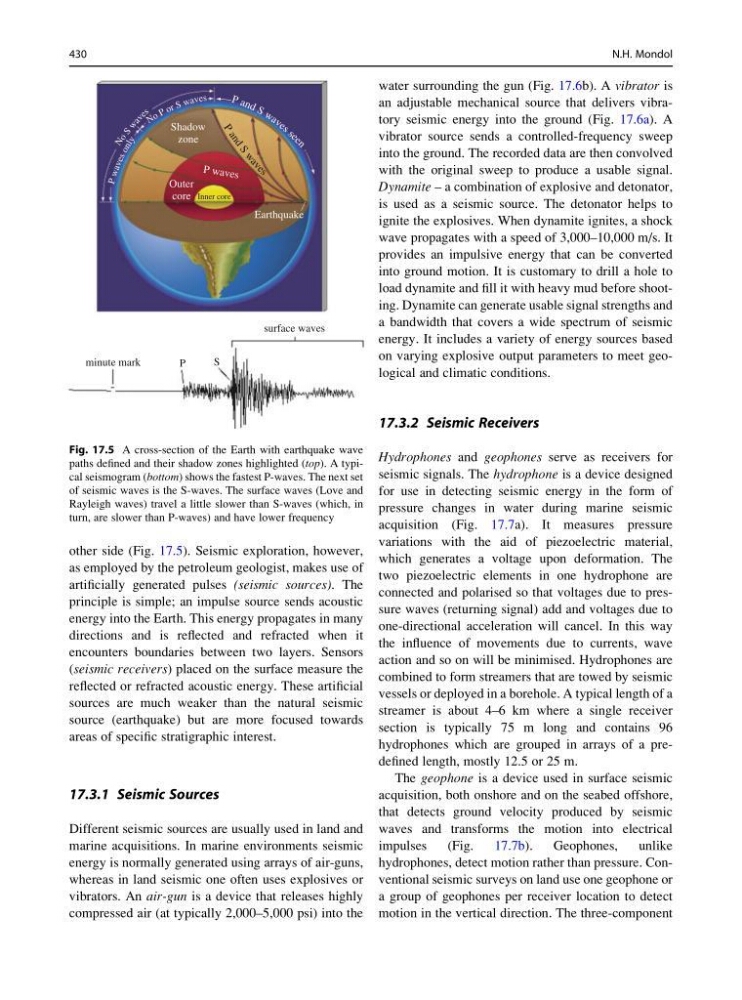
Fig. 17.5 A cross-section of the Earth with earthquake wave
paths defined and their shadow zones highlighted (top). A typical seismogram (bottom) shows the fastest P-waves. The next set
of seismic waves is the S-waves. The surface waves (Love and
Rayleigh waves) travel a little slower than S-waves (which, in
turn, are slower than P-waves) and have lower frequency
430
N.H. Mondol
as employed by the petroleum geologist, makes use of
artificially generated pulses (seismic sources). The
principle is simple; an impulse source sends acoustic
energy into the Earth. This energy propagates in many
directions and is reflected and refracted when it
encounters boundaries between two layers. Sensors
(seismic receivers) placed on the surface measure the
reflected or refracted acoustic energy. These artificial
sources are much weaker than the natural seismic
source (earthquake) but are more focused towards
areas of specific stratigraphic interest.
17.3.1 Seismic Sources
Different seismic sources are usually used in land and
marine acquisitions. In marine environments seismic
energy is normally generated using arrays of air-guns,
whereas in land seismic one often uses explosives or
vibrators. An air-gun is a device that releases highly
compressed air (at typically 2,000–5,000 psi) into the
water surrounding the gun (Fig. 17.6b). A vibrator is
an adjustable mechanical source that delivers vibratory seismic energy into the ground (Fig. 17.6a). A
vibrator source sends a controlled-frequency sweep
into the ground. The recorded data are then convolved
with the original sweep to produce a usable signal.
Dynamite – a combination of explosive and detonator,
is used as a seismic source. The detonator helps to
ignite the explosives. When dynamite ignites, a shock
wave propagates with a speed of 3,000–10,000 m/s. It
provides an impulsive energy that can be converted
into ground motion. It is customary to drill a hole to
load dynamite and fill it with heavy mud before shooting. Dynamite can generate usable signal strengths and
a bandwidth that covers a wide spectrum of seismic
energy. It includes a variety of energy sources based
on varying explosive output parameters to meet geological and climatic conditions.
17.3.2 Seismic Receivers
Hydrophones and geophones serve as receivers for
seismic signals. The hydrophone is a device designed
for use in detecting seismic energy in the form of
pressure changes in water during marine seismic
acquisition (Fig. 17.7a). It measures pressure
variations with the aid of piezoelectric material,
which generates a voltage upon deformation. The
two piezoelectric elements in one hydrophone are
connected and polarised so that voltages due to pressure waves (returning signal) add and voltages due to
one-directional acceleration will cancel. In this way
the influence of movements due to currents, wave
action and so on will be minimised. Hydrophones are
combined to form streamers that are towed by seismic
vessels or deployed in a borehole. A typical length of a
streamer is about 4–6 km where a single receiver
section is typically 75 m long and contains 96
hydrophones which are grouped in arrays of a predefined length, mostly 12.5 or 25 m.
The geophone is a device used in surface seismic
acquisition, both onshore and on the seabed offshore,
that detects ground velocity produced by seismic
waves and transforms the motion into electrical
impulses
(Fig.
17.7b).
Geophones,
unlike
hydrophones, detect motion rather than pressure. Conventional seismic surveys on land use one geophone or
a group of geophones per receiver location to detect
motion in the vertical direction. The three-component
surface waves
minute mark
P
S
Shadow
zone
Outer
core
P wa ve s
Inner core
Earthquake
P a n d S w a v e s s e
e n
P a n d S
w a v e
s
P w a v e s o n l y
N o P o r S w av es
N o S
w a v
e s
Fig. 17.5 A cross-section of the Earth with earthquake wave
paths defined and their shadow zones highlighted (top). A typical seismogram (bottom) shows the fastest P-waves. The next set
of seismic waves is the S-waves. The surface waves (Love and
Rayleigh waves) travel a little slower than S-waves (which, in
turn, are slower than P-waves) and have lower frequency
430
N.H. Mondol