

have to be compensated for with heavier rocks below
the basin. We can assume a depth of compensation of
about 100 km. This means that the weight of a column
of rock plus any water present down to a depth of
100 km must be the same everywhere. Subsidence of
a sedimentary basin may be due to several crustal
processes:
1. Stretching and thinning of the continental crust.
Heavier mantle rocks then make up a greater percentage of the rock column down to a compensation depth of about 100 km.
2. Cooling, i.e. lower geothermal gradients in the
crust, lead to contraction and a higher rock density
(thermal contraction), and this will result in
subsidence.
3. Increased loading by water, sediments or other
rocks will cause subsidence. Water loading could
be due to a transgression increasing the weight of
the water column. Sediment loading occurs with
basin infilling.
4. Subsidence along subduction zones. This results in
lower geothermal gradients in the downwarddeflected crust, so that the density also increases.
5. Tectonic loading. Thrusting of tectonic plates leads
to increased loading on the part of the Earth’s crust
in question and we have subsidence, especially in
front of nappes (foreland basins).
8.8.2 Changes in Sea Level and
Sedimentation and Isostatic
Compensation
Variations in sea level due to eustatic transgressions or
tectonic subsidence will represent loading or
unloading of the crust which will reinforce the primary
change in sea level. If the sea rises 100 m, for example
due to ice sheet melting, this will increase the isostatic
loading on the seafloor. We can calculate that there
will be a further 43.5 m of subsidence, so that the total
increase in the depth of water at equilibrium will be
143.5 m.
If a sedimentary basin with this depth of water is
filled with sediment, there will be further isostatic
subsidence because of the weight of sediments,
providing accommodation for deposition totalling
250–300 m depending on the density of the sediments.
A 100 m rise in sea level will thus lead to deposition of
almost 300 m of sediment. In the same way, primary
tectonic subsidence due to cooling of the ocean floor
will lead to further subsidence due to increased water
and sediment loading.
Using stratigraphic data in the form of measured
profiles or oil wells as our starting point, we can
calculate backwards to the primary tectonic or eustatic
changes in sea level. This method is called
“backstripping”.
Z ¼ Yððρ m À ρ s Þ=tðρ m À ρ w ÞÞΔHρ w =ðρ m À ρ w Þ
þ ðH À ΔHÞ
where Z is the primary tectonic subsidence, F is a
factor which is a function of the rigidity of the Earth’s
crust, ΔH is the change in sea level and H is the water
depth (Watts 1983). Y is the sediment thickness
compensated for compaction, i.e. the sediment
Oceanic crust
Maximum sediment thickness (km)
Thickness of continental crust
Average density of sediments (g/cm
3 )
1.9
2.1
2.3
2.5
2.7
0
5
10
15
20
25
30 km
25 km
20 km
15 km
10 km
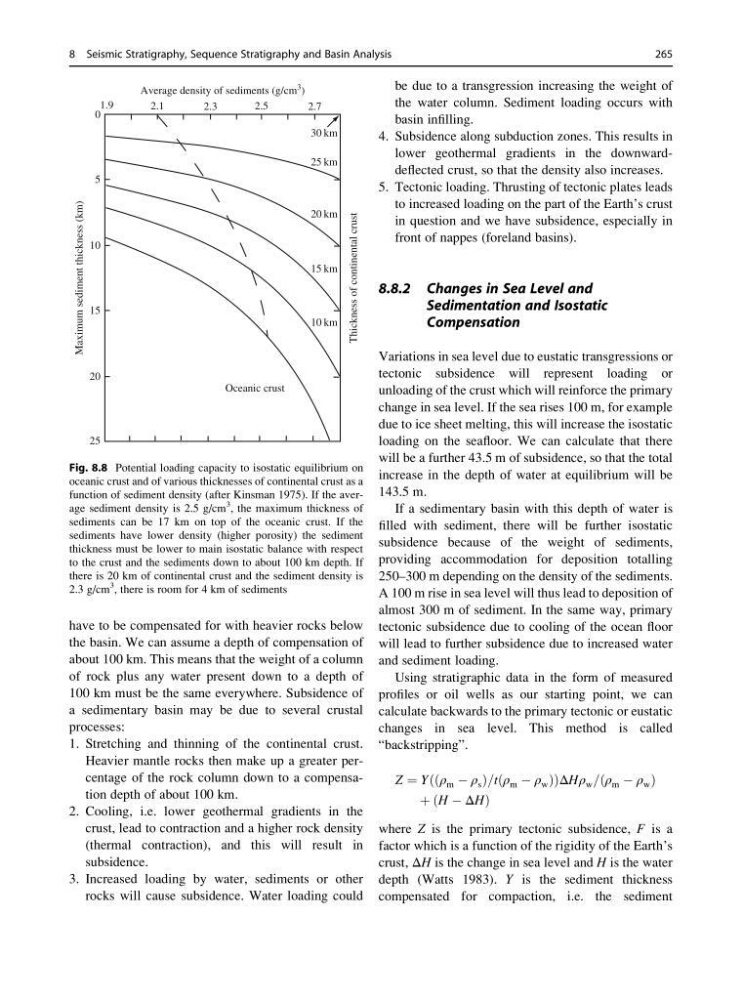
Fig. 8.8 Potential loading capacity to isostatic equilibrium on
oceanic crust and of various thicknesses of continental crust as a
function of sediment density (after Kinsman 1975). If the average sediment density is 2.5 g/cm
3
, the maximum thickness of
sediments can be 17 km on top of the oceanic crust. If the
sediments have lower density (higher porosity) the sediment
thickness must be lower to main isostatic balance with respect
to the crust and the sediments down to about 100 km depth. If
there is 20 km of continental crust and the sediment density is
2.3 g/cm
3
, there is room for 4 km of sediments
8 Seismic Stratigraphy, Sequence Stratigraphy and Basin Analysis
265
the basin. We can assume a depth of compensation of
about 100 km. This means that the weight of a column
of rock plus any water present down to a depth of
100 km must be the same everywhere. Subsidence of
a sedimentary basin may be due to several crustal
processes:
1. Stretching and thinning of the continental crust.
Heavier mantle rocks then make up a greater percentage of the rock column down to a compensation depth of about 100 km.
2. Cooling, i.e. lower geothermal gradients in the
crust, lead to contraction and a higher rock density
(thermal contraction), and this will result in
subsidence.
3. Increased loading by water, sediments or other
rocks will cause subsidence. Water loading could
be due to a transgression increasing the weight of
the water column. Sediment loading occurs with
basin infilling.
4. Subsidence along subduction zones. This results in
lower geothermal gradients in the downwarddeflected crust, so that the density also increases.
5. Tectonic loading. Thrusting of tectonic plates leads
to increased loading on the part of the Earth’s crust
in question and we have subsidence, especially in
front of nappes (foreland basins).
8.8.2 Changes in Sea Level and
Sedimentation and Isostatic
Compensation
Variations in sea level due to eustatic transgressions or
tectonic subsidence will represent loading or
unloading of the crust which will reinforce the primary
change in sea level. If the sea rises 100 m, for example
due to ice sheet melting, this will increase the isostatic
loading on the seafloor. We can calculate that there
will be a further 43.5 m of subsidence, so that the total
increase in the depth of water at equilibrium will be
143.5 m.
If a sedimentary basin with this depth of water is
filled with sediment, there will be further isostatic
subsidence because of the weight of sediments,
providing accommodation for deposition totalling
250–300 m depending on the density of the sediments.
A 100 m rise in sea level will thus lead to deposition of
almost 300 m of sediment. In the same way, primary
tectonic subsidence due to cooling of the ocean floor
will lead to further subsidence due to increased water
and sediment loading.
Using stratigraphic data in the form of measured
profiles or oil wells as our starting point, we can
calculate backwards to the primary tectonic or eustatic
changes in sea level. This method is called
“backstripping”.
Z ¼ Yððρ m À ρ s Þ=tðρ m À ρ w ÞÞΔHρ w =ðρ m À ρ w Þ
þ ðH À ΔHÞ
where Z is the primary tectonic subsidence, F is a
factor which is a function of the rigidity of the Earth’s
crust, ΔH is the change in sea level and H is the water
depth (Watts 1983). Y is the sediment thickness
compensated for compaction, i.e. the sediment
Oceanic crust
Maximum sediment thickness (km)
Thickness of continental crust
Average density of sediments (g/cm
3 )
1.9
2.1
2.3
2.5
2.7
0
5
10
15
20
25
30 km
25 km
20 km
15 km
10 km
Fig. 8.8 Potential loading capacity to isostatic equilibrium on
oceanic crust and of various thicknesses of continental crust as a
function of sediment density (after Kinsman 1975). If the average sediment density is 2.5 g/cm
3
, the maximum thickness of
sediments can be 17 km on top of the oceanic crust. If the
sediments have lower density (higher porosity) the sediment
thickness must be lower to main isostatic balance with respect
to the crust and the sediments down to about 100 km depth. If
there is 20 km of continental crust and the sediment density is
2.3 g/cm
3
, there is room for 4 km of sediments
8 Seismic Stratigraphy, Sequence Stratigraphy and Basin Analysis
265