

content. Sparite is thus a term for well-sorted carbonate
sand, originally with high primary porosity, which has
later been filled with calcite cement (spar). As such it
normally represents a high-energy environment. Thus
the relative proportions of micrite and sparry calcite
cement indicate the degree of “sorting” or current
strength of the environment during deposition.
As illustrated in Fig. 5.59 there are two parts to the
rock name classification. The first part is contributed
by the abbreviated allochems’ name based on the
dominating type of allochem. The second part reflects
the void-filling material (micrite or sparry calcite).
Biosparite, for example, means that the carbonate
rock is dominated by fossil fragments without any
matrix, but cemented with sparry calcite cement.
Oomicrites and pelmicrites are sediments consisting
of oolites or pellets with a carbonate mud matrix.
Intrasparite consists of carbonate fragments eroded
inside a basin to form well-sorted carbonate deposits.
Sediments with a considerable percentage of grains
larger than 1.0 mm are called rudites. A coarse-grained
bioclastic sparite would thus be classified as
biosparrudite.
If the allochems are found in a matrix of carbonate
mud (micrite) the rock is termed biomicrite, oomicrite,
intramicrite or pelmicrite. These sediments represent
low-energy environments where neither currents nor
wave action separate the mud from the grains. Micrites
normally have too low porosity and permeability to be
reservoir rocks. While the carbonate mud may initially
have high porosity this is strongly reduced by mechanical and chemical compaction. Micrites may, however,
become tectonically fractured, thus increasing their
porosity and particularly their permeability. Secondary porosity due to dissolution of aragonite and highMg calcite fossils may also improve the reservoir
quality of micrites.
Carbonate sediments deposited in environments
with sufficient wave or current energy to separate the
grains from the muddy matrix can be well-sorted with
Sparry allochemical
limestones
Micritic allochemical
limestones
Intraclasts
Ooids
Bioclasts
Peloids
Sparry
calcite
Oosparite
Oomicrite
Intrasparite
Intramicrite
Biosparite
Biomicrite
Pelsparite
Pelmicrite
Fig. 5.59 Somewhat simplified schematic representation of the
constituents that form the basis for Folk’s classification of carbonate rocks (modified from Tucker and Wright 1990)
III
II
I
Sparry calcite
cement
Allochem grains
Sparry allochemical
limestones
(Cleanly washed)
Microcrystalline
allochemical
limestones
Microcrystalline
limestones
(Micrites)
Intraclasts
Ooids
Fossils
Pellets
Carbonate
mud
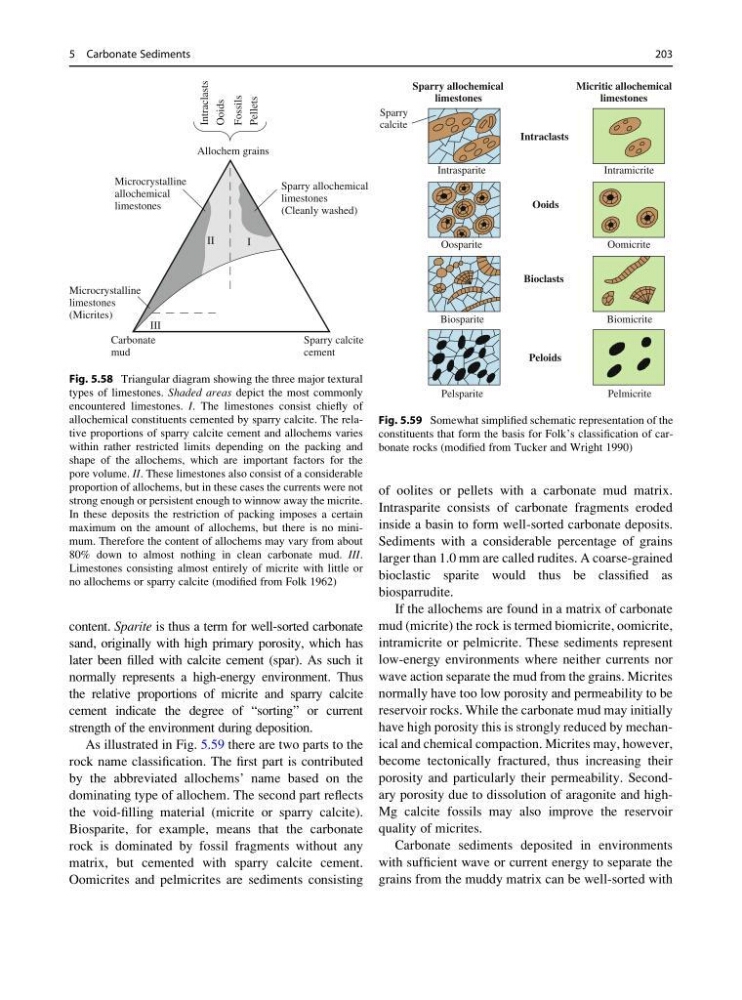
Fig. 5.58 Triangular diagram showing the three major textural
types of limestones. Shaded areas depict the most commonly
encountered limestones. I. The limestones consist chiefly of
allochemical constituents cemented by sparry calcite. The relative proportions of sparry calcite cement and allochems varies
within rather restricted limits depending on the packing and
shape of the allochems, which are important factors for the
pore volume. II. These limestones also consist of a considerable
proportion of allochems, but in these cases the currents were not
strong enough or persistent enough to winnow away the micrite.
In these deposits the restriction of packing imposes a certain
maximum on the amount of allochems, but there is no minimum. Therefore the content of allochems may vary from about
80% down to almost nothing in clean carbonate mud. III.
Limestones consisting almost entirely of micrite with little or
no allochems or sparry calcite (modified from Folk 1962)
5 Carbonate Sediments
203
sand, originally with high primary porosity, which has
later been filled with calcite cement (spar). As such it
normally represents a high-energy environment. Thus
the relative proportions of micrite and sparry calcite
cement indicate the degree of “sorting” or current
strength of the environment during deposition.
As illustrated in Fig. 5.59 there are two parts to the
rock name classification. The first part is contributed
by the abbreviated allochems’ name based on the
dominating type of allochem. The second part reflects
the void-filling material (micrite or sparry calcite).
Biosparite, for example, means that the carbonate
rock is dominated by fossil fragments without any
matrix, but cemented with sparry calcite cement.
Oomicrites and pelmicrites are sediments consisting
of oolites or pellets with a carbonate mud matrix.
Intrasparite consists of carbonate fragments eroded
inside a basin to form well-sorted carbonate deposits.
Sediments with a considerable percentage of grains
larger than 1.0 mm are called rudites. A coarse-grained
bioclastic sparite would thus be classified as
biosparrudite.
If the allochems are found in a matrix of carbonate
mud (micrite) the rock is termed biomicrite, oomicrite,
intramicrite or pelmicrite. These sediments represent
low-energy environments where neither currents nor
wave action separate the mud from the grains. Micrites
normally have too low porosity and permeability to be
reservoir rocks. While the carbonate mud may initially
have high porosity this is strongly reduced by mechanical and chemical compaction. Micrites may, however,
become tectonically fractured, thus increasing their
porosity and particularly their permeability. Secondary porosity due to dissolution of aragonite and highMg calcite fossils may also improve the reservoir
quality of micrites.
Carbonate sediments deposited in environments
with sufficient wave or current energy to separate the
grains from the muddy matrix can be well-sorted with
Sparry allochemical
limestones
Micritic allochemical
limestones
Intraclasts
Ooids
Bioclasts
Peloids
Sparry
calcite
Oosparite
Oomicrite
Intrasparite
Intramicrite
Biosparite
Biomicrite
Pelsparite
Pelmicrite
Fig. 5.59 Somewhat simplified schematic representation of the
constituents that form the basis for Folk’s classification of carbonate rocks (modified from Tucker and Wright 1990)
III
II
I
Sparry calcite
cement
Allochem grains
Sparry allochemical
limestones
(Cleanly washed)
Microcrystalline
allochemical
limestones
Microcrystalline
limestones
(Micrites)
Intraclasts
Ooids
Fossils
Pellets
Carbonate
mud
Fig. 5.58 Triangular diagram showing the three major textural
types of limestones. Shaded areas depict the most commonly
encountered limestones. I. The limestones consist chiefly of
allochemical constituents cemented by sparry calcite. The relative proportions of sparry calcite cement and allochems varies
within rather restricted limits depending on the packing and
shape of the allochems, which are important factors for the
pore volume. II. These limestones also consist of a considerable
proportion of allochems, but in these cases the currents were not
strong enough or persistent enough to winnow away the micrite.
In these deposits the restriction of packing imposes a certain
maximum on the amount of allochems, but there is no minimum. Therefore the content of allochems may vary from about
80% down to almost nothing in clean carbonate mud. III.
Limestones consisting almost entirely of micrite with little or
no allochems or sparry calcite (modified from Folk 1962)
5 Carbonate Sediments
203