

accelerates the weathering. The more massive granitic
areas will stand out in the terrain, and because precipitation runs swiftly down into the depressions between
the elevated portions, the topographic difference will
become more and more pronounced. Granites
surrounded by sedimentary rocks will, because of
their high content of feldspar, normally weather faster
than the sediments which contain more quartz and other
stable minerals. Particularly if the sediments consist of
quartzites and shales, the granite will form a depression
in the terrain. The weathering products from granites
will normally be quartz grains which form sand grains
the same size as the quartz crystals in the granite, and
clay consisting of kaolinite, and possibly also some
illite and smectite formed from feldspars and micas.
We have at the outset a bimodal grain-size distribution
with sand and clay, but very little silt.
Basic rocks (e.g. gabbro) will weather far more
rapidly than granite because basic plagioclase (Cafeldspar), pyroxenes and hornblende are very unstable
and dissolve faster than silica-rich (acid) minerals.
During progressive weathering sodium, potassium,
magnesisum and calcium will be removed by the
groundwater but some potassium may be adsorbed
on clay minerals. The weathering residue will be
enriched in elements with low solubility such as Ti,
Al, Si and Mn (Fig. 3.13). In a normal, oxidising
weathering environment, all the iron will precipitate
out again as iron oxide (Fe(OH) 3 ) while the magnesium will tend to remain in solution. In areas with high
rainfall the concentration of ions like K
+
, Na
+ and
silica will be diluted and kaolinite will precipitate.
Where porewater circulation is slower we may
get a higher build-up of Mg
++ , Ca
++ and silica
concentrations in the water, so that smectite (montmorillonite) or chlorite precipitates. Smectite requires
porewater with a relatively high silica concentration
(Fig. 3.13) and is therefore often found in sediments
derived from volcanic rocks that contain glass or soluble silicate minerals. Biogenic sources of silica
(diatoms, radiolaria) will also increase the silica concentration in porewater because amorphous silica
is much more soluble than quartz. In desert
environments evaporation of water after rainfalls will
concentrate silica in the porewater and make smectite
stable. Figure 3.13 shows analyses of rocks at various
stages of transformation due to weathering.
Weathering proceeds particularly rapidly in
amphibolites: Na
+ , Mg
++ and Ca
++ are quickly leached
out, while A1
3+ , Fe
3+ and Ti
4+ become enriched. K
+ is
however to a large extent adsorbed on clay minerals
and much more Na
+ than K
+ is therefore supplied to
the oceans by the rivers.
After the alkali cations have been dissolved out of
the silicates and kaolinite has been formed, extremely
slow leaching of quartz commences. When the concentration of silica in the porewater is sufficiently low
(see Fig. 3.14), kaolinite will be unstable and be
replaced by gibbsite Al(OH) 3 . Since gibbsite cannot
form as long as the porewater is in equilibrium with
quartz, all the quartz must have dissolved first or
become encapsulated (e.g. in a layer of iron oxides).
Clearly, gibbsite will form far more rapidly during the
weathering of basic rocks than of granites, since the
initial silica content is considerably lower. It takes a
very long time to dissolve all the quartz in a granite.
The solubility of quartz at surface temperatures and
pH 7–8 is about 5 ppm, increasing at higher pH values.
Alkaline (basic) water can therefore increase the solution rate of quartz. The end product of the weathering
process is laterite, which consists of gibbsite and iron
oxides or hydroxides. Under atmospheric (oxidising)
conditions with a neutral pH, aluminum hydroxide and
iron oxides may for practical purposes be regarded as
insoluble.
Weathering = Rock + H 2 O + H
+
Weathering product + Ions in solution
Exfoliation cracks
Granite
Rainwater
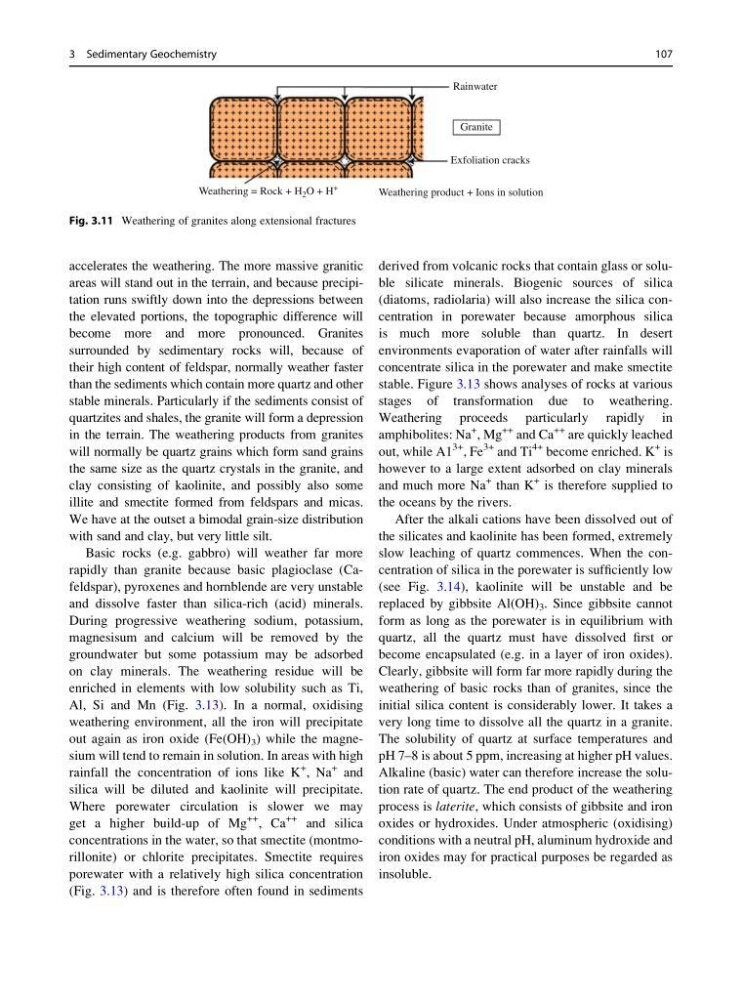
Fig. 3.11 Weathering of granites along extensional fractures
3 Sedimentary Geochemistry
107
areas will stand out in the terrain, and because precipitation runs swiftly down into the depressions between
the elevated portions, the topographic difference will
become more and more pronounced. Granites
surrounded by sedimentary rocks will, because of
their high content of feldspar, normally weather faster
than the sediments which contain more quartz and other
stable minerals. Particularly if the sediments consist of
quartzites and shales, the granite will form a depression
in the terrain. The weathering products from granites
will normally be quartz grains which form sand grains
the same size as the quartz crystals in the granite, and
clay consisting of kaolinite, and possibly also some
illite and smectite formed from feldspars and micas.
We have at the outset a bimodal grain-size distribution
with sand and clay, but very little silt.
Basic rocks (e.g. gabbro) will weather far more
rapidly than granite because basic plagioclase (Cafeldspar), pyroxenes and hornblende are very unstable
and dissolve faster than silica-rich (acid) minerals.
During progressive weathering sodium, potassium,
magnesisum and calcium will be removed by the
groundwater but some potassium may be adsorbed
on clay minerals. The weathering residue will be
enriched in elements with low solubility such as Ti,
Al, Si and Mn (Fig. 3.13). In a normal, oxidising
weathering environment, all the iron will precipitate
out again as iron oxide (Fe(OH) 3 ) while the magnesium will tend to remain in solution. In areas with high
rainfall the concentration of ions like K
+
, Na
+ and
silica will be diluted and kaolinite will precipitate.
Where porewater circulation is slower we may
get a higher build-up of Mg
++ , Ca
++ and silica
concentrations in the water, so that smectite (montmorillonite) or chlorite precipitates. Smectite requires
porewater with a relatively high silica concentration
(Fig. 3.13) and is therefore often found in sediments
derived from volcanic rocks that contain glass or soluble silicate minerals. Biogenic sources of silica
(diatoms, radiolaria) will also increase the silica concentration in porewater because amorphous silica
is much more soluble than quartz. In desert
environments evaporation of water after rainfalls will
concentrate silica in the porewater and make smectite
stable. Figure 3.13 shows analyses of rocks at various
stages of transformation due to weathering.
Weathering proceeds particularly rapidly in
amphibolites: Na
+ , Mg
++ and Ca
++ are quickly leached
out, while A1
3+ , Fe
3+ and Ti
4+ become enriched. K
+ is
however to a large extent adsorbed on clay minerals
and much more Na
+ than K
+ is therefore supplied to
the oceans by the rivers.
After the alkali cations have been dissolved out of
the silicates and kaolinite has been formed, extremely
slow leaching of quartz commences. When the concentration of silica in the porewater is sufficiently low
(see Fig. 3.14), kaolinite will be unstable and be
replaced by gibbsite Al(OH) 3 . Since gibbsite cannot
form as long as the porewater is in equilibrium with
quartz, all the quartz must have dissolved first or
become encapsulated (e.g. in a layer of iron oxides).
Clearly, gibbsite will form far more rapidly during the
weathering of basic rocks than of granites, since the
initial silica content is considerably lower. It takes a
very long time to dissolve all the quartz in a granite.
The solubility of quartz at surface temperatures and
pH 7–8 is about 5 ppm, increasing at higher pH values.
Alkaline (basic) water can therefore increase the solution rate of quartz. The end product of the weathering
process is laterite, which consists of gibbsite and iron
oxides or hydroxides. Under atmospheric (oxidising)
conditions with a neutral pH, aluminum hydroxide and
iron oxides may for practical purposes be regarded as
insoluble.
Weathering = Rock + H 2 O + H
+
Weathering product + Ions in solution
Exfoliation cracks
Granite
Rainwater
Fig. 3.11 Weathering of granites along extensional fractures
3 Sedimentary Geochemistry
107