

catalysts have been the most popular of the transition metal catalysts and are easily
handled and highly efficient [15].
Of the copper(I) systems, probably the most well-known is the so-called atom
transfer radical polymerization (ATRP), which utilizes the lower oxidation state
copper(I) halide and (usually) nitrogen-based ligand complexes as the catalyst.
Further research resulted in development of systems such as simultaneous reverse
and normal initiation (SR&NI) ATRP, activators generated by electron transfer
(AGET) ATRP, activators regenerated by electron transfer (ARGET) ATRP,
initiators for continuous activator regeneration (ICAR) ATRP and electrochemically
mediated ATRP (eATRP). In these systems, copper (I) generated by reduction of
higher oxidation state copper(II) was believed to be always present and act as the
predominant activator [18].
For the copper(0) systems, copper(I) is used as a catalyst precursor to generate
copper(0), which reacts with organic halides for radical generation. Previous research
has suggested that in polar solvents copper(I) halides and nitrogen-based ligand
complexes are often unstable to sometimes rapid disproportionation into copper
(0) and copper (II) halide and this disproportionation facilitates an fast LRP, in
which the radicals are generated from the nascent copper(0) atomic species and the
deactivation is mediated by copper(II) halide. Both steps are proposed to proceed via
a low activation energy outer-sphere single-electron-transfer mechanism and thus the
polymerization was named single electron transfer living radical polymerization
(SET-LRP) [19, 20].
The direct polymerization of a protected glycomonomer via ATRP was first
reported in 1998 using CuBr/4,4
0 -di-n-heptyl-2, 2
0 -bipyridine catalyst in veratrole
at 80
C [21] (see Table 1). Direct copper-mediated polymerization of unprotected
glycomonomers was generally performed in highly polar solvents such as alcohols,
dimethylformamide (DMF), dimethyl sulfoxide (DMSO), N-methyl-2-pyrrolidone
(NMP) or mixtures with water [22]. The main reason for choosing such highly polar
solvents is to solubilize the glycomonomer and the obtained glycopolymer, yet in
some cases it resulted in low initiation efficiency or polymerization that was out of
control [22, 23]. Previous research also revealed that direct aqueous ATRP of
unprotected glycomonomers showed poor living character and that high ratios of
alcohol as the co-solvent had to be used [24, 25]. The main reason is due to the fast
propagation yet inefficient deactivation and the presence of side reactions under
aqueous condition, such as hydrolysis of initiator and propagating polymer chain
and, more importantly, disproportionation of copper catalyst [26]. Pure water has
only been used as the solvent for surface-initiated polymerization, in which cases
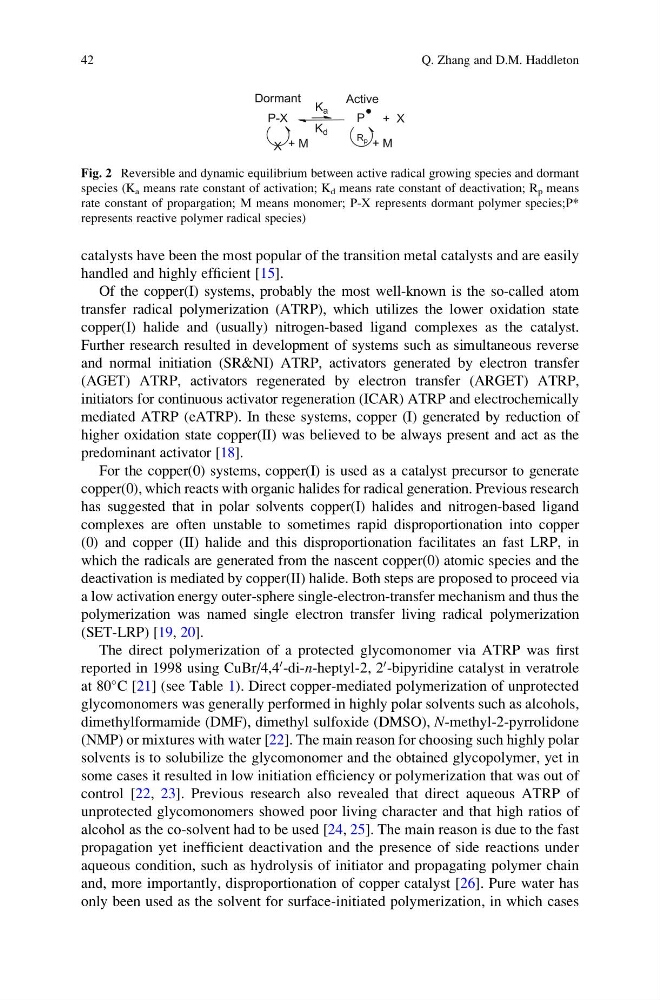
Fig. 2 Reversible and dynamic equilibrium between active radical growing species and dormant
species (K a means rate constant of activation; K d means rate constant of deactivation; R p means
rate constant of propargation; M means monomer; P-X represents dormant polymer species;P*
represents reactive polymer radical species)
42
Q. Zhang and D.M. Haddleton
handled and highly efficient [15].
Of the copper(I) systems, probably the most well-known is the so-called atom
transfer radical polymerization (ATRP), which utilizes the lower oxidation state
copper(I) halide and (usually) nitrogen-based ligand complexes as the catalyst.
Further research resulted in development of systems such as simultaneous reverse
and normal initiation (SR&NI) ATRP, activators generated by electron transfer
(AGET) ATRP, activators regenerated by electron transfer (ARGET) ATRP,
initiators for continuous activator regeneration (ICAR) ATRP and electrochemically
mediated ATRP (eATRP). In these systems, copper (I) generated by reduction of
higher oxidation state copper(II) was believed to be always present and act as the
predominant activator [18].
For the copper(0) systems, copper(I) is used as a catalyst precursor to generate
copper(0), which reacts with organic halides for radical generation. Previous research
has suggested that in polar solvents copper(I) halides and nitrogen-based ligand
complexes are often unstable to sometimes rapid disproportionation into copper
(0) and copper (II) halide and this disproportionation facilitates an fast LRP, in
which the radicals are generated from the nascent copper(0) atomic species and the
deactivation is mediated by copper(II) halide. Both steps are proposed to proceed via
a low activation energy outer-sphere single-electron-transfer mechanism and thus the
polymerization was named single electron transfer living radical polymerization
(SET-LRP) [19, 20].
The direct polymerization of a protected glycomonomer via ATRP was first
reported in 1998 using CuBr/4,4
0 -di-n-heptyl-2, 2
0 -bipyridine catalyst in veratrole
at 80
C [21] (see Table 1). Direct copper-mediated polymerization of unprotected
glycomonomers was generally performed in highly polar solvents such as alcohols,
dimethylformamide (DMF), dimethyl sulfoxide (DMSO), N-methyl-2-pyrrolidone
(NMP) or mixtures with water [22]. The main reason for choosing such highly polar
solvents is to solubilize the glycomonomer and the obtained glycopolymer, yet in
some cases it resulted in low initiation efficiency or polymerization that was out of
control [22, 23]. Previous research also revealed that direct aqueous ATRP of
unprotected glycomonomers showed poor living character and that high ratios of
alcohol as the co-solvent had to be used [24, 25]. The main reason is due to the fast
propagation yet inefficient deactivation and the presence of side reactions under
aqueous condition, such as hydrolysis of initiator and propagating polymer chain
and, more importantly, disproportionation of copper catalyst [26]. Pure water has
only been used as the solvent for surface-initiated polymerization, in which cases
Fig. 2 Reversible and dynamic equilibrium between active radical growing species and dormant
species (K a means rate constant of activation; K d means rate constant of deactivation; R p means
rate constant of propargation; M means monomer; P-X represents dormant polymer species;P*
represents reactive polymer radical species)
42
Q. Zhang and D.M. Haddleton