

materials has been amplified into macroscopic work [50, 144–146]. Unique to the
dendronized polymer system [50], though, is the level of detail at which we can
understand the nanomechanical function as a series of hierarchical processes.
3 Summary
The complex architecture of polymers substituted on each repeat unit with selfassembling dendrons (i.e., dendronized polymers) has lead to the emergence of
nanomechanical function in these materials. Folding of the polymer backbone into
a helical conformation is a compromise between the low energy conformations that
the backbone will allow and the arrangement of dendrons required to achieve a
cylindrical macromolecule, where packing of the dendrons is usually the dominant
force. Dendron–backbone combinations that promote the formation of compact
helical states can then undergo reversible stretching and contraction of the helical
polymer backbone, which is manifest as a molecular-scale mechanical actuator
because of the steric volume of the dendrons. Amphiphilic dendrons that promote
self-organization of the dendronized polymers into columnar p6mm lattices facilitate detailed structural characterization of the molecular-scale events, and provide
a mechanism to amplify the motions of individual molecules into macroscopic
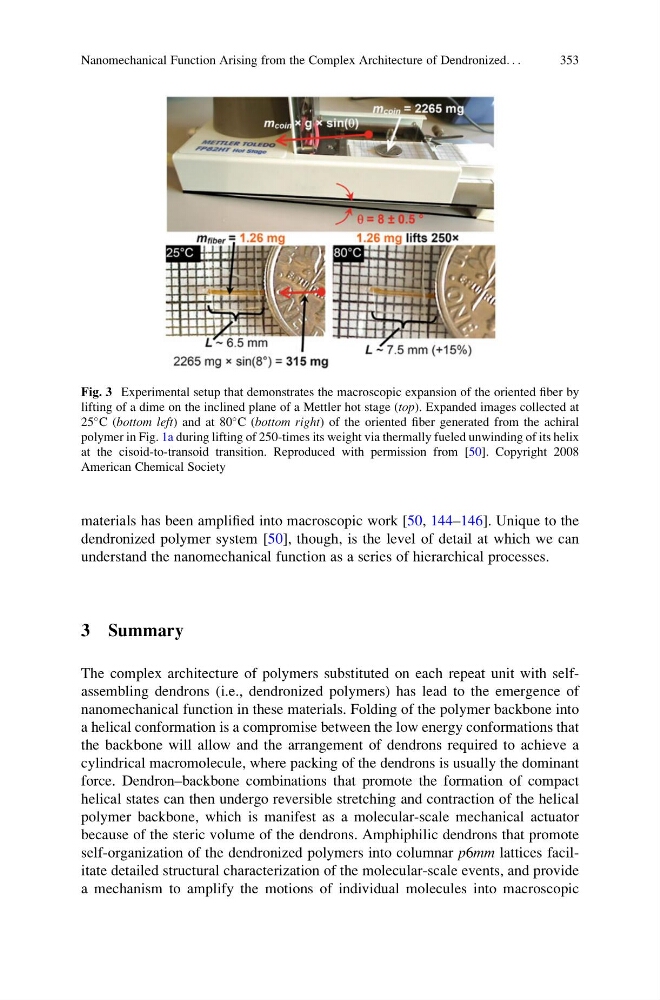
Fig. 3 Experimental setup that demonstrates the macroscopic expansion of the oriented fiber by
lifting of a dime on the inclined plane of a Mettler hot stage (top). Expanded images collected at
25
C (bottom left) and at 80
C (bottom right) of the oriented fiber generated from the achiral
polymer in Fig. 1a during lifting of 250-times its weight via thermally fueled unwinding of its helix
at the cisoid-to-transoid transition. Reproduced with permission from [50]. Copyright 2008
American Chemical Society
Nanomechanical Function Arising from the Complex Architecture of Dendronized. . .
353
dendronized polymer system [50], though, is the level of detail at which we can
understand the nanomechanical function as a series of hierarchical processes.
3 Summary
The complex architecture of polymers substituted on each repeat unit with selfassembling dendrons (i.e., dendronized polymers) has lead to the emergence of
nanomechanical function in these materials. Folding of the polymer backbone into
a helical conformation is a compromise between the low energy conformations that
the backbone will allow and the arrangement of dendrons required to achieve a
cylindrical macromolecule, where packing of the dendrons is usually the dominant
force. Dendron–backbone combinations that promote the formation of compact
helical states can then undergo reversible stretching and contraction of the helical
polymer backbone, which is manifest as a molecular-scale mechanical actuator
because of the steric volume of the dendrons. Amphiphilic dendrons that promote
self-organization of the dendronized polymers into columnar p6mm lattices facilitate detailed structural characterization of the molecular-scale events, and provide
a mechanism to amplify the motions of individual molecules into macroscopic
Fig. 3 Experimental setup that demonstrates the macroscopic expansion of the oriented fiber by
lifting of a dime on the inclined plane of a Mettler hot stage (top). Expanded images collected at
25
C (bottom left) and at 80
C (bottom right) of the oriented fiber generated from the achiral
polymer in Fig. 1a during lifting of 250-times its weight via thermally fueled unwinding of its helix
at the cisoid-to-transoid transition. Reproduced with permission from [50]. Copyright 2008
American Chemical Society
Nanomechanical Function Arising from the Complex Architecture of Dendronized. . .
353