

2.4 New Emulsions
Whereas the preparation of particles with solvent evaporation from apolar droplets
is widely reported, their preparation from polar droplets is still unusual
[13–18]. The challenge is to find a suitable polar solvent with a low boiling point
that can solubilizes both the polymer and the substance to be encapsulated. Water as
dispersed phase in such cases is not always suitable and has been replaced in
non-aqueous emulsions by other polar solvents [15] to allow reactions sensitive
to water such as anionic polymerization [96] or reactions requiring high temperature and the absence or removal of water [97]. Dimethyl formamide (DMF), formic
acid, formamide, or dimethyl sulfoxide (DMSO) are polar solvents that can be used
but that are difficult to remove because of their high boiling points. Recently,
hexafluoroisopropanol (HFIP) was proposed as a suitable candidate for the preparation of polymer nanoparticles via the emulsion–solvent evaporation method. It
also has the ability to be a good solvent for metallopharmaceuticals that need to be
embedded in a carrier material to be delivered in the body [98]. A ruthenium
nitrosyl complex designed for phototherapy that is polar but not soluble in water
could be successfully encaspulated in polymer nanoparticles after the evaporation
of HFIP from HFIP-in-alkane miniemulsions (Fig. 8) [99]. Various polymer
matrixes such as gelatin, PLLA, poly(ethylene terephtalate), and poly(vinyl formal)
could be used for the physical entrapment of complex. The colloidal stability of the
particles was improved by matching the density of the continuous phase to the
density of HFIP, and hence cis-decalin was found to be more suitable than cyclohexane, hexadecane, and isooctane. The nanoparticles could be re-dispersed in
aqeuous solutions after removal of the alkane, and the release of nitric oxide
upon irradiation of the aqueous dispersion with a low intensity UV light could be
demonstrated in a fluorescence assay.
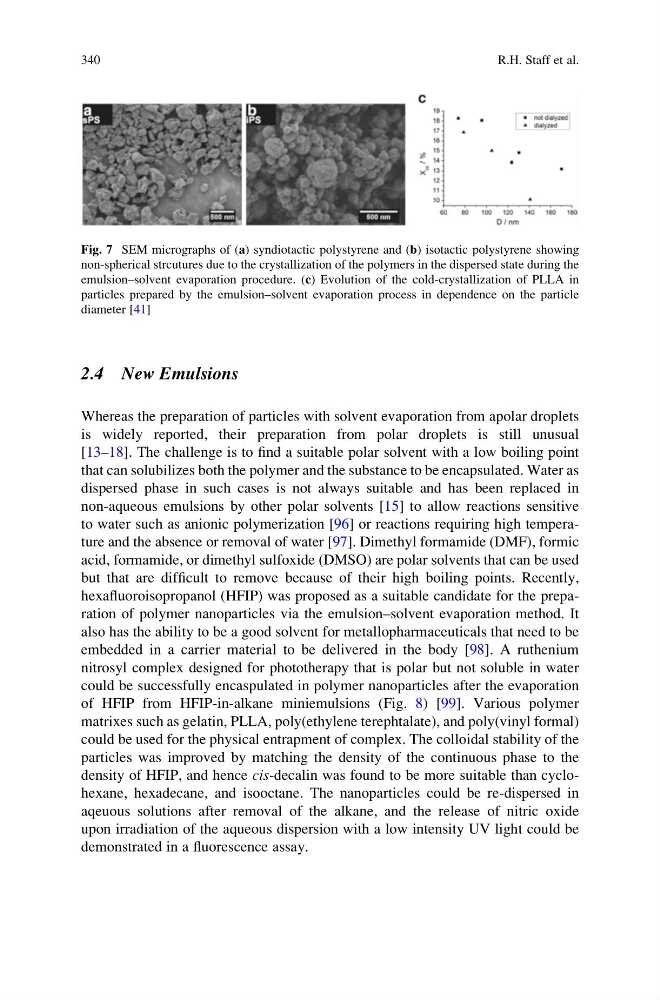
Fig. 7 SEM micrographs of (a) syndiotactic polystyrene and (b) isotactic polystyrene showing
non-spherical strcutures due to the crystallization of the polymers in the dispersed state during the
emulsion–solvent evaporation procedure. (c) Evolution of the cold-crystallization of PLLA in
particles prepared by the emulsion–solvent evaporation process in dependence on the particle
diameter [41]
340
R.H. Staff et al.
Whereas the preparation of particles with solvent evaporation from apolar droplets
is widely reported, their preparation from polar droplets is still unusual
[13–18]. The challenge is to find a suitable polar solvent with a low boiling point
that can solubilizes both the polymer and the substance to be encapsulated. Water as
dispersed phase in such cases is not always suitable and has been replaced in
non-aqueous emulsions by other polar solvents [15] to allow reactions sensitive
to water such as anionic polymerization [96] or reactions requiring high temperature and the absence or removal of water [97]. Dimethyl formamide (DMF), formic
acid, formamide, or dimethyl sulfoxide (DMSO) are polar solvents that can be used
but that are difficult to remove because of their high boiling points. Recently,
hexafluoroisopropanol (HFIP) was proposed as a suitable candidate for the preparation of polymer nanoparticles via the emulsion–solvent evaporation method. It
also has the ability to be a good solvent for metallopharmaceuticals that need to be
embedded in a carrier material to be delivered in the body [98]. A ruthenium
nitrosyl complex designed for phototherapy that is polar but not soluble in water
could be successfully encaspulated in polymer nanoparticles after the evaporation
of HFIP from HFIP-in-alkane miniemulsions (Fig. 8) [99]. Various polymer
matrixes such as gelatin, PLLA, poly(ethylene terephtalate), and poly(vinyl formal)
could be used for the physical entrapment of complex. The colloidal stability of the
particles was improved by matching the density of the continuous phase to the
density of HFIP, and hence cis-decalin was found to be more suitable than cyclohexane, hexadecane, and isooctane. The nanoparticles could be re-dispersed in
aqeuous solutions after removal of the alkane, and the release of nitric oxide
upon irradiation of the aqueous dispersion with a low intensity UV light could be
demonstrated in a fluorescence assay.
Fig. 7 SEM micrographs of (a) syndiotactic polystyrene and (b) isotactic polystyrene showing
non-spherical strcutures due to the crystallization of the polymers in the dispersed state during the
emulsion–solvent evaporation procedure. (c) Evolution of the cold-crystallization of PLLA in
particles prepared by the emulsion–solvent evaporation process in dependence on the particle
diameter [41]
340
R.H. Staff et al.