

not only to allow a reversible aggregation/re-dispersion upon changes, but also to
create emulsions without additional surfactant. The solid content was increased by
successive cycle aggregation/re-dispersion in a lower amount of water to concentrate the dispersion of nanocapsules. In miniemulsion polymerization, a possibility
for increasing the amount of encapsulated substance without increasing the content
of dispersed phase is to dilute the substance and the monomer in a solvent – instead
of diluting the substance only in the monomer – and then to evaporate the
solvent [42].
2 Solvent Evaporation from Nanodroplets
2.1 Mechanism of the Emulsion–Solvent Evaporation
Process
Surprisingly little has been known for many years about the mechanisms governing
the emulsion–solvent evaporation process. The main physical processes underlying
the process are quite simple: a polymer is dissolved in a good solvent, which is then
emulsified in an aqueous medium containing a surfactant. The slow evaporation of
the polymer solvent leads to nucleation of the polymer on the water–solvent
interface [12]. The mechanism for the removal of the solvent is based on its
solubility in the continuous phase, therefore both the temperature and the nature
500 nm
PLLA
PVAc
PPO
PVCi
PMMA
PVF
500 nm
Lauryl methacrylate
OMCTS
PDMS-DE
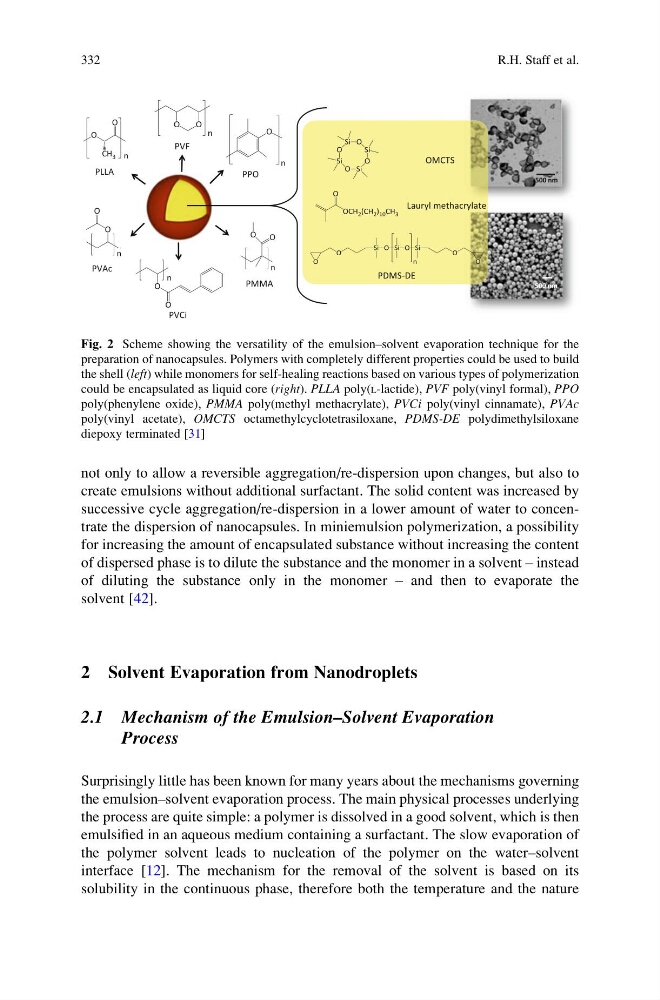
Fig. 2 Scheme showing the versatility of the emulsion–solvent evaporation technique for the
preparation of nanocapsules. Polymers with completely different properties could be used to build
the shell (left) while monomers for self-healing reactions based on various types of polymerization
could be encapsulated as liquid core (right). PLLA poly(L-lactide), PVF poly(vinyl formal), PPO
poly(phenylene oxide), PMMA poly(methyl methacrylate), PVCi poly(vinyl cinnamate), PVAc
poly(vinyl acetate), OMCTS octamethylcyclotetrasiloxane, PDMS-DE polydimethylsiloxane
diepoxy terminated [31]
332
R.H. Staff et al.
create emulsions without additional surfactant. The solid content was increased by
successive cycle aggregation/re-dispersion in a lower amount of water to concentrate the dispersion of nanocapsules. In miniemulsion polymerization, a possibility
for increasing the amount of encapsulated substance without increasing the content
of dispersed phase is to dilute the substance and the monomer in a solvent – instead
of diluting the substance only in the monomer – and then to evaporate the
solvent [42].
2 Solvent Evaporation from Nanodroplets
2.1 Mechanism of the Emulsion–Solvent Evaporation
Process
Surprisingly little has been known for many years about the mechanisms governing
the emulsion–solvent evaporation process. The main physical processes underlying
the process are quite simple: a polymer is dissolved in a good solvent, which is then
emulsified in an aqueous medium containing a surfactant. The slow evaporation of
the polymer solvent leads to nucleation of the polymer on the water–solvent
interface [12]. The mechanism for the removal of the solvent is based on its
solubility in the continuous phase, therefore both the temperature and the nature
500 nm
PLLA
PVAc
PPO
PVCi
PMMA
PVF
500 nm
Lauryl methacrylate
OMCTS
PDMS-DE
Fig. 2 Scheme showing the versatility of the emulsion–solvent evaporation technique for the
preparation of nanocapsules. Polymers with completely different properties could be used to build
the shell (left) while monomers for self-healing reactions based on various types of polymerization
could be encapsulated as liquid core (right). PLLA poly(L-lactide), PVF poly(vinyl formal), PPO
poly(phenylene oxide), PMMA poly(methyl methacrylate), PVCi poly(vinyl cinnamate), PVAc
poly(vinyl acetate), OMCTS octamethylcyclotetrasiloxane, PDMS-DE polydimethylsiloxane
diepoxy terminated [31]
332
R.H. Staff et al.