

With the great development of “living” radical polymerization (LRP), one can
now easily prepare linear polymers with different monomers and functional chain
ends. The past decade has seen a boost in new synthetic strategies for cyclic
polymers. Lepoittevin et al. [78] pioneered a new synthetic method for cyclization
of PSTY by combining NMRP and esterification. 4-Hydroxyl-2,2,6,6-tetramethylpyperidine-1-oxy (HTEMPO) and 4,4
0 -azobis(4-cyanovaleric acid) were used in a
combination, yielding linear PSTY with both hydroxyl and carboxylic acid chain
ends. Subsequently, the cyclization reaction was catalyzed by 1-methyl-2chloropyridinium iodide and triethylamine (Scheme 27). Because the esterification
reaction is not highly efficient, especially when used in polymer systems, this
method was only successful with low molecular weight PSTY (<4 kDa).
A fast and highly efficient chemical reaction could significantly advance the
synthesis of cyclic polymers. One of the most prevalent, highly efficient and
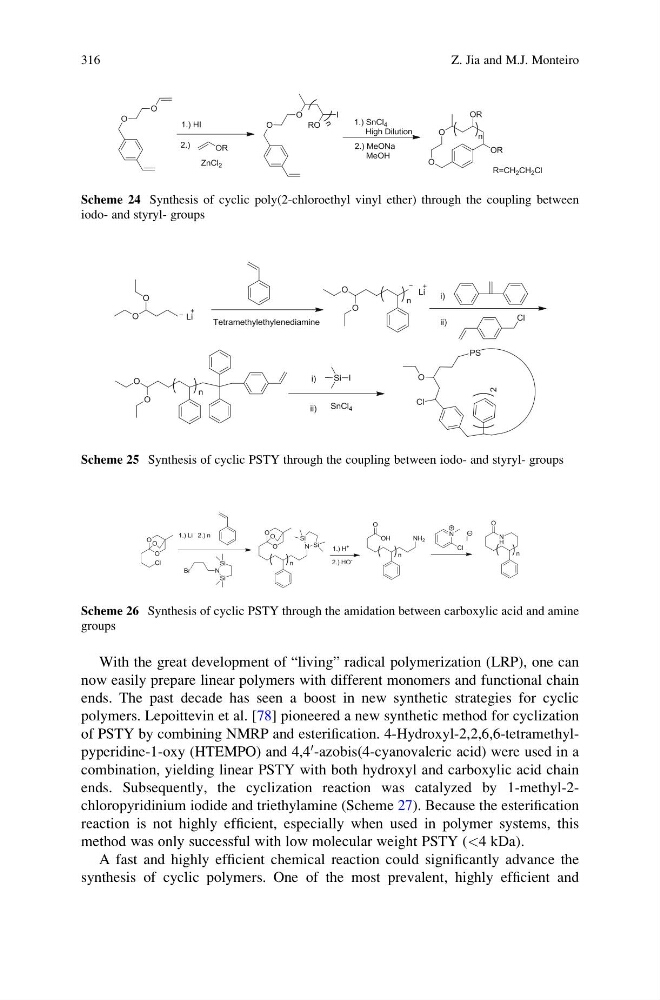
Scheme 24 Synthesis of cyclic poly(2-chloroethyl vinyl ether) through the coupling between
iodo- and styryl- groups
Scheme 25 Synthesis of cyclic PSTY through the coupling between iodo- and styryl- groups
Scheme 26 Synthesis of cyclic PSTY through the amidation between carboxylic acid and amine
groups
316
Z. Jia and M.J. Monteiro
now easily prepare linear polymers with different monomers and functional chain
ends. The past decade has seen a boost in new synthetic strategies for cyclic
polymers. Lepoittevin et al. [78] pioneered a new synthetic method for cyclization
of PSTY by combining NMRP and esterification. 4-Hydroxyl-2,2,6,6-tetramethylpyperidine-1-oxy (HTEMPO) and 4,4
0 -azobis(4-cyanovaleric acid) were used in a
combination, yielding linear PSTY with both hydroxyl and carboxylic acid chain
ends. Subsequently, the cyclization reaction was catalyzed by 1-methyl-2chloropyridinium iodide and triethylamine (Scheme 27). Because the esterification
reaction is not highly efficient, especially when used in polymer systems, this
method was only successful with low molecular weight PSTY (<4 kDa).
A fast and highly efficient chemical reaction could significantly advance the
synthesis of cyclic polymers. One of the most prevalent, highly efficient and
Scheme 24 Synthesis of cyclic poly(2-chloroethyl vinyl ether) through the coupling between
iodo- and styryl- groups
Scheme 25 Synthesis of cyclic PSTY through the coupling between iodo- and styryl- groups
Scheme 26 Synthesis of cyclic PSTY through the amidation between carboxylic acid and amine
groups
316
Z. Jia and M.J. Monteiro