

The Grouping of Architectural Units in Clastic Rocks According to Depositional Time Scale
65
0
10
20
30
40
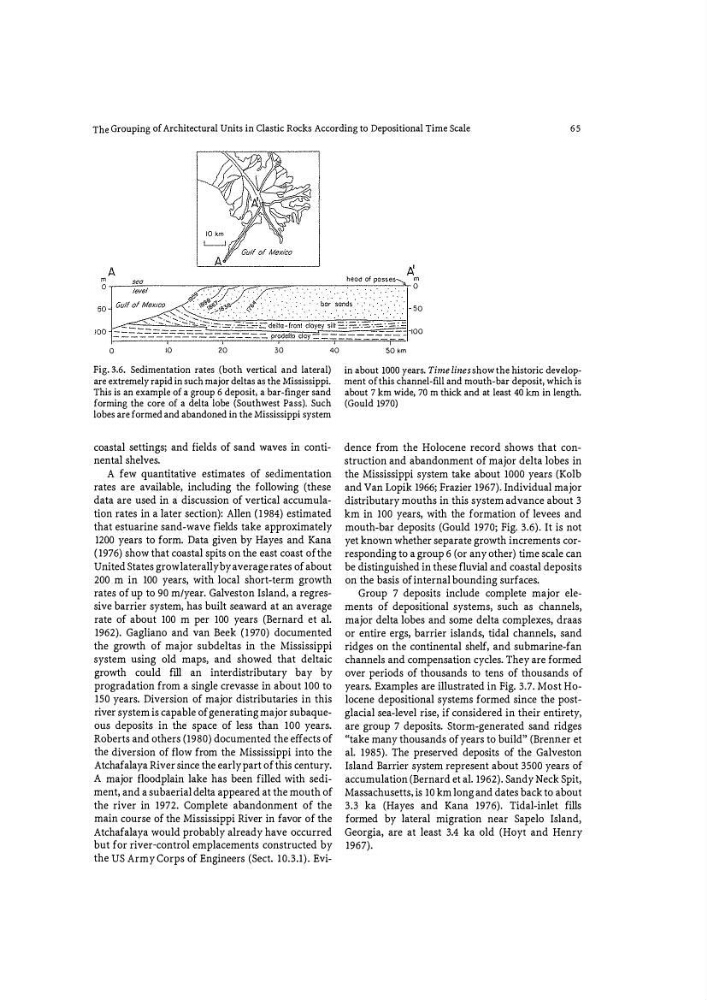
Fig. 3.6. Sedimentation rates (both vertical and lateral)
are extremely rapid in such major deltas as the Mississippi.
This is an example of a group 6 deposit> a bar� finger sand
forming the core -of a delta lobe (Southwest Pass). Such
lobes are formed and abandoned in the Mississippi system
coastal settings; and fields of sand waves in continental shelves.
A few quantitative estimates of sedimentation
rates are available, including the following (these
data are used in a discussion of vertical accumulation rates in a later section): Allen (1984) estimated
that estuarine sand-wave fields take approximately
1200 years to form. Data given by Hayes and Kana
(1976) show that coastal spits on the east coast of the
United States grow laterally by average rates of about
200 m in 100 years, with local short-term growth
rates of up to 90 m/year. Galveston Island> a regressive barrier system> has built seaward at an average
rate of about 100 m per 100 years (Bernard et al.
1962). Gagliano and van Beek (1970) documented
the growth of major subdeltas in tbe Mississippi
system using old maps, and showed that deltaic
growth could fill an interdistributary bay by
progradation from a single crevasse in about 100 to
150 years. Diversion of major distributaries in this
river system is capable of generating major subaqueous deposits in the space of less than 100 years.
Roberts and others (1980) documented the effects of
the diversion of flow from the Mississippi into the
Atchafalaya River since the early part of this century.
A major floodplain lake has been filled with sediment, and a subaerial delta appeared at the mouth of
the river in 1972. Complete abandonment of the
main course of the Mississippi River in favor of the
Atchafalaya would probably already have occurred
but for river-control emplacements constructed by
the US Army Corps of Engineers (Sect. 10.3.1). Evid
heod of posses-... .. . m
0
50
: 100
50 �m
in about 1000 years. Time lines show the historic develop�
ment of this channel-fill and mouth-bar deposit, which is
about 7 km wide, 70 m thick and at least 40 km in length.
(Gould 1970)
dence from the Holocene record shows that construction and abandonment of major delta lobes in
the Mississippi system take about 1000 years (Kolb
and Van Lopik 1966; Frazier 1967). Individual major
distributary mouths in this system advance about 3
km in 100 years, with the formation of levees and
mouth-bar deposits (Gould 1970; Fig. 3.6). It is not
yet known whether separate growth increments corresponding to a group 6 (or any other) time scale can
be distinguished in these fluvial and coastal deposits
on the basis of internal bounding surfaces.
Group 7 deposits include complete major elements of depositional systems, such as channels,
major delta lobes and some delta complexes, draas
or entire ergs, barrier islands, tidal channels, sand
ridges on the continental shelf, and submarine-fan
channels and compensation cycles. They are formed
over periods of thousands to tens of thousands of
years. Examples are illustrated in Fig. 3.7. Most Holocene depositional systems formed since the postglacial sea-level rise, if considered in their entirety>
are group 7 deposits. Storm-generated sand ridges
"take many thousands of years to build" (Brenner et
a!. 1985). The preserved deposits of the Galveston
Island Barrier system represent about 3500 years of
accumulation (Bernard et al. 1962). Sandy Neck Spit,
Massachusetts, is 10 km long and dates back to about
3.3 ka (Hayes and Kana 1976). Tidal-inlet fills
formed by lateral migration near Sapelo Island,
Georgia, are at least 3.4 ka old (Hoyt and Henry
1967).
65
0
10
20
30
40
Fig. 3.6. Sedimentation rates (both vertical and lateral)
are extremely rapid in such major deltas as the Mississippi.
This is an example of a group 6 deposit> a bar� finger sand
forming the core -of a delta lobe (Southwest Pass). Such
lobes are formed and abandoned in the Mississippi system
coastal settings; and fields of sand waves in continental shelves.
A few quantitative estimates of sedimentation
rates are available, including the following (these
data are used in a discussion of vertical accumulation rates in a later section): Allen (1984) estimated
that estuarine sand-wave fields take approximately
1200 years to form. Data given by Hayes and Kana
(1976) show that coastal spits on the east coast of the
United States grow laterally by average rates of about
200 m in 100 years, with local short-term growth
rates of up to 90 m/year. Galveston Island> a regressive barrier system> has built seaward at an average
rate of about 100 m per 100 years (Bernard et al.
1962). Gagliano and van Beek (1970) documented
the growth of major subdeltas in tbe Mississippi
system using old maps, and showed that deltaic
growth could fill an interdistributary bay by
progradation from a single crevasse in about 100 to
150 years. Diversion of major distributaries in this
river system is capable of generating major subaqueous deposits in the space of less than 100 years.
Roberts and others (1980) documented the effects of
the diversion of flow from the Mississippi into the
Atchafalaya River since the early part of this century.
A major floodplain lake has been filled with sediment, and a subaerial delta appeared at the mouth of
the river in 1972. Complete abandonment of the
main course of the Mississippi River in favor of the
Atchafalaya would probably already have occurred
but for river-control emplacements constructed by
the US Army Corps of Engineers (Sect. 10.3.1). Evid
heod of posses-... .. . m
0
50
: 100
50 �m
in about 1000 years. Time lines show the historic develop�
ment of this channel-fill and mouth-bar deposit, which is
about 7 km wide, 70 m thick and at least 40 km in length.
(Gould 1970)
dence from the Holocene record shows that construction and abandonment of major delta lobes in
the Mississippi system take about 1000 years (Kolb
and Van Lopik 1966; Frazier 1967). Individual major
distributary mouths in this system advance about 3
km in 100 years, with the formation of levees and
mouth-bar deposits (Gould 1970; Fig. 3.6). It is not
yet known whether separate growth increments corresponding to a group 6 (or any other) time scale can
be distinguished in these fluvial and coastal deposits
on the basis of internal bounding surfaces.
Group 7 deposits include complete major elements of depositional systems, such as channels,
major delta lobes and some delta complexes, draas
or entire ergs, barrier islands, tidal channels, sand
ridges on the continental shelf, and submarine-fan
channels and compensation cycles. They are formed
over periods of thousands to tens of thousands of
years. Examples are illustrated in Fig. 3.7. Most Holocene depositional systems formed since the postglacial sea-level rise, if considered in their entirety>
are group 7 deposits. Storm-generated sand ridges
"take many thousands of years to build" (Brenner et
a!. 1985). The preserved deposits of the Galveston
Island Barrier system represent about 3500 years of
accumulation (Bernard et al. 1962). Sandy Neck Spit,
Massachusetts, is 10 km long and dates back to about
3.3 ka (Hayes and Kana 1976). Tidal-inlet fills
formed by lateral migration near Sapelo Island,
Georgia, are at least 3.4 ka old (Hoyt and Henry
1967).