

-..- -� �-main boundino surfaces
internal reactivation surfaces
cross stratification
0
VE zero
-� : . ... ::�...: - :_-.:.:>...,
50m
®
-c; �::_ - - ... .. :: .::- <>
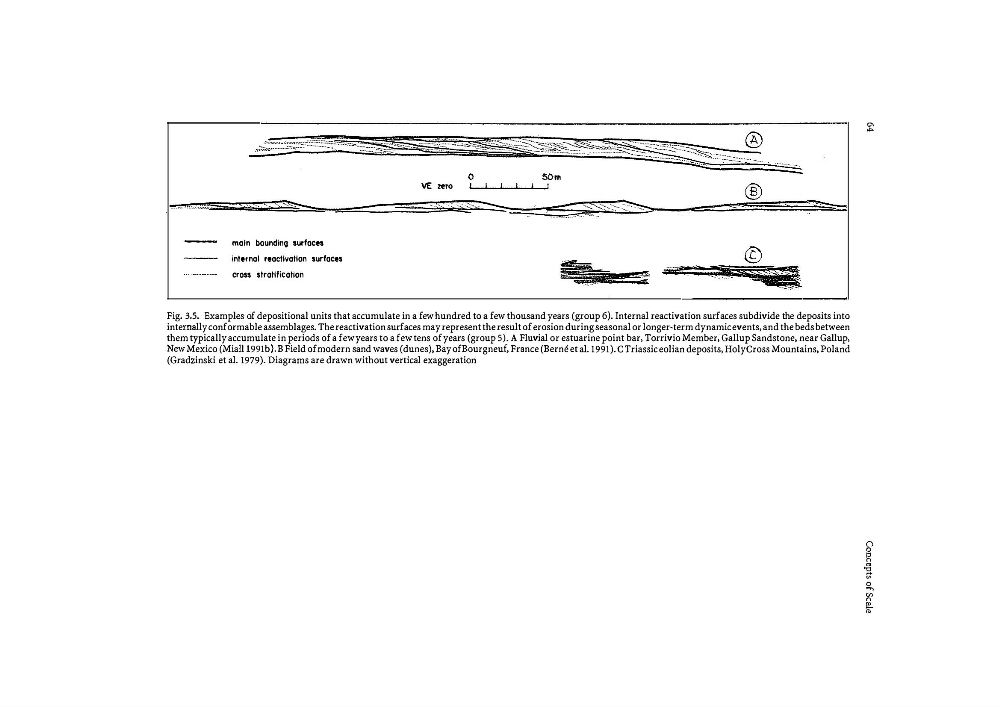
Fig. 3.5. Examples of depositional units that accumulate in a few hundred to a few thousand years (group 6). Internal reactivation surfaces subdivide the deposits into
internally conformable assemblages. The reactivation surfaces may represent the result of erosion during seasonal or longer�term dynamic events, and the beds between
them typically accumulate in periods of a few years to a few tens of years (group 5). A Fluvial or estuarine point bar, Torrivio Member; Gallup Sandstone, near Gallup,
New Mexico (Miall l991 b }. B Field of modern sand waves (dunes), Bay ofBourgneuf. France (Berne et al. 1991 ). C Triassic eolian deposits, HolyCross Mountains, Poland
(Gradzinski et al. 1979). Diagrams are drawn without vertical exaggeration
�
0
0
�
.g
"
0
�
:<'
!'<-
internal reactivation surfaces
cross stratification
0
VE zero
-� : . ... ::�...: - :_-.:.:>...,
50m
®
-c; �::_ - - ... .. :: .::- <>
Fig. 3.5. Examples of depositional units that accumulate in a few hundred to a few thousand years (group 6). Internal reactivation surfaces subdivide the deposits into
internally conformable assemblages. The reactivation surfaces may represent the result of erosion during seasonal or longer�term dynamic events, and the beds between
them typically accumulate in periods of a few years to a few tens of years (group 5). A Fluvial or estuarine point bar, Torrivio Member; Gallup Sandstone, near Gallup,
New Mexico (Miall l991 b }. B Field of modern sand waves (dunes), Bay ofBourgneuf. France (Berne et al. 1991 ). C Triassic eolian deposits, HolyCross Mountains, Poland
(Gradzinski et al. 1979). Diagrams are drawn without vertical exaggeration
�
0
0
�
.g
"
0
�
:<'
!'<-