

5!6
N
t
0
200
400 KM
(j
Case Studies of Oil and Gas Fields in Fluvial Reservoirs
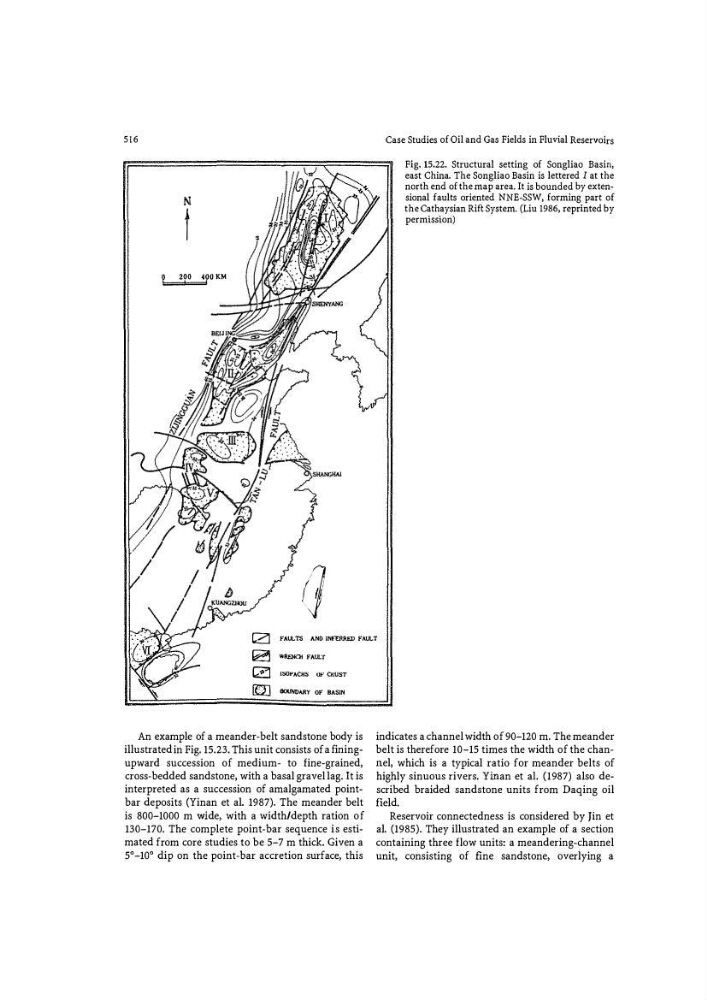
Fig. 15.22. Structural setting of Songliao Basin,
east China. The Songliao Basin is lettered I at the
north end of the map area. It is bounded by exten�
sional faults oriented NNE�SSW, forming part of
the Cathaysian Rift System. (Liu 1986, reprinted by
permission)
0 FAULTS AND INF'Efl.RED FAULT
� WRf..HCH FAUI..' f
0 l�i'ACHS 01<' CltU!:iT
[OJ &otJNt)ARY OF BASIN
An example of a meander-belt sandstone body is
illustrated in Fig. 15.23. This unit consists of a finingupward succession of medium- to fine-grained,
cross-bedded sandstone, with a basal gravel lag. It is
interpreted as a succession of amalgamated pointbar deposits (Yinan et al. 1987). The meander belt
is 800-1000 m wide, with a width/depth ration of
130-170. The complete point-bar sequence is estimated from core studies to be 5-7 m thick. Given a
5°-10° dip on the point-bar accretion surface, this
indicates a channel width of 90-!20 m. The meander
belt is therefore 10-15 times the width of the channel, which is a typical ratio for meander belts of
highly sinuous rivers. Yinan et a!. (1987) also described braided sandstone units from Daqing oil
field.
Reservoir connectedness is considered by Jin et
al. (1985). They illustrated an example of a section
containing three flow units: a meandering-channel
unit, consisting of fine sandstone, overlying a