

488
Stratigraphic and Tectonic Controls on the Distribution and Architecture of Fluvial Oil and Gas Reservoirs
geometry
clastic wedge
of depositional system
� paleovalley fill
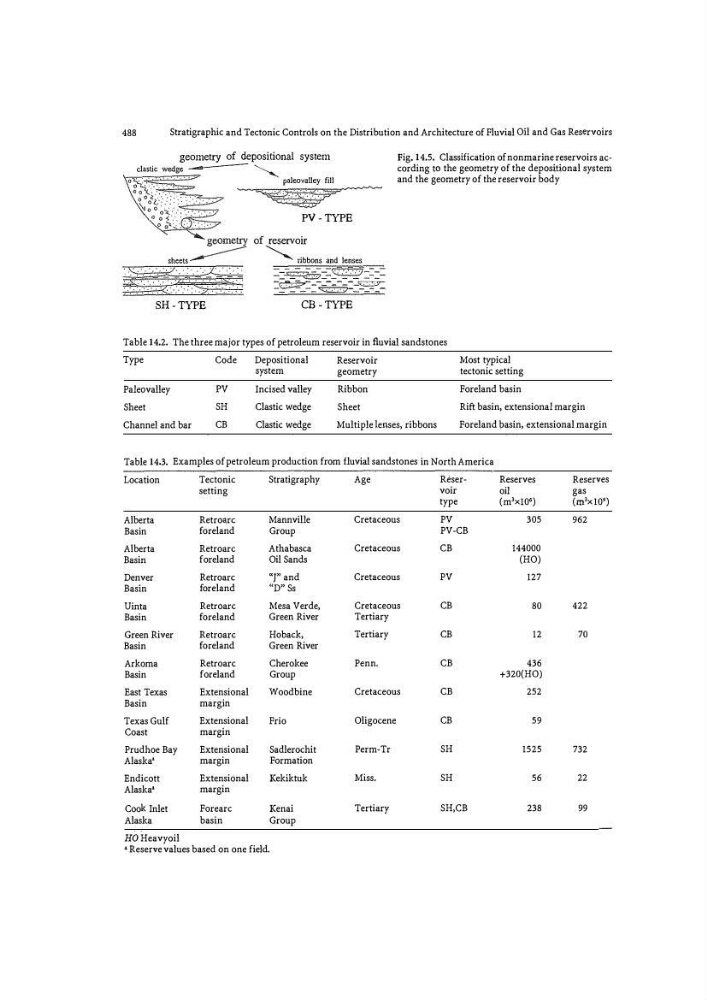
Fig.14.5. Classification of nonmarine reservoirs according to the geometry of the depos�t:�onal system
and the geometry of the reservoir body
SH-TYPE
�:;g;;;:;s=
PV -TYPE
of reservoir
� ribbons and lenses
-=�=-S7::· ::_;=-==�=-�=-�
CB -TYPE
Table 14.2. The three major types of petroleum reservoir in fluvial sandstones
Type
Code
Depositional
Reservoir
Paleovalley
Sheet
Channel and bar
PV
SH
CB
system
geometry
Incised valley
Clastic wedge
Clastic wedge
Ribbon
Sheet
Multiple �en,ses, ribbons
Most typical
tectonic setting
Foreland basin
Rift basin, extensional margin
Foreland Pasin, extensional margin
Table 14.3. Examples of petroleum production from fluvial sandstones in North America
Location
Tectonic
Stratigraphy
setting
Alberta
Retroa,rc
Mannville
Basin
fo reland
Group
Alberta
Retroarc
Athabasca
Basin
foreland
Oil Sands
Denver
Retroarc
'T'and
Basin
fo reland
"D" Ss
Uinta
Retroarc
Mesa Verde,
Basin
fo reland
Green River
Green River
Retroarc
Hoback,
Basin
fo reland
Green River
Arkoma
Retroarc
Cherokee
Basin
foreland
Group
East Texas
Extensional
Woodbine
Basin
margin
Texas Gulf
Extensional
Frio
Coast
margin
Prudhoe Bay
Extensional
Sadlerochit
Alaska�
margin
Formation
Endicott
Extensional
Kekiktuk
Alaska a
margin
Cook, Inlet
Forearc
Kenai
Alaska
basin
Group
HOHeavyoil
a Reserve values based on one field.
Age
Reservoir
type
Cretaceous
PV
PV-CB
Cretaceous
CB
Cretaceous
PV
Cretaceous
CB
Tertiary
Tertiary
CB
Penn.
CB
Cretaceous
CB
Oligocene
CB
Perm-Tr
SH
Miss.
SH
Tertiary
SH,CB
Reserves
oil
(m3xl06)
305
144000
(HO)
127
80
12
436
+320(HO)
252
59
1525
56
238
Reserves
gas
(m3x 109)
962
422
70
732
22
99
Stratigraphic and Tectonic Controls on the Distribution and Architecture of Fluvial Oil and Gas Reservoirs
geometry
clastic wedge
of depositional system
� paleovalley fill
Fig.14.5. Classification of nonmarine reservoirs according to the geometry of the depos�t:�onal system
and the geometry of the reservoir body
SH-TYPE
�:;g;;;:;s=
PV -TYPE
of reservoir
� ribbons and lenses
-=�=-S7::· ::_;=-==�=-�=-�
CB -TYPE
Table 14.2. The three major types of petroleum reservoir in fluvial sandstones
Type
Code
Depositional
Reservoir
Paleovalley
Sheet
Channel and bar
PV
SH
CB
system
geometry
Incised valley
Clastic wedge
Clastic wedge
Ribbon
Sheet
Multiple �en,ses, ribbons
Most typical
tectonic setting
Foreland basin
Rift basin, extensional margin
Foreland Pasin, extensional margin
Table 14.3. Examples of petroleum production from fluvial sandstones in North America
Location
Tectonic
Stratigraphy
setting
Alberta
Retroa,rc
Mannville
Basin
fo reland
Group
Alberta
Retroarc
Athabasca
Basin
foreland
Oil Sands
Denver
Retroarc
'T'and
Basin
fo reland
"D" Ss
Uinta
Retroarc
Mesa Verde,
Basin
fo reland
Green River
Green River
Retroarc
Hoback,
Basin
fo reland
Green River
Arkoma
Retroarc
Cherokee
Basin
foreland
Group
East Texas
Extensional
Woodbine
Basin
margin
Texas Gulf
Extensional
Frio
Coast
margin
Prudhoe Bay
Extensional
Sadlerochit
Alaska�
margin
Formation
Endicott
Extensional
Kekiktuk
Alaska a
margin
Cook, Inlet
Forearc
Kenai
Alaska
basin
Group
HOHeavyoil
a Reserve values based on one field.
Age
Reservoir
type
Cretaceous
PV
PV-CB
Cretaceous
CB
Cretaceous
PV
Cretaceous
CB
Tertiary
Tertiary
CB
Penn.
CB
Cretaceous
CB
Oligocene
CB
Perm-Tr
SH
Miss.
SH
Tertiary
SH,CB
Reserves
oil
(m3xl06)
305
144000
(HO)
127
80
12
436
+320(HO)
252
59
1525
56
238
Reserves
gas
(m3x 109)
962
422
70
732
22
99