

462
Sequence Stratigraphy
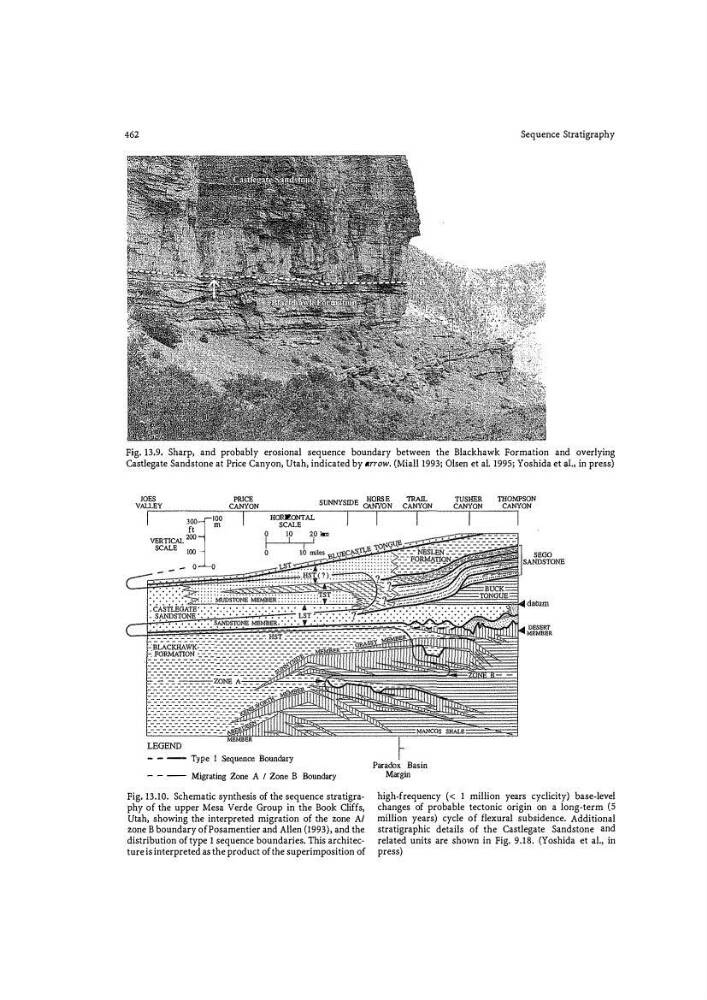
Fig. 13.9. Sharp, and probably erosional sequence boundary between the Blackhawk Formation and overlying
Castlegate Sandstone at Price Canyon, Utah, indicated by arrow. (Miall 1993; Olsen et al. 1995; Yoshida et al., in press}
JOES
VALLEY
PRICE
CANYON
SUNNYSIDE c���
TRAll.
CANYON
TUSHER
CANYON
THOMPSON
CANYON
ft
m
1
' oo l' o o I
HORIZONTAL
I
I
SCALE
I
I
I
VERTICAL
200
SCALE
IOO
-- 0
0
0
0
10
20 km
- - -- Type 1 Sequence Boundary
- - -- Migrating Zone A I Zone B Boundary
Fig. 13.10. Schematic synthesis of the sequence stratigraphy of the upper Mesa Verde Group in the Book Cliffs,
Utah, showing the interpreted migration of the zone A/
zone B boundary ofPosamentier and Allen (1993), and the
distribution of type 1 sequence boundaries. This architecture is interpreted as the product of the superimposition of
Paradox Basin
Margin
high�frequency ( < 1 million years cyclicity) base� level
changes of probable tectonic origin on a long-term (5
million years) cycle of flexural subsidence. Additional
stratigraphic details of the Castlegate Sandstone and
related units are shown in Fig. 9.18. (Yoshida et al., in
press)
Sequence Stratigraphy
Fig. 13.9. Sharp, and probably erosional sequence boundary between the Blackhawk Formation and overlying
Castlegate Sandstone at Price Canyon, Utah, indicated by arrow. (Miall 1993; Olsen et al. 1995; Yoshida et al., in press}
JOES
VALLEY
PRICE
CANYON
SUNNYSIDE c���
TRAll.
CANYON
TUSHER
CANYON
THOMPSON
CANYON
ft
m
1
' oo l' o o I
HORIZONTAL
I
I
SCALE
I
I
I
VERTICAL
200
SCALE
IOO
-- 0
0
0
0
10
20 km
- - -- Type 1 Sequence Boundary
- - -- Migrating Zone A I Zone B Boundary
Fig. 13.10. Schematic synthesis of the sequence stratigraphy of the upper Mesa Verde Group in the Book Cliffs,
Utah, showing the interpreted migration of the zone A/
zone B boundary ofPosamentier and Allen (1993), and the
distribution of type 1 sequence boundaries. This architecture is interpreted as the product of the superimposition of
Paradox Basin
Margin
high�frequency ( < 1 million years cyclicity) base� level
changes of probable tectonic origin on a long-term (5
million years) cycle of flexural subsidence. Additional
stratigraphic details of the Castlegate Sandstone and
related units are shown in Fig. 9.18. (Yoshida et al., in
press)