

392
0 Plf�Om�"'>" boo�•m•M cor•
IBJ M�l<>
0 S•d""""'"'� l�rlo'�
Tectonic Control of Fluvial Sedimentation
r -
P•HtiHIJS"oooa< 0<19<
<>I /(01<0JO •:dom�MI
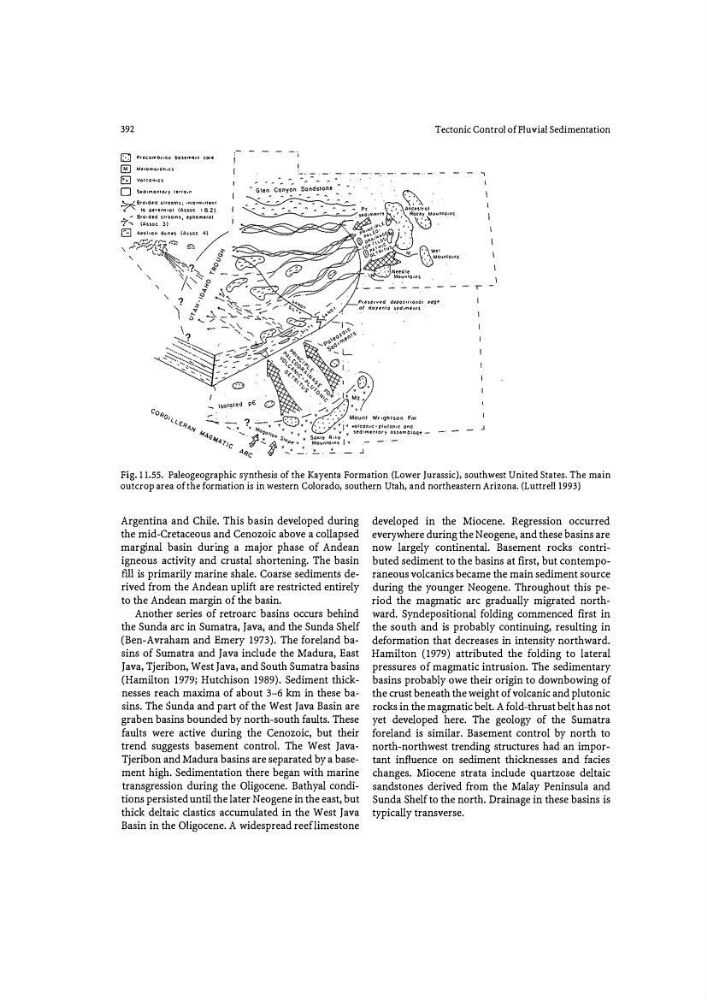
Fig. 11.55. Paleogeographic synthesis of the Kayenta Formation (Lower Jurassic), southwest United States. The main
outcrop a.rea of the formation is in western Colorado, southern Utah, and northeastern Arizona. (Luttrell l993)
Argentina and Chile. This basin developed during
the mid-Cretaceous and Cenozoic above a collapsed
marginal basin during a major phase of Andean
igneous activity and crustal shortening. The basin
fill is primarily marine shale. Coarse sediments derived from the Andean uplift are restricted entirely
to the Andean margin of the basin.
Another series of retroarc basins occurs behind
the Sunda arc in Sumatra, Java, and the Sunda Shelf
(Ben-Avraham and Emery 1973). The foreland basins of Sumatra and Java include the Madura, East
Java, Tjeribon, West Java, and South Sumatra basins
(Hamilton 1979; Hutchison 1989). Sediment thicknesses reach maxima of about 3-6 km in these basins. The Sunda and part of the West java Basin are
graben basins bounded by north-south faults. These
faults were active during the Cenozoic, but their
trend suggests basement control. The West javaTjeribon and Madura basins are separated by a basement high. Sedimentation there began with marine
transgression during the Oligocene. Bathyal conditions persisted until the later Neogene in the east, but
thick deltaic clastics accumulated in the West Java
Basin in the Oligocene. A widespread reef limestone
developed in the Miocene. Regression occurred
everywhere during the N eogene, and these basins are
now largely continental. Basement rocks contributed sediment to the basins at first, but contemporaneous volcanics became the main sediment source
during the younger Neogene. Throughout this period the magmatic arc gradually migrated northward. Syndepositional folding commenced first in
the south and is probably continuin� resulting in
deformation that decreases in intensity northward.
Hamilton (1979) attributed the folding to lateral
pressures of magmatic intrusion. The sedimentary
basins probably owe their origin to down bowing of
the crust beneath the weight of volcanic and plutonic
rocks in the magmatic belt. A fold-thrust belt has not
yet developed here. The geology of the Sumatra
foreland is similar. Basement control by north to
north-northwest trending structures had an important influence on sediment thicknesses and facies
changes. Miocene strata include quartzose deltaic
sandstones derived from the Malay Peninsula and
Sunda Shelf to the north. Drainage in these basins is
typically transverse.
0 Plf�Om�"'>" boo�•m•M cor•
IBJ M�l<>
0 S•d""""'"'� l�rlo'�
Tectonic Control of Fluvial Sedimentation
r -
P•HtiHIJ
<>I /(01<0JO •:dom�MI
Fig. 11.55. Paleogeographic synthesis of the Kayenta Formation (Lower Jurassic), southwest United States. The main
outcrop a.rea of the formation is in western Colorado, southern Utah, and northeastern Arizona. (Luttrell l993)
Argentina and Chile. This basin developed during
the mid-Cretaceous and Cenozoic above a collapsed
marginal basin during a major phase of Andean
igneous activity and crustal shortening. The basin
fill is primarily marine shale. Coarse sediments derived from the Andean uplift are restricted entirely
to the Andean margin of the basin.
Another series of retroarc basins occurs behind
the Sunda arc in Sumatra, Java, and the Sunda Shelf
(Ben-Avraham and Emery 1973). The foreland basins of Sumatra and Java include the Madura, East
Java, Tjeribon, West Java, and South Sumatra basins
(Hamilton 1979; Hutchison 1989). Sediment thicknesses reach maxima of about 3-6 km in these basins. The Sunda and part of the West java Basin are
graben basins bounded by north-south faults. These
faults were active during the Cenozoic, but their
trend suggests basement control. The West javaTjeribon and Madura basins are separated by a basement high. Sedimentation there began with marine
transgression during the Oligocene. Bathyal conditions persisted until the later Neogene in the east, but
thick deltaic clastics accumulated in the West Java
Basin in the Oligocene. A widespread reef limestone
developed in the Miocene. Regression occurred
everywhere during the N eogene, and these basins are
now largely continental. Basement rocks contributed sediment to the basins at first, but contemporaneous volcanics became the main sediment source
during the younger Neogene. Throughout this period the magmatic arc gradually migrated northward. Syndepositional folding commenced first in
the south and is probably continuin� resulting in
deformation that decreases in intensity northward.
Hamilton (1979) attributed the folding to lateral
pressures of magmatic intrusion. The sedimentary
basins probably owe their origin to down bowing of
the crust beneath the weight of volcanic and plutonic
rocks in the magmatic belt. A fold-thrust belt has not
yet developed here. The geology of the Sumatra
foreland is similar. Basement control by north to
north-northwest trending structures had an important influence on sediment thicknesses and facies
changes. Miocene strata include quartzose deltaic
sandstones derived from the Malay Peninsula and
Sunda Shelf to the north. Drainage in these basins is
typically transverse.