

386
-
""1
,
.
.
. ·
�
!,,_, ... , .
. ;J; .
'-- .. .'J•:
I · · �
LATROBE) •' ' .
·r-· '1Z.
. --',_ · r-:·
L . � f.-;-,
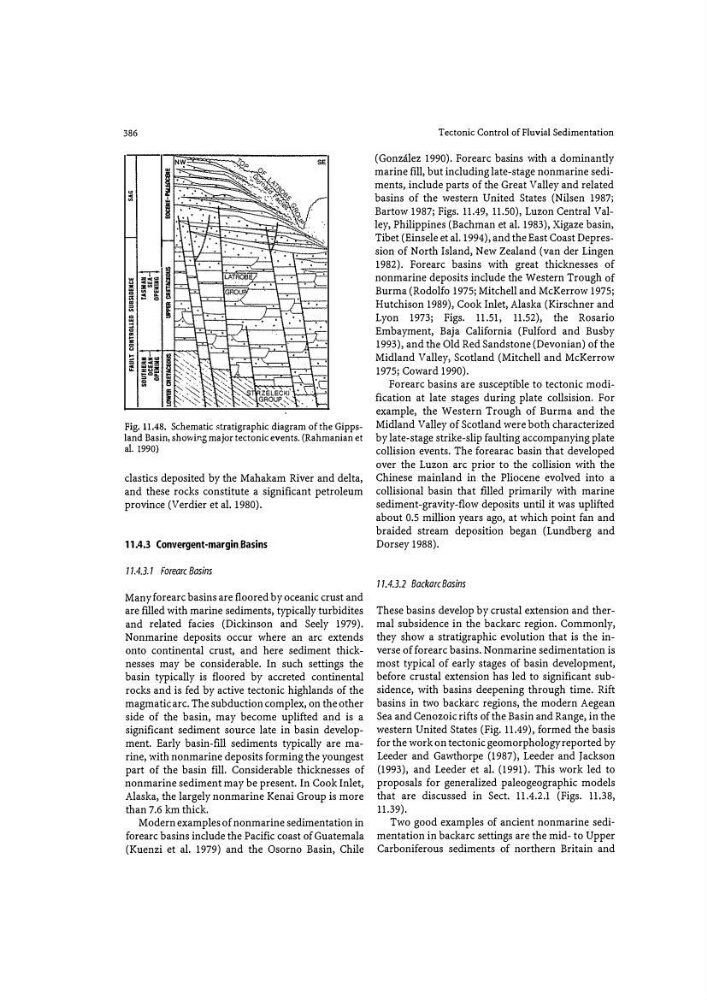
Fig. l1.48. Schematic stratigraphic diagram of the Gipps�
land Basin, showing major tectonic events. (Rahmanian et
a!. 1990)
clastics deposited by the Mahakam River and delta,
and these rocks constitute a significant petroleum
province (Verdier et al. 1980).
11.4.3 Convergent-margin.Basins
11.4.3.1 Forearc Basins
Many forearc basins are fl oored by oceanic crust and
are filled with marine sediments, typically turbidites
and related facies (Dickinson and Seely 1979).
Nonmarine deposits occur where an arc extends
onto continental crust, and here sediment thicknesses may be considerable. In such settings the
basin typically is floored by accreted continental
rocks and is fed by active tectonic highlands of the
magmatic arc. The subduction complex, on the other
side of the basin, may become uplifted and is a
significant sediment source late in basin development. Early basin-fill sediments typically are marine, with nonmarine deposits forming the youngest
part of the basin fill. Considerable thicknesses of
nonmarine sediment may be present. In Cook Inlet,
Alaska, the largely nonmarine Kenai Group is more
than 7.6 km thick.
Modern examples of nonmarine sedimentation in
forearc basins include the Pacific coast of Guatemala
(Kuenzi et al. 1979) and the Osorno Basin, Chile
Tectonic Control of Fluvial Sedimentation
(Gonzalez !990). Forearc basins with a dominantly
marine fill, but including late-stage nonmarine sediments, include parts of the Great Valley and related
basins of the western United States (Nilsen 1987i
Bartow 1987; Figs. 11.49, 11.50), Luzon Central Valley, Philippines (Bachman et al. 1983), Xigaze basin,
Tibet (Einsele et al. 1994), and the East Coast Depression of North Island, New Zealand (van der Lingen
1982). Forearc basins with great thicknesses of
nonmarine deposits include the Western Trough of
Burma (Rodolfo 1975; Mitchell and McKerrow 1975;
Hutchison 1989), Cook Inlet, Alaska (Kirschner and
Lyon 1973; Figs. 11.51, 11.52), the Rosario
Embayment, Baja California (Fulford and Busby
1993), and the Old Red Sandstone (Devonian) of the
Midland Valley, Scotland (Mitchell and McKerrow
1975; Coward 1990).
Forearc basins are susceptible to tectonic modification at late stages during plate collsision. For
example, the Western Trough of Burma and the
Midland Valley of Scotland were both characterized
by late-stage strike-slip faulting accompanying plate
collision events. The forearac basin that developed
over the Luzon arc prior to the collision with the
Chinese mainland in the Pliocene evolved into a
collisional basin that f!lled primarily with marine
sediment-gravity-flow deposits until it was uplifted
about 0.5 million years ago, at which point fan and
braided stream deposition began (Lundberg and
Dorsey 1988).
11.4.3.2 Backorc Basins
These basins develop by crustal extension and thermal subsidence in the backarc region. Commonly,
they show a stratigraphic evolution that is the inverse of forearc basins. Nonmarine sedimentation is
most typical of early stages of basin development,
before crustal extension has led to significant subsidence, with basins deepening through time. Rift
basins in two backarc regions, the modern Aegean
Sea and Cenozoic rifts of the Basin and Range, in the
western United States (Fig. 11.49), formed the basis
for the work on tectonic geomorphology reported by
Leeder and Gawthorpe (1987), Leeder and jackson
(1993), and Leeder et al. (1991). This work led to
proposals for generalized paleogeographic models
that are discussed in Sect. 11.4.2.1 (Figs. 11.38,
11.39).
Two good examples of ancient nonmarine sedimentation in backarc settings are the mid- to Upper
Carboniferous sediments of northern Britain and
-
""1
,
.
.
. ·
�
!,,_, ... , .
. ;J; .
'-- .. .'J•:
I · · �
LATROBE) •' ' .
·r-· '1Z.
. --',_ · r-:·
L . � f.-;-,
Fig. l1.48. Schematic stratigraphic diagram of the Gipps�
land Basin, showing major tectonic events. (Rahmanian et
a!. 1990)
clastics deposited by the Mahakam River and delta,
and these rocks constitute a significant petroleum
province (Verdier et al. 1980).
11.4.3 Convergent-margin.Basins
11.4.3.1 Forearc Basins
Many forearc basins are fl oored by oceanic crust and
are filled with marine sediments, typically turbidites
and related facies (Dickinson and Seely 1979).
Nonmarine deposits occur where an arc extends
onto continental crust, and here sediment thicknesses may be considerable. In such settings the
basin typically is floored by accreted continental
rocks and is fed by active tectonic highlands of the
magmatic arc. The subduction complex, on the other
side of the basin, may become uplifted and is a
significant sediment source late in basin development. Early basin-fill sediments typically are marine, with nonmarine deposits forming the youngest
part of the basin fill. Considerable thicknesses of
nonmarine sediment may be present. In Cook Inlet,
Alaska, the largely nonmarine Kenai Group is more
than 7.6 km thick.
Modern examples of nonmarine sedimentation in
forearc basins include the Pacific coast of Guatemala
(Kuenzi et al. 1979) and the Osorno Basin, Chile
Tectonic Control of Fluvial Sedimentation
(Gonzalez !990). Forearc basins with a dominantly
marine fill, but including late-stage nonmarine sediments, include parts of the Great Valley and related
basins of the western United States (Nilsen 1987i
Bartow 1987; Figs. 11.49, 11.50), Luzon Central Valley, Philippines (Bachman et al. 1983), Xigaze basin,
Tibet (Einsele et al. 1994), and the East Coast Depression of North Island, New Zealand (van der Lingen
1982). Forearc basins with great thicknesses of
nonmarine deposits include the Western Trough of
Burma (Rodolfo 1975; Mitchell and McKerrow 1975;
Hutchison 1989), Cook Inlet, Alaska (Kirschner and
Lyon 1973; Figs. 11.51, 11.52), the Rosario
Embayment, Baja California (Fulford and Busby
1993), and the Old Red Sandstone (Devonian) of the
Midland Valley, Scotland (Mitchell and McKerrow
1975; Coward 1990).
Forearc basins are susceptible to tectonic modification at late stages during plate collsision. For
example, the Western Trough of Burma and the
Midland Valley of Scotland were both characterized
by late-stage strike-slip faulting accompanying plate
collision events. The forearac basin that developed
over the Luzon arc prior to the collision with the
Chinese mainland in the Pliocene evolved into a
collisional basin that f!lled primarily with marine
sediment-gravity-flow deposits until it was uplifted
about 0.5 million years ago, at which point fan and
braided stream deposition began (Lundberg and
Dorsey 1988).
11.4.3.2 Backorc Basins
These basins develop by crustal extension and thermal subsidence in the backarc region. Commonly,
they show a stratigraphic evolution that is the inverse of forearc basins. Nonmarine sedimentation is
most typical of early stages of basin development,
before crustal extension has led to significant subsidence, with basins deepening through time. Rift
basins in two backarc regions, the modern Aegean
Sea and Cenozoic rifts of the Basin and Range, in the
western United States (Fig. 11.49), formed the basis
for the work on tectonic geomorphology reported by
Leeder and Gawthorpe (1987), Leeder and jackson
(1993), and Leeder et al. (1991). This work led to
proposals for generalized paleogeographic models
that are discussed in Sect. 11.4.2.1 (Figs. 11.38,
11.39).
Two good examples of ancient nonmarine sedimentation in backarc settings are the mid- to Upper
Carboniferous sediments of northern Britain and