

382
F
0
•
'
;--; ;;-o
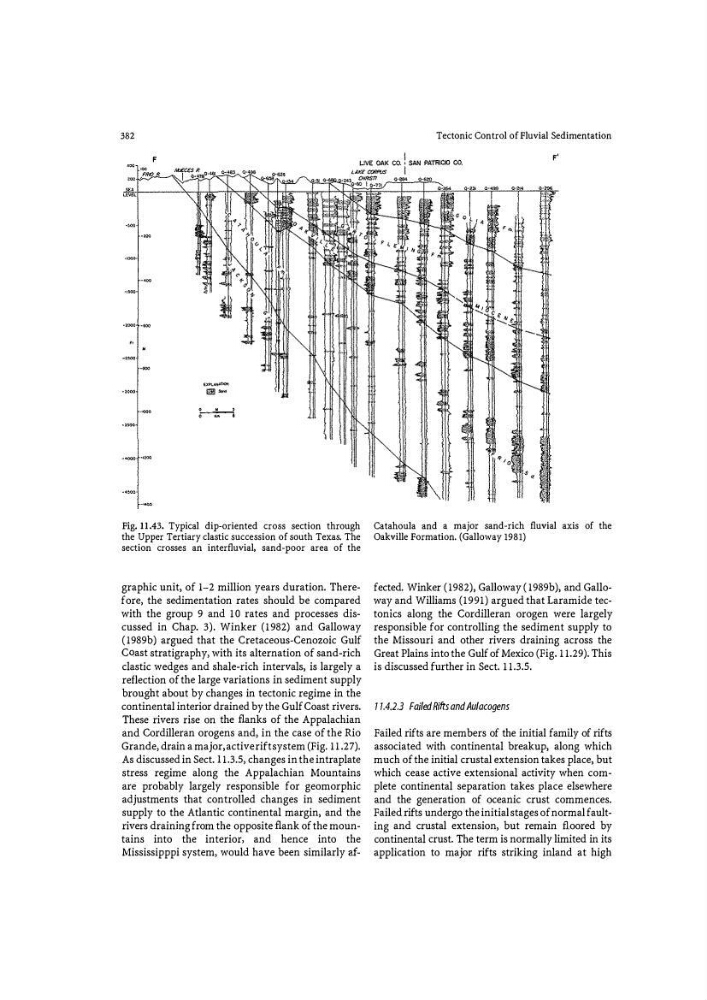
Fig. 11.43. Typical dip-oriented cross section through
the Upper Tertiary clastic succession of south Texas. The
section crosses an interfluvial, sand-poor area of the
graphic unit, of 1-2 million years duration. Therefore, the sedimentation rates should be compared
with the group 9 and 10 rates and processes discussed in Chap. 3). Winker (1982) and Galloway
(1989b) argued that the Cretaceous-Cenozoic Gulf
Coast stratigraphy, with its alternation of sand-rich
clastic wedges and shale-rich intervals, is largely a
reflection of the large variations in sediment supply
brought about by changes in tectonic regime in the
continental interior drained by the Gulf Coast rivers.
These rivers rise on the flanks of the Appalachian
and Cordilleran orogens and, in the case of the Rio
Grande, drain a major, active rift system (Fig. 11.27).
As discussed in Sect. l1.3.51 changes in the intraplate
stress regime along the Appalachian Mountains
are probably largely responsible for geomorphic
adjustments that controlled changes in sediment
supply to the Atlantic continental margin, and the
rivers draining from the opposite flank of the mountains into the interior� and hence into the
Mississipppi system, would have been similarly afTectonic Control of Fluvial Sedimentation
F'
Catahoula and a major sand-rich fluvial axis of the
Oakville Formation. (Galloway 1981)
fected. Winker (1982), Galloway (1989b), and Galloway and Williams (1991) argued that Laramide tectonics along the Cordilleran orogen were largely
responsible for controlling the sediment supply to
the Missouri and other rivers draining across the
Great Plains into the Gulf of Mexico (Fig. 11.29). This
is discussed further in Sect. 11.3.5.
1 1.4.2.3 Failed Rifts and Aulacogens
Failed rifts are members of the initial family of rifts
associated with continental breakup, along which
much of the initial crustal extension takes place, but
which cease active extensional activity when complete continental separation takes place elsewhere
and the generation of oceanic crust commences.
Failed rifts undergo the initial stages of normal faulting and crustal extension, but remain floored by
continental crust. The term is normally limited in its
application to major rifts striking inland at high
F
0
•
'
;--; ;;-o
Fig. 11.43. Typical dip-oriented cross section through
the Upper Tertiary clastic succession of south Texas. The
section crosses an interfluvial, sand-poor area of the
graphic unit, of 1-2 million years duration. Therefore, the sedimentation rates should be compared
with the group 9 and 10 rates and processes discussed in Chap. 3). Winker (1982) and Galloway
(1989b) argued that the Cretaceous-Cenozoic Gulf
Coast stratigraphy, with its alternation of sand-rich
clastic wedges and shale-rich intervals, is largely a
reflection of the large variations in sediment supply
brought about by changes in tectonic regime in the
continental interior drained by the Gulf Coast rivers.
These rivers rise on the flanks of the Appalachian
and Cordilleran orogens and, in the case of the Rio
Grande, drain a major, active rift system (Fig. 11.27).
As discussed in Sect. l1.3.51 changes in the intraplate
stress regime along the Appalachian Mountains
are probably largely responsible for geomorphic
adjustments that controlled changes in sediment
supply to the Atlantic continental margin, and the
rivers draining from the opposite flank of the mountains into the interior� and hence into the
Mississipppi system, would have been similarly afTectonic Control of Fluvial Sedimentation
F'
Catahoula and a major sand-rich fluvial axis of the
Oakville Formation. (Galloway 1981)
fected. Winker (1982), Galloway (1989b), and Galloway and Williams (1991) argued that Laramide tectonics along the Cordilleran orogen were largely
responsible for controlling the sediment supply to
the Missouri and other rivers draining across the
Great Plains into the Gulf of Mexico (Fig. 11.29). This
is discussed further in Sect. 11.3.5.
1 1.4.2.3 Failed Rifts and Aulacogens
Failed rifts are members of the initial family of rifts
associated with continental breakup, along which
much of the initial crustal extension takes place, but
which cease active extensional activity when complete continental separation takes place elsewhere
and the generation of oceanic crust commences.
Failed rifts undergo the initial stages of normal faulting and crustal extension, but remain floored by
continental crust. The term is normally limited in its
application to major rifts striking inland at high