

364
Most major rivers enter the sea at divergent plate
margins (Mississipi, Rio Grande, Mackenzie,
Murray, Amazon, Yellow, Plate, Congo) or where the
axes of fo reland basins terminate at the margins of
continental plates (Po, Tigris-Euphrates, Ganges,
Indus). Foldbelts that are marginal to continents,
such as the Appalachians and Cordilleran belts of
North America, have continental divides close to the
continental margin, so that the rivers draining their
seaward flanks are short. A major exception is the
Columbia River, which crosses the coastal .mountains of the western United States by a geologically
complex route. On the landward flank of such
foldbelts are the vast continental interiors, which by
their very size contribute to the development of
major rivers.
11.3.2 Axial and Transverse Drainage
A particular characteristic of the world's major rivers is that most are axial or longitudinal rivers, that
is, their course parallels regional structural grain
(Kuenen 1957; Potter 1978; Miall 1981a,b). The grain
may be that of major rift systems, as in tP.e case of the
Mississippi, Rio Grande, Amazon, Niger, lower
Torton ian -l' ontian
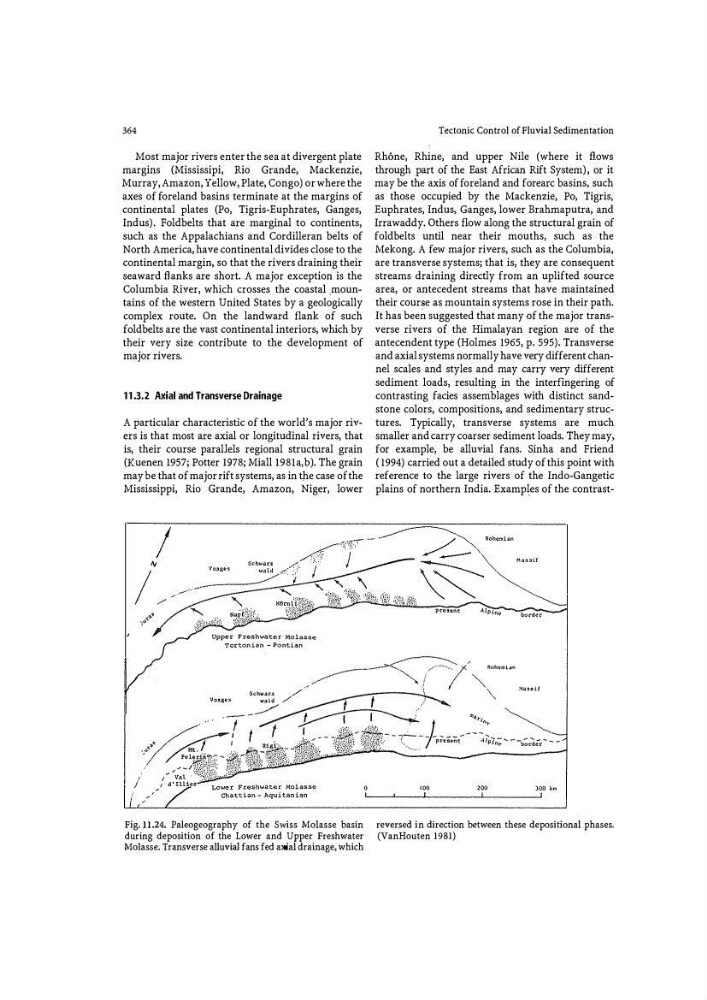
Fig. 11.24. Paleogeography of the Swiss Molasse basin
during deposition of the Lower and Upper Freshwater
Molasse. Transverse alluvial fans fed axial drainage, which
Tectonic Control of Fluvial Sedimentation
Rh6ne, Rhine, and upper Nile (where it flows
through part of the East African Rift System), or it
may be the axis of fo reland and forearc basins, such
as thos. e occupied by the Mackenzie, Po, Tigris)
Euphrates, Indus) Ganges, lower Brahmaputra, and
Irrawaddy. Others flow along the structural grain of
foldbelts until near their mouths, such as the
Mekong. A few major rivers, such as the Columbia,
are transverse systems; that is, they are consequent
streams draining directly from an uplifted source
area, or antecedent streams that have maintained
their cour�e as mountain systems rose in their path.
It has been suggested that many of the major transverse rivers of the Himalayan region are of the
antecendent type (Holmes 1965, p. 595). Transverse
and axial systems normally have very different channel scales and styles and may carry very different
sediment loads, resulting in the interfingering of
contrasting facies assemblages -with distinct sandstone colors, compositions, and sedimentary structures. Typically, transverse systems are much
smaller and carry coarser sediment loads. They may)
for example, be alluvial fans. Sinha and Friend
(1994) carried out a detailed study of this point with
reference to the large rivers of the Indo-Gangetic
plains of northern India. Examp�es of the contrastMaa�!f
reversed in direction between these depositional phases.
(VanHouten 1981)
Most major rivers enter the sea at divergent plate
margins (Mississipi, Rio Grande, Mackenzie,
Murray, Amazon, Yellow, Plate, Congo) or where the
axes of fo reland basins terminate at the margins of
continental plates (Po, Tigris-Euphrates, Ganges,
Indus). Foldbelts that are marginal to continents,
such as the Appalachians and Cordilleran belts of
North America, have continental divides close to the
continental margin, so that the rivers draining their
seaward flanks are short. A major exception is the
Columbia River, which crosses the coastal .mountains of the western United States by a geologically
complex route. On the landward flank of such
foldbelts are the vast continental interiors, which by
their very size contribute to the development of
major rivers.
11.3.2 Axial and Transverse Drainage
A particular characteristic of the world's major rivers is that most are axial or longitudinal rivers, that
is, their course parallels regional structural grain
(Kuenen 1957; Potter 1978; Miall 1981a,b). The grain
may be that of major rift systems, as in tP.e case of the
Mississippi, Rio Grande, Amazon, Niger, lower
Torton ian -l' ontian
Fig. 11.24. Paleogeography of the Swiss Molasse basin
during deposition of the Lower and Upper Freshwater
Molasse. Transverse alluvial fans fed axial drainage, which
Tectonic Control of Fluvial Sedimentation
Rh6ne, Rhine, and upper Nile (where it flows
through part of the East African Rift System), or it
may be the axis of fo reland and forearc basins, such
as thos. e occupied by the Mackenzie, Po, Tigris)
Euphrates, Indus) Ganges, lower Brahmaputra, and
Irrawaddy. Others flow along the structural grain of
foldbelts until near their mouths, such as the
Mekong. A few major rivers, such as the Columbia,
are transverse systems; that is, they are consequent
streams draining directly from an uplifted source
area, or antecedent streams that have maintained
their cour�e as mountain systems rose in their path.
It has been suggested that many of the major transverse rivers of the Himalayan region are of the
antecendent type (Holmes 1965, p. 595). Transverse
and axial systems normally have very different channel scales and styles and may carry very different
sediment loads, resulting in the interfingering of
contrasting facies assemblages -with distinct sandstone colors, compositions, and sedimentary structures. Typically, transverse systems are much
smaller and carry coarser sediment loads. They may)
for example, be alluvial fans. Sinha and Friend
(1994) carried out a detailed study of this point with
reference to the large rivers of the Indo-Gangetic
plains of northern India. Examp�es of the contrastMaa�!f
reversed in direction between these depositional phases.
(VanHouten 1981)