

344
search program initiated by M.R. Leeder in the 1980s
set out to investigate the quantitative relationships
between geomorphic, sedimentary, and tectonic
processes, and some of this work is referred to in this
chapter (see also his summary article: Leeder 1993).
It should not be forgotten that sediments are simultaneously affected by both autogenic and allogenic processes, and the allogenic processes
described here are overprinted on the autogenic
variations in stratigraphy, such as those generated
by geomorphic thresholds and lateral channel
migration and avulsion, as described in Chap. 10.
Recent work also suggests that changes in fluvial
facies, channel density, channel style, and other fe a�
tures that have been attributed to tectonic mechanisms in earlier studies may in fact be driven by
climate change. For example, in Sect. 12.12.2 it is
shown how changes from aggradation to degradational regimes in Texas river terraces were caused by
climate changes associated with the late Cenozoic
glaciation and not by tectonism or base-level change.
G.A. Smith (1994) documented a complex record of
changes in fluvial style in a late Cenozoic extensional
basin in Arizona. at a time of tectonic quiescence, and
was able to suggest climatic causes because of the
availability of a proxy climatic record in the form of
oxygen and carbon isotopic signatures.
11.2.1 The Effects of Syndepositional Fault
and Fold Movements
1 1.2. 1.1 The Effe cts of Basin-Margin Faulting
Extensional basins are commonly bounded by normal faults. These may be steep faults that penetrate
to at least mid-crustallevels) or listric faults that may
flatten out onto decollements at some shallower
level. Graben basins are bounded on both sides by
faults, whereas half-graben basins are underlain by
tilt blocks and have a bounding fault on one side
-ve dhsplacement vecton
Tectonic Control of Fluvial Sedimentation
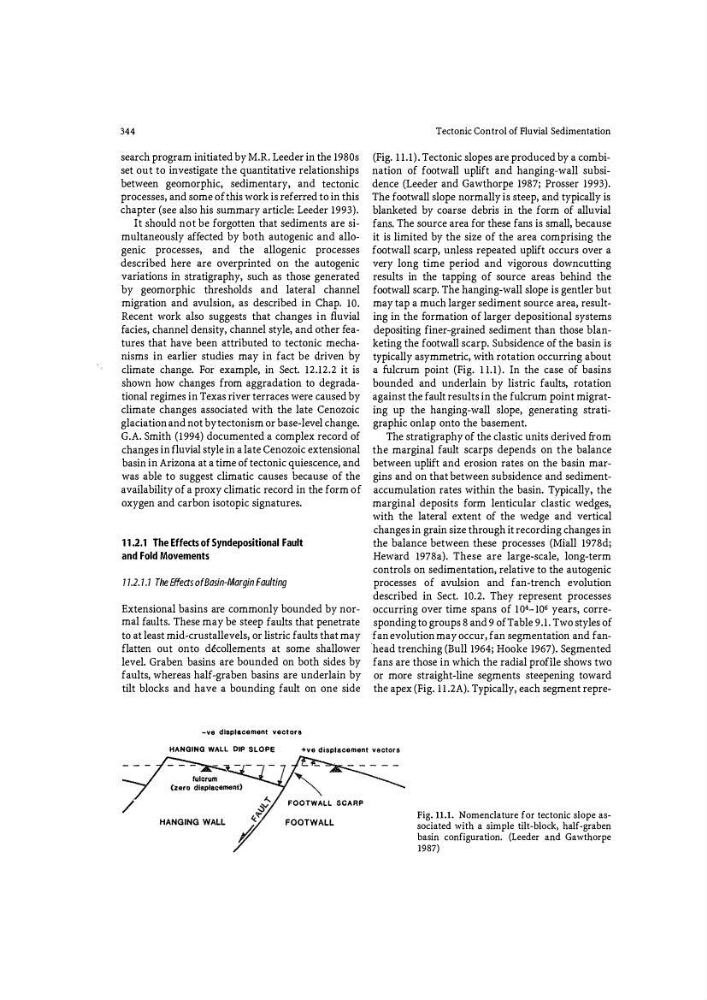
(Fig. 11.1). Tectonic slopes are produced by a combination of footwall uplift and hanging-wall subsidence (Leeder and Gawthorpe 1987; Prosser 1993).
The footwall slope normally is steep, and typically is
blanketed by coarse debris in the form of alluvial
fans. The source area for these fans is small, because
it is limited by the size of the area comprising the
footwall scarp, unless repeated uplift occurs over a
very long time period and vigorous downcutting
results in the tapping of source areas behind the
footwall scarp. The hanging-wall slope is gentler but
may tap a much larger sediment source area, resulting in the fo rmation of larger depositional systems
depositing finer-grained sediment than those blanketing the footwall scarp. Subsidence of the basin is
typically asymmetric, with rotation occurring about
a fulcrum point (Fig. 11.1). In the case of basins
bounded and underlain by listric faults, rotation
against the fault results in the fulcrum point migrating up the hanging-wall slope, generating stratigraphic onlap onto the basement.
The stratigraphy of the clastic units derived fr om
the marginal fault scarps depends on the balance
between uplift and erosion rates on the basin margins and on that between subsidence and sedimentaccumulation rates within the basin. Typically, the
marginal deposits form lenticular clastic wedges,
with the lateral extent of the wedge and vertical
changes in grain size through it recording changes in
the balance between these processes (Miall 1978d;
Heward 1978a). These are large-scale, long-term
controls on sedimentation, relative to the autogenic
processes of avulsion and fan-trench evolution
described in Sect. 10.2. They represent processes
occurring over time spans of 1 QL 106 years, corresponding to groups 8 and 9 of Table 9.1. Two styles of
fan evolution may occur) fan segmentation and fan·head trenching (Bull 1964; Hooke 1967). Segmented
fans are those in which the radial proflle shows two
or more straight-line segments steepening toward
the apex (Fig. 11.2A). Typically, each segment repreHANGING WALL DIP SLOPE
+ve displacement vactors
FOOTWALL SCARP
HANGING WALL
FOOTWALL
Fig. ll.l. Nomenclature for tectonic slope associated with a simple tilt-block, half-graben
basin configuration. (Leeder and Gawthorpe
!987)
search program initiated by M.R. Leeder in the 1980s
set out to investigate the quantitative relationships
between geomorphic, sedimentary, and tectonic
processes, and some of this work is referred to in this
chapter (see also his summary article: Leeder 1993).
It should not be forgotten that sediments are simultaneously affected by both autogenic and allogenic processes, and the allogenic processes
described here are overprinted on the autogenic
variations in stratigraphy, such as those generated
by geomorphic thresholds and lateral channel
migration and avulsion, as described in Chap. 10.
Recent work also suggests that changes in fluvial
facies, channel density, channel style, and other fe a�
tures that have been attributed to tectonic mechanisms in earlier studies may in fact be driven by
climate change. For example, in Sect. 12.12.2 it is
shown how changes from aggradation to degradational regimes in Texas river terraces were caused by
climate changes associated with the late Cenozoic
glaciation and not by tectonism or base-level change.
G.A. Smith (1994) documented a complex record of
changes in fluvial style in a late Cenozoic extensional
basin in Arizona. at a time of tectonic quiescence, and
was able to suggest climatic causes because of the
availability of a proxy climatic record in the form of
oxygen and carbon isotopic signatures.
11.2.1 The Effects of Syndepositional Fault
and Fold Movements
1 1.2. 1.1 The Effe cts of Basin-Margin Faulting
Extensional basins are commonly bounded by normal faults. These may be steep faults that penetrate
to at least mid-crustallevels) or listric faults that may
flatten out onto decollements at some shallower
level. Graben basins are bounded on both sides by
faults, whereas half-graben basins are underlain by
tilt blocks and have a bounding fault on one side
-ve dhsplacement vecton
Tectonic Control of Fluvial Sedimentation
(Fig. 11.1). Tectonic slopes are produced by a combination of footwall uplift and hanging-wall subsidence (Leeder and Gawthorpe 1987; Prosser 1993).
The footwall slope normally is steep, and typically is
blanketed by coarse debris in the form of alluvial
fans. The source area for these fans is small, because
it is limited by the size of the area comprising the
footwall scarp, unless repeated uplift occurs over a
very long time period and vigorous downcutting
results in the tapping of source areas behind the
footwall scarp. The hanging-wall slope is gentler but
may tap a much larger sediment source area, resulting in the fo rmation of larger depositional systems
depositing finer-grained sediment than those blanketing the footwall scarp. Subsidence of the basin is
typically asymmetric, with rotation occurring about
a fulcrum point (Fig. 11.1). In the case of basins
bounded and underlain by listric faults, rotation
against the fault results in the fulcrum point migrating up the hanging-wall slope, generating stratigraphic onlap onto the basement.
The stratigraphy of the clastic units derived fr om
the marginal fault scarps depends on the balance
between uplift and erosion rates on the basin margins and on that between subsidence and sedimentaccumulation rates within the basin. Typically, the
marginal deposits form lenticular clastic wedges,
with the lateral extent of the wedge and vertical
changes in grain size through it recording changes in
the balance between these processes (Miall 1978d;
Heward 1978a). These are large-scale, long-term
controls on sedimentation, relative to the autogenic
processes of avulsion and fan-trench evolution
described in Sect. 10.2. They represent processes
occurring over time spans of 1 QL 106 years, corresponding to groups 8 and 9 of Table 9.1. Two styles of
fan evolution may occur) fan segmentation and fan·head trenching (Bull 1964; Hooke 1967). Segmented
fans are those in which the radial proflle shows two
or more straight-line segments steepening toward
the apex (Fig. 11.2A). Typically, each segment repreHANGING WALL DIP SLOPE
+ve displacement vactors
FOOTWALL SCARP
HANGING WALL
FOOTWALL
Fig. ll.l. Nomenclature for tectonic slope associated with a simple tilt-block, half-graben
basin configuration. (Leeder and Gawthorpe
!987)