

312
Fluvial Depositional Systems and Autogenic Sedimentary Controls
processes are intimately related. As shown in Fig. 4.3}
conglomeratic distributary systems cycle through
two main depositional styles, a cycle of entrench�
ment and a cycle of trench backfilling and dispersion
of flow. Avulsive shifting of distributaries may be
associated with the establishment of new deposi�
tional lobes during the entrenchment phase, or with
the more minor shifting of distributaries that can
occur during the dispersion phase. Events upstream
in the drainage basin may also affe ct the development of the deposits, as the tributary network grows
and sediment is stored and periodically flushed from
the hinterland out into the basin (Fraser and
DeCelles 1992). In detail, over periods of !03-105
years, the resulting stratigraphy is controlled by the
action of various geomorphic thresholds, as described by Schumm (1977, 1979).
Schumm et al. (1987; Table 9.1) listed numerous
mechanisms that lead to fa n-head entrenchment,
including climate change and reduction in source
area-basin relief as a result of normal erosion. However, their experimental work on small, artifical fans
A
c
g---;
�
8
v
'
'
'
D
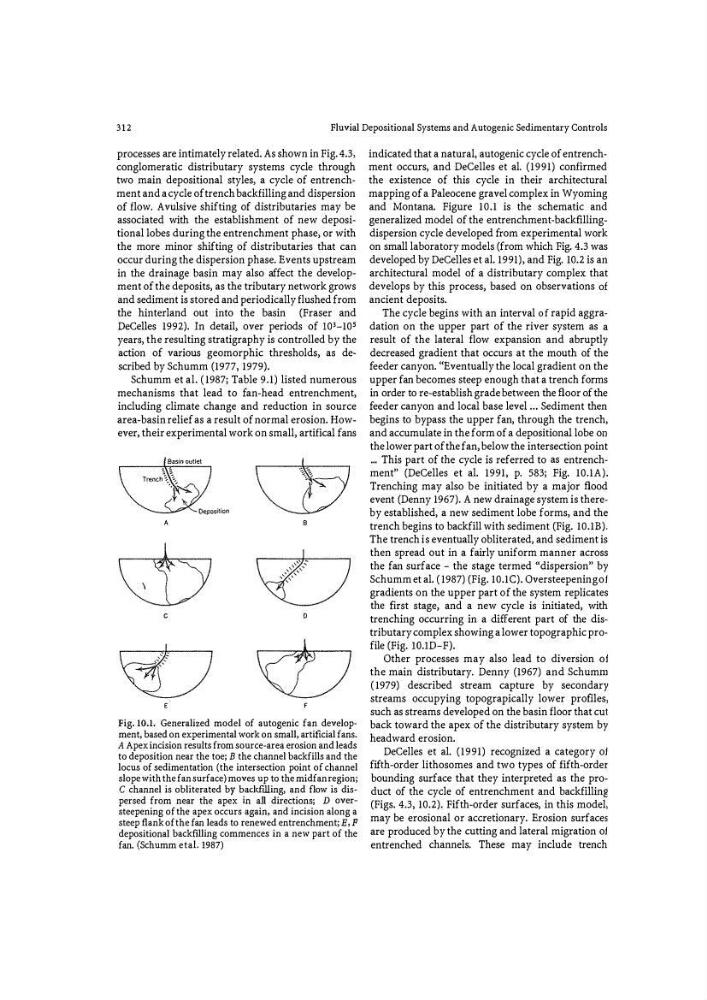
Fig. 10.1. Generalized model of autogenic fan development, based on experimental work on small, artificial fans.
A Apex incision results from source-area erosion and leads
to deposition near the toe; B the channel backfills and the
locus of sedimentation (the intersection point of channel
slope with the fan surface) moves up to the midfan region;
C channel is obliterated by backfill ing, and flow is dispersed from near the apex in all directions; D oversteepening of the apex occurs again, and incision along a
steep flank of the fan leads to renewed entrenchment; E, F
depositional backfilling commences in a new part of the
fan. (Schumm eta!. 1987)
indicated that a natural, autogenic cycle of entrenchment occurs, and DeCelles et al. (1991) confirmed
the existence of this cycle in their architectural
mapping of a Paleocene gravel complex in Wyoming
and Montana. Figure 10.1 is the schematic and
generalized model of the entrenchment-backfillingdispersion cycle developed fr om experimental work
on small laboratory models (from which Fig. 4.3 was
developed by DeCelles et al. 1991), and Fig. 10.2 is an
architectural model of a distributary complex that
develops by this process, based on observations of
ancient deposits.
The cycle begins with an interval of rapid aggradation on the upper part of the river system as a
result of the lateral flow expansion and abruptly
decreased gradient that occurs at the mouth of the
fe eder canyon. ''Eventually the local gradient on the
upper fan becomes steep enough that a trench forms
in order to re-establish grade between the floor of the
fe eder canyon and local base level ... Sediment then
begins to bypass the upper fan, through the trench,
and accumulate in the form of a depositional lobe on
the lower part of the fan, below the intersection point
... This part of the cycle is referred to as entrench�
ment" (DeCelles et al. 1991, p. 583; Fig. 10.1A).
Trenching may also be initiated by a major flood
event (Denny 1967). A new drainage system is thereby established, a new sediment lobe forms, and the
trench begins to backfill with sediment (Fig. 10.1B).
The trench is eventually obliterated, and sediment is
then spread out in a fairly uniform manner across
the fan surface - the stage termed "dispersion" by
Schumm et al. (1987) (Fig. 10.1C). Oversteepeningoi
gradients on the upper part of the system replicates
the first stage, and a new cycle is initiated, with
trenching occurring in a different part of the dis�
tributary complex showing a lower topographic pro�
file (Fig. lO.lD-F).
Other processes may also lead to diversion oj
the main distributary. Denny (1967) and Schumm
(1979) described stream capture by secondary
streams occupying topograpically lower profrles1
such as streams developed on the basin floor that cut
back toward the apex of the distributary system by
headward erosion.
DeCelles et al. (1991) recognized a category oi
fifth-order lithosomes and two types of fifth-order
bounding surface that they interpreted as the product of the cycle of entrenchment and backfllling
(Figs. 4.3, 10.2). Fifth-order surfaces, in this model,
may be erosional or accretionary. Erosion surfaces
are produced by the cutting and lateral migration oi
entrenched channels. These may include trench
Fluvial Depositional Systems and Autogenic Sedimentary Controls
processes are intimately related. As shown in Fig. 4.3}
conglomeratic distributary systems cycle through
two main depositional styles, a cycle of entrench�
ment and a cycle of trench backfilling and dispersion
of flow. Avulsive shifting of distributaries may be
associated with the establishment of new deposi�
tional lobes during the entrenchment phase, or with
the more minor shifting of distributaries that can
occur during the dispersion phase. Events upstream
in the drainage basin may also affe ct the development of the deposits, as the tributary network grows
and sediment is stored and periodically flushed from
the hinterland out into the basin (Fraser and
DeCelles 1992). In detail, over periods of !03-105
years, the resulting stratigraphy is controlled by the
action of various geomorphic thresholds, as described by Schumm (1977, 1979).
Schumm et al. (1987; Table 9.1) listed numerous
mechanisms that lead to fa n-head entrenchment,
including climate change and reduction in source
area-basin relief as a result of normal erosion. However, their experimental work on small, artifical fans
A
c
g---;
�
8
v
'
'
'
D
Fig. 10.1. Generalized model of autogenic fan development, based on experimental work on small, artificial fans.
A Apex incision results from source-area erosion and leads
to deposition near the toe; B the channel backfills and the
locus of sedimentation (the intersection point of channel
slope with the fan surface) moves up to the midfan region;
C channel is obliterated by backfill ing, and flow is dispersed from near the apex in all directions; D oversteepening of the apex occurs again, and incision along a
steep flank of the fan leads to renewed entrenchment; E, F
depositional backfilling commences in a new part of the
fan. (Schumm eta!. 1987)
indicated that a natural, autogenic cycle of entrenchment occurs, and DeCelles et al. (1991) confirmed
the existence of this cycle in their architectural
mapping of a Paleocene gravel complex in Wyoming
and Montana. Figure 10.1 is the schematic and
generalized model of the entrenchment-backfillingdispersion cycle developed fr om experimental work
on small laboratory models (from which Fig. 4.3 was
developed by DeCelles et al. 1991), and Fig. 10.2 is an
architectural model of a distributary complex that
develops by this process, based on observations of
ancient deposits.
The cycle begins with an interval of rapid aggradation on the upper part of the river system as a
result of the lateral flow expansion and abruptly
decreased gradient that occurs at the mouth of the
fe eder canyon. ''Eventually the local gradient on the
upper fan becomes steep enough that a trench forms
in order to re-establish grade between the floor of the
fe eder canyon and local base level ... Sediment then
begins to bypass the upper fan, through the trench,
and accumulate in the form of a depositional lobe on
the lower part of the fan, below the intersection point
... This part of the cycle is referred to as entrench�
ment" (DeCelles et al. 1991, p. 583; Fig. 10.1A).
Trenching may also be initiated by a major flood
event (Denny 1967). A new drainage system is thereby established, a new sediment lobe forms, and the
trench begins to backfill with sediment (Fig. 10.1B).
The trench is eventually obliterated, and sediment is
then spread out in a fairly uniform manner across
the fan surface - the stage termed "dispersion" by
Schumm et al. (1987) (Fig. 10.1C). Oversteepeningoi
gradients on the upper part of the system replicates
the first stage, and a new cycle is initiated, with
trenching occurring in a different part of the dis�
tributary complex showing a lower topographic pro�
file (Fig. lO.lD-F).
Other processes may also lead to diversion oj
the main distributary. Denny (1967) and Schumm
(1979) described stream capture by secondary
streams occupying topograpically lower profrles1
such as streams developed on the basin floor that cut
back toward the apex of the distributary system by
headward erosion.
DeCelles et al. (1991) recognized a category oi
fifth-order lithosomes and two types of fifth-order
bounding surface that they interpreted as the product of the cycle of entrenchment and backfllling
(Figs. 4.3, 10.2). Fifth-order surfaces, in this model,
may be erosional or accretionary. Erosion surfaces
are produced by the cutting and lateral migration oi
entrenched channels. These may include trench