

I
I
M ethods of Correlation and Mapping
301
DC\ , "' DIP ANGLE A NO DIRECTION
I M I
-
'0 ·
I�
2
5
m
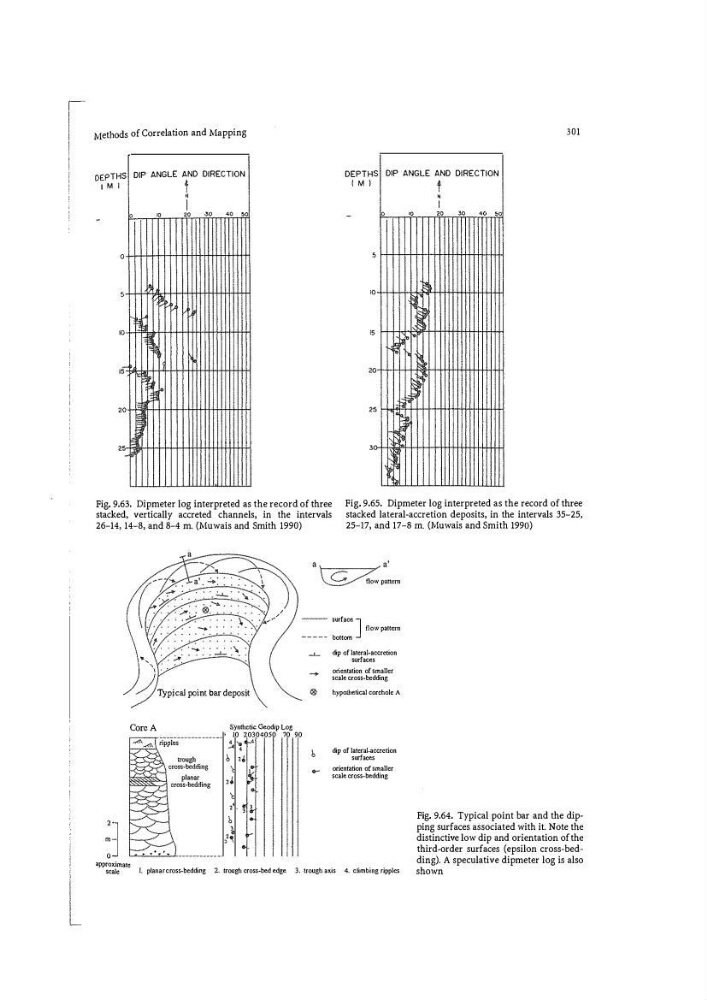
Fig. 9.63. Dipmeter log interpreted as the record of three
stacked, vertically accreted channels, in the intervals
26-14, 14-8, and 8-4 m. (Muwais and Smith 1990)
DEPTH
I M l
s
5
'0
5
2 0
5
3
'
DIP ANGLE AN D DIRECTION
!
'
I
"
"
"
" "
Fig. 9.65. Dipmeter log interpreted as the record of three
stacked lateral-accretion deposits, in the intervals 35-25,
25-17, and 17-8 m. (Muwais and Smith 1990)
a' �
:� )
a,
.-a'
� wp attern
•, '
'
'
: ®: �: :::: · .. /
•
A
-'",� Typ�cal point bar deposit
Core A
S)'nthctic Oeodip Log
surface
J
flow pattern
bottom
dip of lateral-accretion
surfaces
orientation of smaller
scale cross-bedding
hypothetical corchole A
!0 20304050 70 90
' .
•
6 ,,
'
' '
b
-
-
'
�
approxim ate
scale
!. p!anarcross-bedding 2. trough cross·bed edge
dip of lateral-accretion
surfaces
orientation of smaller
scale cross-bedding
3. trough axis 4. climbing ripples
Fig. 9.64. Typical point bar and the dipping surfaces associated with it. Note the
distinctive low dip and orientation of the
third-order surfaces (epsilon cross-bedding). A speculative dipmeter log is also
shown
I
M ethods of Correlation and Mapping
301
DC\ , "' DIP ANGLE A NO DIRECTION
I M I
-
'0 ·
I�
2
5
m
Fig. 9.63. Dipmeter log interpreted as the record of three
stacked, vertically accreted channels, in the intervals
26-14, 14-8, and 8-4 m. (Muwais and Smith 1990)
DEPTH
I M l
s
5
'0
5
2 0
5
3
'
DIP ANGLE AN D DIRECTION
!
'
I
"
"
"
" "
Fig. 9.65. Dipmeter log interpreted as the record of three
stacked lateral-accretion deposits, in the intervals 35-25,
25-17, and 17-8 m. (Muwais and Smith 1990)
a' �
:� )
a,
.-a'
� wp attern
•, '
'
'
: ®: �: :::: · .. /
•
A
-'",� Typ�cal point bar deposit
Core A
S)'nthctic Oeodip Log
surface
J
flow pattern
bottom
dip of lateral-accretion
surfaces
orientation of smaller
scale cross-bedding
hypothetical corchole A
!0 20304050 70 90
' .
•
6 ,,
'
' '
b
-
-
'
�
approxim ate
scale
!. p!anarcross-bedding 2. trough cross·bed edge
dip of lateral-accretion
surfaces
orientation of smaller
scale cross-bedding
3. trough axis 4. climbing ripples
Fig. 9.64. Typical point bar and the dipping surfaces associated with it. Note the
distinctive low dip and orientation of the
third-order surfaces (epsilon cross-bedding). A speculative dipmeter log is also
shown