

Facies Models
243
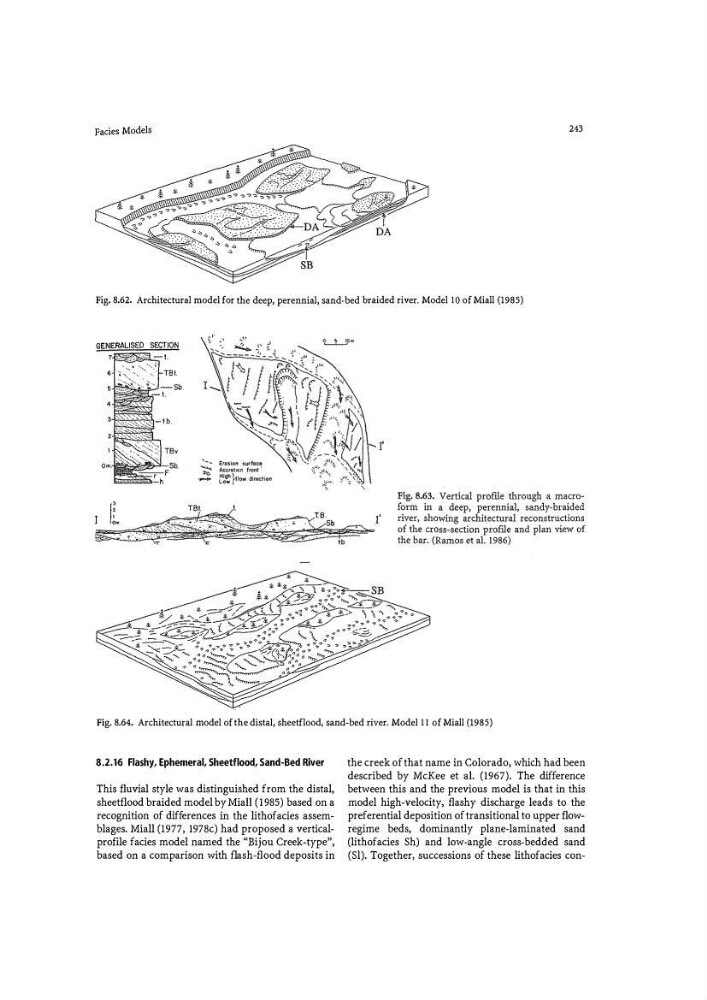
Fig. 8.62. Architectural model for the deep, perennial, sand¥bed braided river. Model lO of Miall (1985)
Fig. 8.64. Architectural model of the distal, sheetflood, sand-bed river. Model ll of Miall (1985)
8.2.16 Flashy, Ephemeral, Sheetflood, Sand-Bed River
This fluvial style was distinguished from the distal,
sheetflood braided model by Mia!! (1985) based on a
recognition of differences in the lithofacies assemblages. Miall (1977, 1978c) had proposed a verticalprofile facies model named the "Bijou Creek-type",
based on a comparison with flash-flood deposits in
the creek of that name in Colorado, which had been
described by McKee et a!. (1967). The difference
between this and the previous model is that in this
model high-velocity, flashy discharge leads to the
preferential deposition of transitional to upper flowregime beds, dominantly plane-laminated sand
(lithofacies Sh) and low-angle cross-bedded sand
(Sl). Together, successions of these lithofacies con-
243
Fig. 8.62. Architectural model for the deep, perennial, sand¥bed braided river. Model lO of Miall (1985)
Fig. 8.64. Architectural model of the distal, sheetflood, sand-bed river. Model ll of Miall (1985)
8.2.16 Flashy, Ephemeral, Sheetflood, Sand-Bed River
This fluvial style was distinguished from the distal,
sheetflood braided model by Mia!! (1985) based on a
recognition of differences in the lithofacies assemblages. Miall (1977, 1978c) had proposed a verticalprofile facies model named the "Bijou Creek-type",
based on a comparison with flash-flood deposits in
the creek of that name in Colorado, which had been
described by McKee et a!. (1967). The difference
between this and the previous model is that in this
model high-velocity, flashy discharge leads to the
preferential deposition of transitional to upper flowregime beds, dominantly plane-laminated sand
(lithofacies Sh) and low-angle cross-bedded sand
(Sl). Together, successions of these lithofacies con-