

Facies Models
241
UPSTREAM
'\
I
CHANNEL
MID BAR
1
t
t
"vf
\¥bffi i? ?
� �
I
DOWNSTREAM
1m
��� -: ==::: :
�==' __ //
PEAT, WITH SAND AND SILT
VEGETATION -RICH, SMALL ·SCALE CROSS -STRATIFIED SAND
LARGE -SCALE CROSS- STRATifiED SAND
UNSORTED SANOS AND GRAVELS
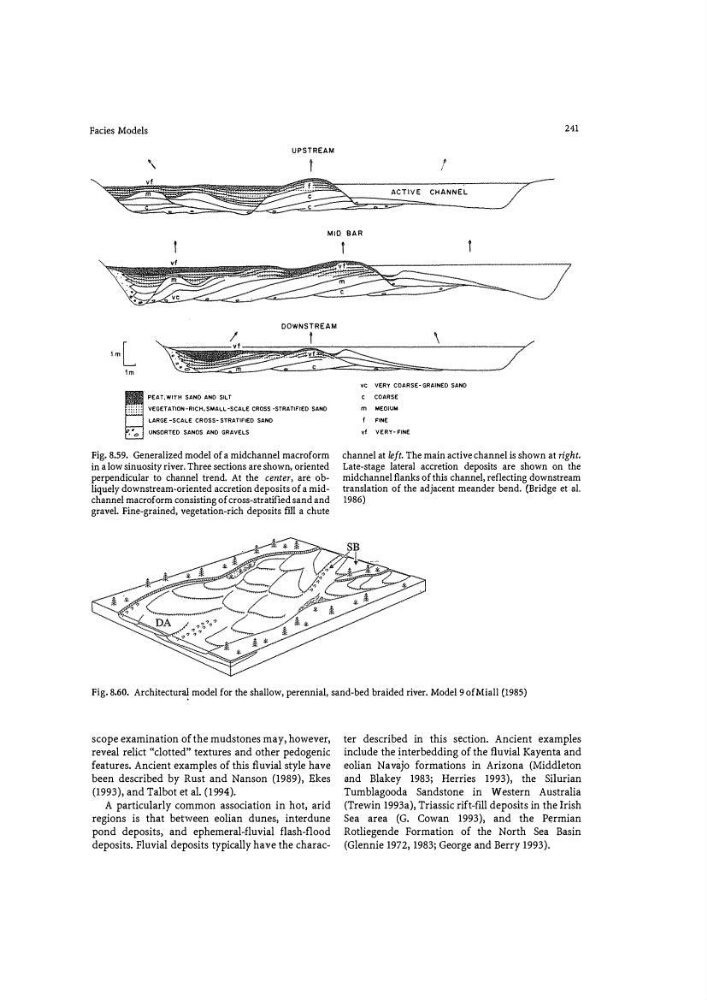
Fig. 8.59. Generalized model of a midchannel macroform
in a low sinuosity river. Three sections are shown) oriented
perpendicular to channel trend. At the center, are obliquely downstream-oriented accretion deposits of a midchannel macroform consisting of cross-stratified sand and
gravel. Fine-grained, vegetation-rich deposits fill a chute
VC VERY COARSE- GRAINED SAND
c
COARSE
m MEOIUM
f
FINE
�f VERY- FINE
channel at left. The main active channel is shown at righ t.
Late-stage lateral accretion deposits are shown on the
midchannel flanks of this channel, reflecting downstream
translation of the adjacent meander bend. (Bridge et al.
1986)
Fig. 8.60. Architectur� model for the shallow, perennial, sand-bed braided river. Model 9 ofMiall (1985)
scope examination of the mudstones may, however,
reveal relict "clotted" textures and other pedogenic
features. Ancient examples of this fl uvial style have
been described by Rust and Nanson (1989), Ekes
(1993), and Talbot et al. (1994).
A particularly common association in hot, arid
regions is that between eolian dunes, interdune
pond deposits, and ephemeral-fluvial flash-flood
deposits. Fluvial deposits typically have the character described in this s�ction. Ancient examples
include the interbedding of the fluvial Kayenta and
eolian Nav a jo fo rmations in Arizona (Middleton
and Blakey 1983; Herries 1993), the Silurian
Tumblagooda Sandstone in Western Australia
(Trewin 1993a), Triassic rift-fill depos i ts in the Irish
Sea area (G. Cowan 1993), and the Permian
Rotliegende Formation of the North Sea Basin
(Glennie 1972, 1983; George and Berry 1993).
241
UPSTREAM
'\
I
CHANNEL
MID BAR
1
t
t
"vf
\¥bffi i? ?
� �
I
DOWNSTREAM
1m
��� -: ==::: :
�==' __ //
PEAT, WITH SAND AND SILT
VEGETATION -RICH, SMALL ·SCALE CROSS -STRATIFIED SAND
LARGE -SCALE CROSS- STRATifiED SAND
UNSORTED SANOS AND GRAVELS
Fig. 8.59. Generalized model of a midchannel macroform
in a low sinuosity river. Three sections are shown) oriented
perpendicular to channel trend. At the center, are obliquely downstream-oriented accretion deposits of a midchannel macroform consisting of cross-stratified sand and
gravel. Fine-grained, vegetation-rich deposits fill a chute
VC VERY COARSE- GRAINED SAND
c
COARSE
m MEOIUM
f
FINE
�f VERY- FINE
channel at left. The main active channel is shown at righ t.
Late-stage lateral accretion deposits are shown on the
midchannel flanks of this channel, reflecting downstream
translation of the adjacent meander bend. (Bridge et al.
1986)
Fig. 8.60. Architectur� model for the shallow, perennial, sand-bed braided river. Model 9 ofMiall (1985)
scope examination of the mudstones may, however,
reveal relict "clotted" textures and other pedogenic
features. Ancient examples of this fl uvial style have
been described by Rust and Nanson (1989), Ekes
(1993), and Talbot et al. (1994).
A particularly common association in hot, arid
regions is that between eolian dunes, interdune
pond deposits, and ephemeral-fluvial flash-flood
deposits. Fluvial deposits typically have the character described in this s�ction. Ancient examples
include the interbedding of the fluvial Kayenta and
eolian Nav a jo fo rmations in Arizona (Middleton
and Blakey 1983; Herries 1993), the Silurian
Tumblagooda Sandstone in Western Australia
(Trewin 1993a), Triassic rift-fill depos i ts in the Irish
Sea area (G. Cowan 1993), and the Permian
Rotliegende Formation of the North Sea Basin
(Glennie 1972, 1983; George and Berry 1993).