

Facies Models
6
. . ·· . · · . . . '
7� 1
221"
'lili llliP•""
i78°
1! ' 4'
9 tl,f
53m
::u
-g
-1
2
3
27m
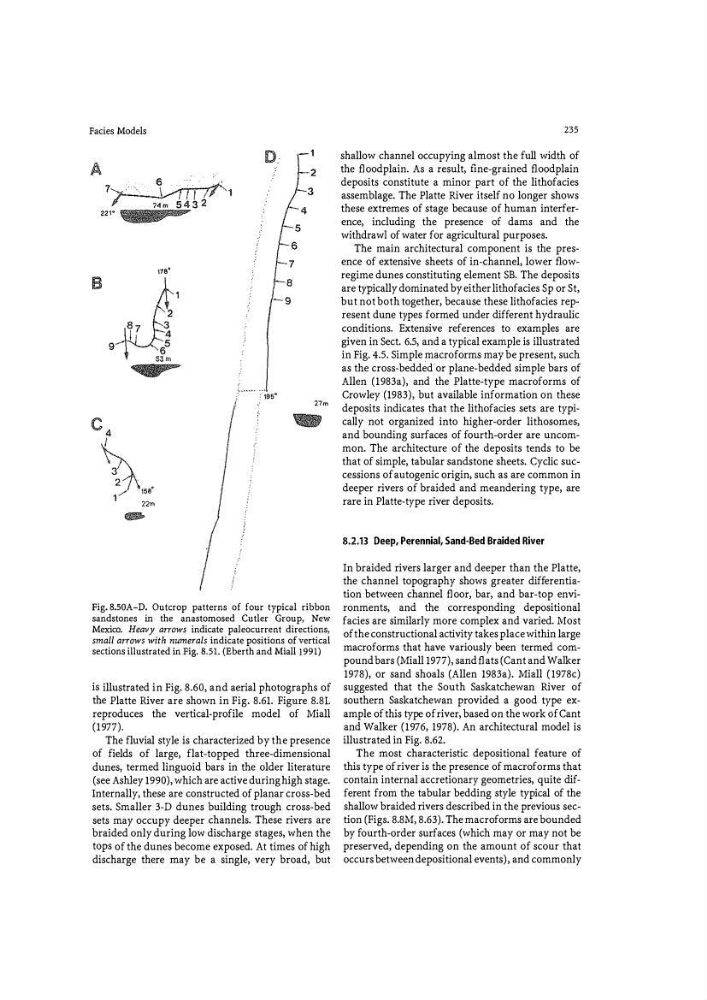
Fig. 8.50A-D. Outcrop patterns of four typical ribbon
sandstones in the anastomosed Cutler Group, New
Mexico. Heavy arrows indicate paleocurrent directions,
small arrows with numerals indicate positions of vertical
sections illustrated in Fig. 8.51. (Eberth and Miall 1991)
is illustrated in Fig. 8.60, and aerial photographs of
the Platte River are shown in Fig. 8.61. Figure 8.8L
reproduces the vertical-profile model of Miall
(1977).
The fluvial style is characterized by the presence
of fields of large, flat-topped three-dimensional
dunes, termed linguoid bars in the older literature
(see Ashley 1990 ), which are active during high stage.
Internally, these are constructed of planar cross-bed
sets. Smaller 3-D dunes building trough cross-bed
sets may occupy deeper channels. These rivers are
braided only during low discharge stages, when the
tops of the dunes become exposed. At times of high
discharge there may be a single, very broad, but
235
shallow channel occupying almost the full width of
the floodplain. As a result, fine-grained floodplain
deposits constitute a minor part of the lithofacies
assemblage. The Platte River itself no longer shows
these extremes of stage because of human interference, including the presence of dams and the
withdraw! of water for agricultural purposes.
The main architectural component is the presence of extensive sheets of in-channel, lower flowregime dunes constituting element SB. The deposits
are typically dominated by either lithofacies Sp or St,
but not both together, because these lithofacies represent dune types formed under different hydraulic
conditions. Extensive references to examples are
given in Sect. 6.5, and a typical example is illustrated
in Fig. 4.5. Simple macro forms· may be present, such
as the cross-bedded or plane-bedded simple bars of
Allen (1983a), and the Platte-type macroforms of
Crowley (1983), but available information on these
deposits indicates that the lithofacies sets are typically not organized into higher-order lithosomes,
and bounding surfaces of fo urth-order are uncommon. The architecture of the deposits tends to be
that of simple, tabular sandstone sheets. Cyclic successions of autogenic origin, such as are common in
deeper rivers of braided and meandering type, are
rare in Platte-type river deposits.
8.2.13 Deep, Perennial, Sand-Bed Braided River
In braided rivers larger and deeper than the Platte,
the channel topography shows greater differentiation between channel floor, bar, and bar-top environments, and the corresponding depositional
facies are similarly more complex and varied. Most
of the constructional activity takes place within large
macro forms that have variously been termed compound bars (Miall 1977), sand flats (Cant and Walker
1978), or sand shoals (Allen 1983a). Miall (1978c)
suggested that the South Saskatchewan River of
southern Saskatchewan provided a good type example of this type of river, based on the work of Cant
and Walker (1976, 1978). An architectural model is
illustrated in Fig. 8.62.
The most characteristic depositional feature of
this type of river is the presence of macro forms that
contain internal accretionary geometries, quite different from the tabular bedding style typical of the
shallow braided rivers described in the previous section (Figs. 8.8M, 8.63). The macro forms are bounded
by fo urth-order surfaces (which may or may not be
preserved, depending on the amount of scour that
occurs between depositional events), and commonly
6
. . ·· . · · . . . '
7� 1
221"
'lili llliP•""
i78°
1! ' 4'
9 tl,f
53m
::u
-g
-1
2
3
27m
Fig. 8.50A-D. Outcrop patterns of four typical ribbon
sandstones in the anastomosed Cutler Group, New
Mexico. Heavy arrows indicate paleocurrent directions,
small arrows with numerals indicate positions of vertical
sections illustrated in Fig. 8.51. (Eberth and Miall 1991)
is illustrated in Fig. 8.60, and aerial photographs of
the Platte River are shown in Fig. 8.61. Figure 8.8L
reproduces the vertical-profile model of Miall
(1977).
The fluvial style is characterized by the presence
of fields of large, flat-topped three-dimensional
dunes, termed linguoid bars in the older literature
(see Ashley 1990 ), which are active during high stage.
Internally, these are constructed of planar cross-bed
sets. Smaller 3-D dunes building trough cross-bed
sets may occupy deeper channels. These rivers are
braided only during low discharge stages, when the
tops of the dunes become exposed. At times of high
discharge there may be a single, very broad, but
235
shallow channel occupying almost the full width of
the floodplain. As a result, fine-grained floodplain
deposits constitute a minor part of the lithofacies
assemblage. The Platte River itself no longer shows
these extremes of stage because of human interference, including the presence of dams and the
withdraw! of water for agricultural purposes.
The main architectural component is the presence of extensive sheets of in-channel, lower flowregime dunes constituting element SB. The deposits
are typically dominated by either lithofacies Sp or St,
but not both together, because these lithofacies represent dune types formed under different hydraulic
conditions. Extensive references to examples are
given in Sect. 6.5, and a typical example is illustrated
in Fig. 4.5. Simple macro forms· may be present, such
as the cross-bedded or plane-bedded simple bars of
Allen (1983a), and the Platte-type macroforms of
Crowley (1983), but available information on these
deposits indicates that the lithofacies sets are typically not organized into higher-order lithosomes,
and bounding surfaces of fo urth-order are uncommon. The architecture of the deposits tends to be
that of simple, tabular sandstone sheets. Cyclic successions of autogenic origin, such as are common in
deeper rivers of braided and meandering type, are
rare in Platte-type river deposits.
8.2.13 Deep, Perennial, Sand-Bed Braided River
In braided rivers larger and deeper than the Platte,
the channel topography shows greater differentiation between channel floor, bar, and bar-top environments, and the corresponding depositional
facies are similarly more complex and varied. Most
of the constructional activity takes place within large
macro forms that have variously been termed compound bars (Miall 1977), sand flats (Cant and Walker
1978), or sand shoals (Allen 1983a). Miall (1978c)
suggested that the South Saskatchewan River of
southern Saskatchewan provided a good type example of this type of river, based on the work of Cant
and Walker (1976, 1978). An architectural model is
illustrated in Fig. 8.62.
The most characteristic depositional feature of
this type of river is the presence of macro forms that
contain internal accretionary geometries, quite different from the tabular bedding style typical of the
shallow braided rivers described in the previous section (Figs. 8.8M, 8.63). The macro forms are bounded
by fo urth-order surfaces (which may or may not be
preserved, depending on the amount of scour that
occurs between depositional events), and commonly