

Fades Models
M SILTSTONE
fa f!NE· COARSE SS. Q
g CONGLOMERATE
� TROUGH XNSTRAT.
ft.
50
flow
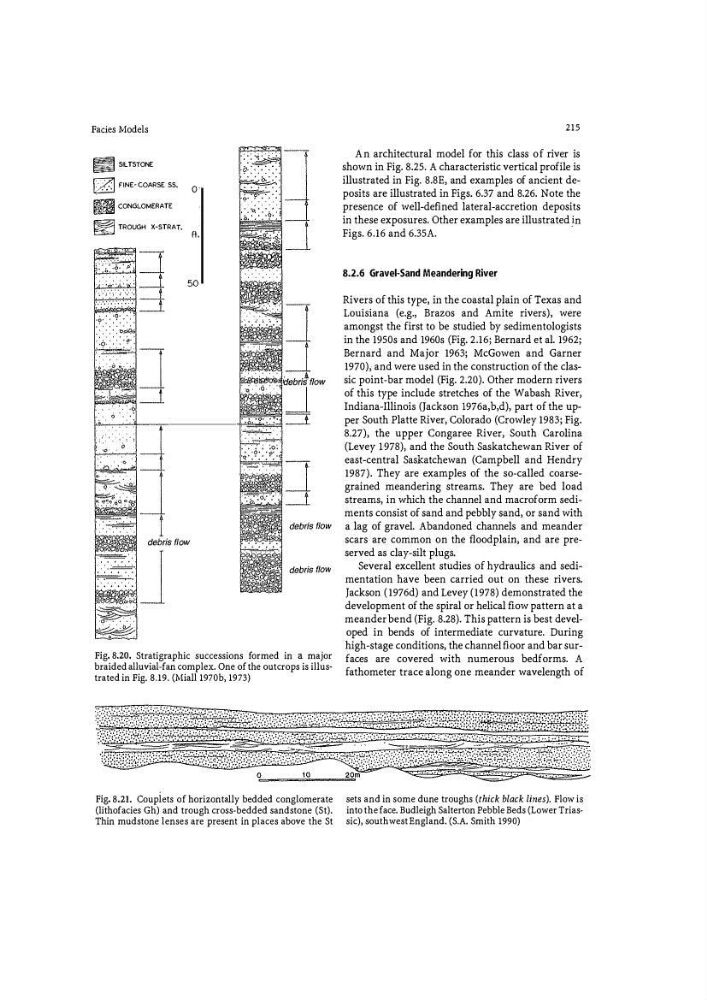
Fig. 8.20. Stratigraphic successions fo rmed in a major
braided alluvial-fan complex. One of the outcrops is illustrated in Fig. 8.19. (Miall 1970b, 1973)
Fig. 8.21. Couplets of horizontally bedded conglomerate
(lithofacies Gh) and trough cross-bedded sandstone (St).
Thin mudstone lenses are present in places above the St
215
An architectural model for this class of river is
shown in Fig. 8.25. A characteristic vertical profile is
illustrated in Fig. 8.8E, and examples of ancient deposits are illustrated in Figs. 6.37 and 8.26. Note the
presence of well-defi ned lateral-accretion deposits
in these exposures. Other examples are illustrated !n
Figs. 6.16 and 6.35A.
8.2.6 Gravel-Sand Meandering River
Rivers of this type, in the coastal plain of Texas and
Louisiana (e.g., Brazos and Amite rivers), were
amongst the first to be studied by sedimentologists
in the 1950s and 1960s (Fig. 2.16; Bernard et al. 1962;
Bernard and Major 1963; McGowen and Garner
1970),: and were used in the construction of the classic point-bar model (Fig. 2.20). Other modern rivers
of this type include stretches of the Wabash River,
Indiana-Illinois (Jackson !976a,b,d), part of the upper South Platte River, Colorado (Crowley 1983; Fig.
8.27), the upper Congaree River, South Carolina
(Levey 1978), and the South Saskatchewan River of
east-central Saskatchewan (Campbell and Hendry
1987). They are examples of the so-called coarsegrained meandering streams. They are bed load
streams, in which the channel and macroform sediments consist of sand and pebbly sand, or sand with
a lag of gravel. Abandoned channels and meander
scars are common on the floodplain, and are preserved as clay-silt plugs.
Several excellent studies of hydraulics and sedimentation have been carried out on these rivers.
jackson (1976d) and Levey (1978) demonstrated the
development of the spiral or helical flow pattern at a
meander bend (Fig. 8.28). This pattern is best developed in bends of intermediate curvature. During
high-stage conditions, the channel floor and bar surfaces are covered with numerous bedforms. A
fathometer trace along one meander wavelength of
sets and in some dune troughs (thick black lines). Flow is
into the face. Budleigh Salterton Pebble Beds (Lower Triassic), southwest England. (S.A. Smith 1990)
M SILTSTONE
fa f!NE· COARSE SS. Q
g CONGLOMERATE
� TROUGH XNSTRAT.
ft.
50
flow
Fig. 8.20. Stratigraphic successions fo rmed in a major
braided alluvial-fan complex. One of the outcrops is illustrated in Fig. 8.19. (Miall 1970b, 1973)
Fig. 8.21. Couplets of horizontally bedded conglomerate
(lithofacies Gh) and trough cross-bedded sandstone (St).
Thin mudstone lenses are present in places above the St
215
An architectural model for this class of river is
shown in Fig. 8.25. A characteristic vertical profile is
illustrated in Fig. 8.8E, and examples of ancient deposits are illustrated in Figs. 6.37 and 8.26. Note the
presence of well-defi ned lateral-accretion deposits
in these exposures. Other examples are illustrated !n
Figs. 6.16 and 6.35A.
8.2.6 Gravel-Sand Meandering River
Rivers of this type, in the coastal plain of Texas and
Louisiana (e.g., Brazos and Amite rivers), were
amongst the first to be studied by sedimentologists
in the 1950s and 1960s (Fig. 2.16; Bernard et al. 1962;
Bernard and Major 1963; McGowen and Garner
1970),: and were used in the construction of the classic point-bar model (Fig. 2.20). Other modern rivers
of this type include stretches of the Wabash River,
Indiana-Illinois (Jackson !976a,b,d), part of the upper South Platte River, Colorado (Crowley 1983; Fig.
8.27), the upper Congaree River, South Carolina
(Levey 1978), and the South Saskatchewan River of
east-central Saskatchewan (Campbell and Hendry
1987). They are examples of the so-called coarsegrained meandering streams. They are bed load
streams, in which the channel and macroform sediments consist of sand and pebbly sand, or sand with
a lag of gravel. Abandoned channels and meander
scars are common on the floodplain, and are preserved as clay-silt plugs.
Several excellent studies of hydraulics and sedimentation have been carried out on these rivers.
jackson (1976d) and Levey (1978) demonstrated the
development of the spiral or helical flow pattern at a
meander bend (Fig. 8.28). This pattern is best developed in bends of intermediate curvature. During
high-stage conditions, the channel floor and bar surfaces are covered with numerous bedforms. A
fathometer trace along one meander wavelength of
sets and in some dune troughs (thick black lines). Flow is
into the face. Budleigh Salterton Pebble Beds (Lower Triassic), southwest England. (S.A. Smith 1990)